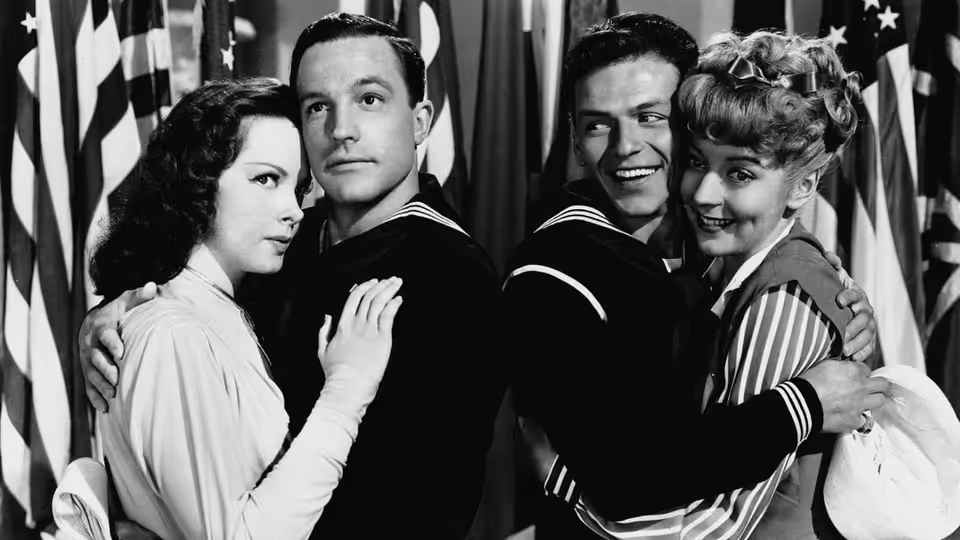
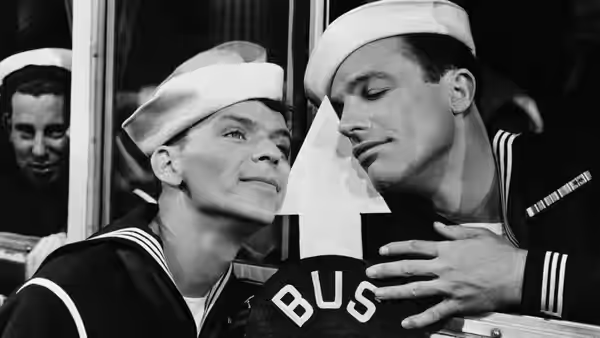
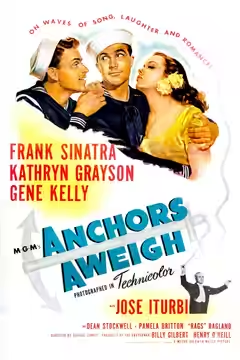
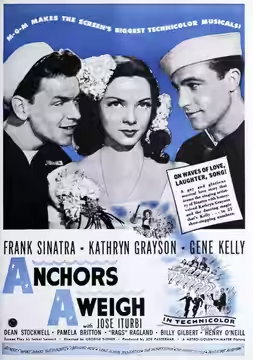
George Sidney’s wartime musical has three great things in it, all of them Gene Kelly, and 143 minutes around them. The dancing is as good as the studio musical ever got; the story is a sailor suit with nobody much inside it.
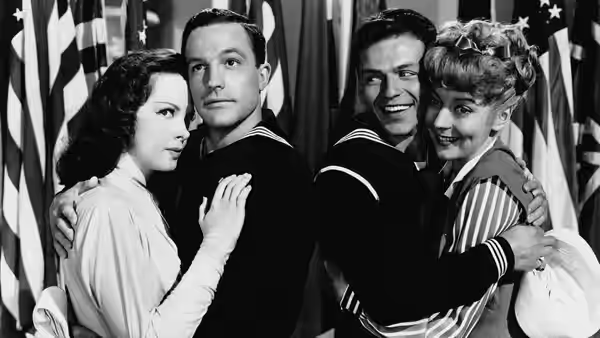
George Sidney’s Anchors Aweigh gives two sailors four days’ leave in Hollywood and 143 minutes to spend them. It was made in 1945 for an audience with men overseas, and it has the manners of the moment: the Navy is wonderful, children are wonderful, classical music is good for you, and nobody in it has an unkind thought that lasts beyond the next song. Isobel Lennart’s screenplay, from a story by Natalie Marcin, is a clothesline for the numbers and does not pretend otherwise. The numbers are the reason to watch, and three of them belong to Gene Kelly, and those three are as good as the studio musical ever got. The rest is amiable and long.
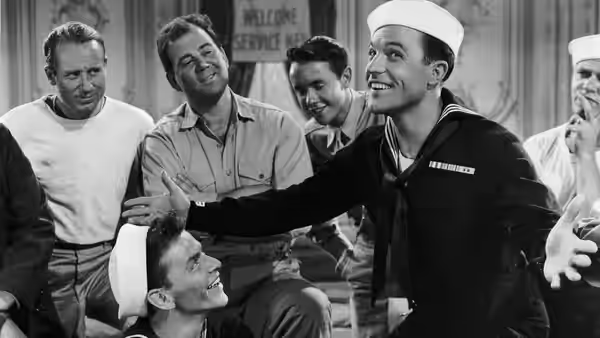
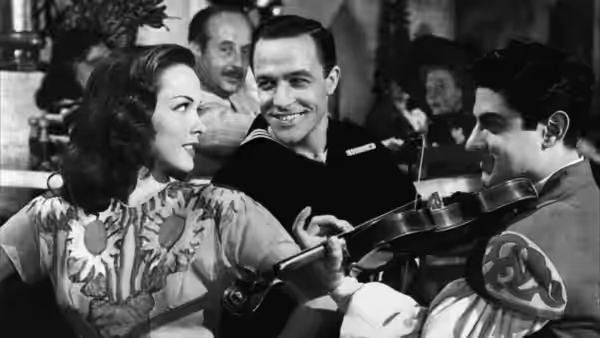
The one everybody remembers has Kelly, in his whites, telling a story to a class of schoolchildren and then dancing with a cartoon mouse. Jerry, on loan from the Tom and Jerry shorts, is a king who has banned music from his kingdom because he cannot dance; Kelly teaches him. The mouse’s feet land where Kelly’s land, Kelly’s hand pats a head that was never on the set, and the two of them finish side by side and bow. We grinned at it like children and did not stop for its whole length. Kelly’s choreography plays every step to the mouse as though it were a small, difficult partner, and it is that, not the trick, that makes it work. His other two turns, a courtyard dance with a small girl and a fantasy in which he plays a bandit leaping across the roofs to reach Kathryn Grayson at a window, are nearly as good and much less talked about.
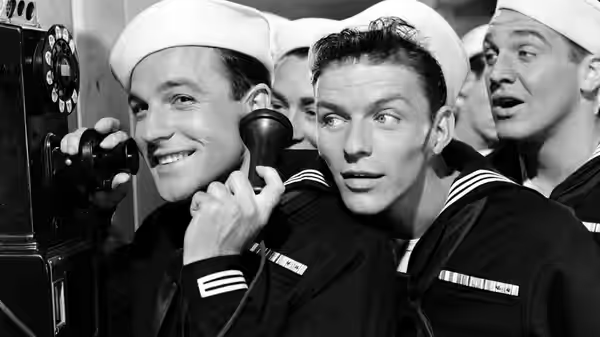
Frank Sinatra is Clarence, a shy kid from Brooklyn who has never spoken to a woman and wants Kelly’s Joe to teach him how. The joke is that the man every woman in America wanted to hear sing plays the one boy in the Navy who cannot say hello, and Sinatra plays it straight, thin and anxious with his cap in both hands. When he sings, everyone around him goes quiet. I Fall in Love Too Easily, done at a piano in the empty Hollywood Bowl at night, is the quietest thing in the film and the best acted. Pamela Britton, as the waitress the credits call only the Girl from Brooklyn, is the sharpest woman in it: quick, plain, not taken in by anybody, and given about a fifth of the screen time she earns.
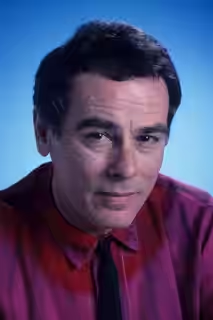
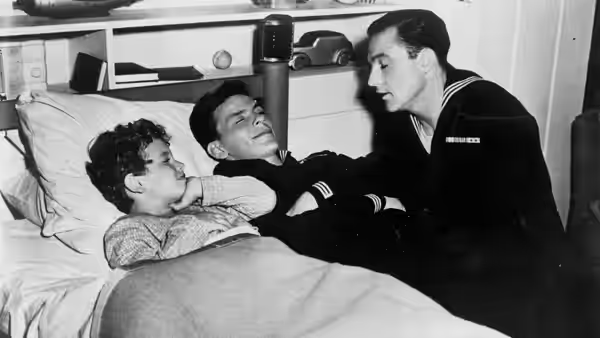
Grayson, as Susan, the aunt with a voice and no break, sings sweetly and is asked to do nothing else but wait. Dean Stockwell, as her nephew Donald, is small and solemn and on screen far more than a plot this thin can use. And then there is José Iturbi (Josep Iturbi Bàguena), the conductor the whole story is a scheme to reach. When the sailors finally reach him he plays, at length, in a sequence that appears to have gathered every grand piano in California onto one stage. It is a fine spectacle. We looked at the clock during it, and we were not proud of that, and then we looked again.
Charles P. Boyle and Robert H. Planck shoot it in colour that has held up: sailor whites against terracotta walls, Grayson’s frocks in yellows and greens, Hollywood looking like a set of itself. Adrienne Fazan’s editing is at its best in the numbers, where she holds a shot until Kelly has finished a phrase and cuts only when he lands; the mouse sequence depends on her never letting a join show, and none does. Between the songs she is at the mercy of scenes that run a minute past their point, and there are a great many of them. Joe Pasternak produced, and the film has a producer’s faith that more is always welcome.
Four years later Kelly would put sailors on leave into On the Town (1949), a film that runs shorter, moves faster and trusts its audience to keep up. Anchors Aweigh is the rough draft: the same idea, twice the padding, half the nerve. You can also watch Kelly, here, finding out how much a camera will do for a dancer who knows where to put it.
See it for Kelly, for the mouse and for Sinatra at the piano. Watch it at home, where nobody will mind if you leave during the recital and come back in time for the roofs.