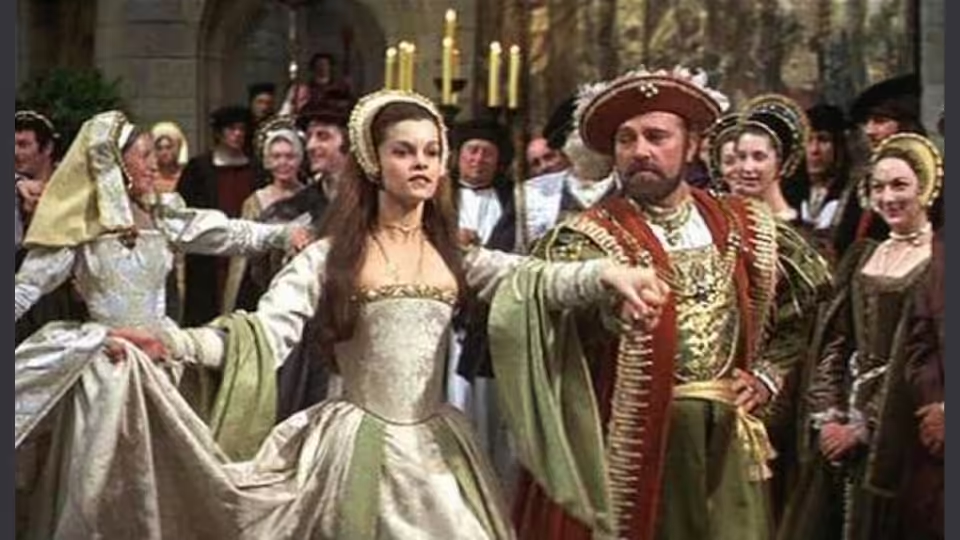
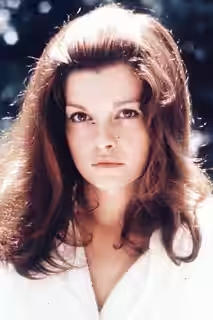
Geneviève Bujold gives Anne Boleyn a temper and a brain, and every scene she is in has a pulse. The rest is handsome, well-spoken and slow, a pageant that moves at the pace of a procession. Worth an evening for her.
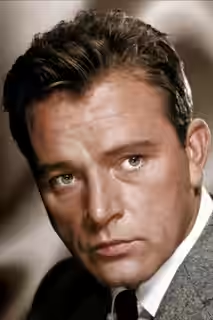
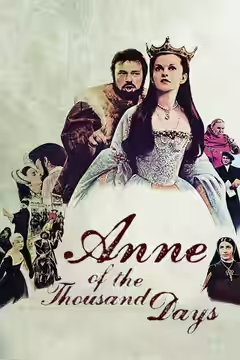
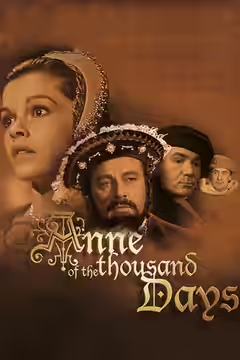
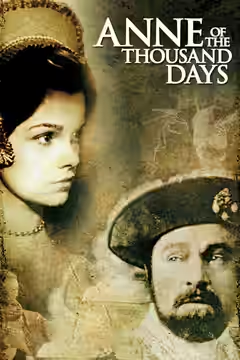
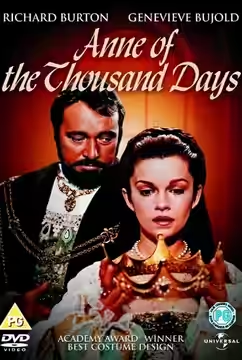
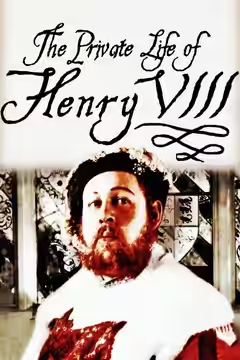
Charles Jarrott’s film, produced by Hal B. Wallis and written by John Hale and Bridget Boland from Maxwell Anderson’s play, covers the years in which King Henry VIII (Richard Burton) wanted Anne Boleyn (Geneviève Bujold), got her, and turned his kingdom upside down to do it. It runs 145 minutes and takes its time over all of them. It is a handsome, well-spoken, slow film with one performance that is a great deal better than that, and the performance is the reason to watch.
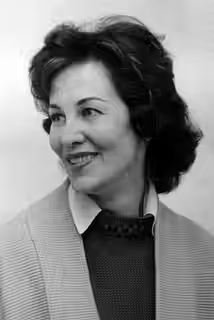
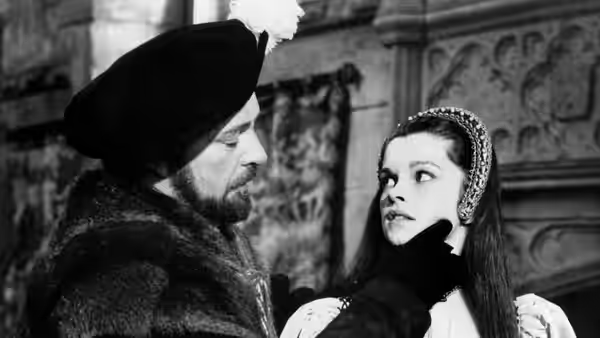
Bujold plays Anne as a clever, quick-tempered young woman who does not want the king and says so. Early on, Henry corners her and tells her what he feels, and she tells him to his face that she does not love him, does not want him, and would rather he went back to her sister. We sat up. In a film that mostly asks to be admired, here at last was someone who wanted something and was prepared to be rude about it. Bujold keeps that temper going even when Anne’s wants change, when refusing the king turns into the ambition to be his queen, and she never plays it as a love story unless the script forces her.
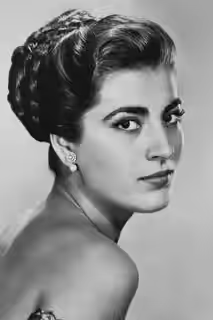
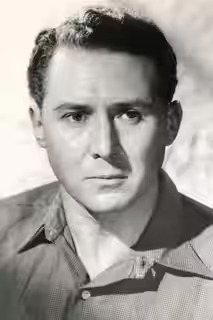
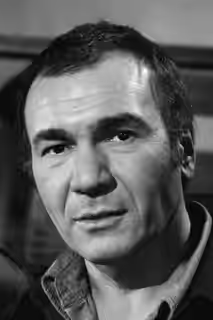
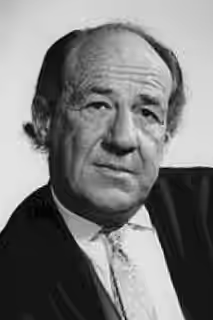
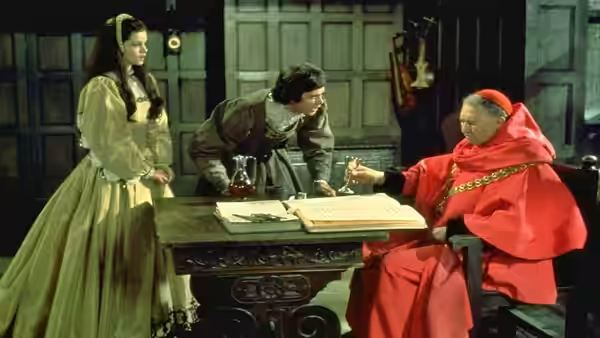
Burton plays Henry as a large, bored, dangerous man who is used to being agreed with. He roars well, and Hale and Boland give him plenty to roar, but he is better in the quiet moments, asking Anne a plain question and waiting, badly, for the answer. Irene Papas has a handful of scenes as Queen Catherine and gives each of them a stubborn dignity that makes Henry’s case look as thin as it was. Anthony Quayle’s Wolsey is a tired man sweating through his robes, and John Colicos as Cromwell stands at the edge of every room, saying little and missing nothing. Michael Hordern plays Thomas Boleyn as a father who has done the sums and does not like his daughter’s answer.
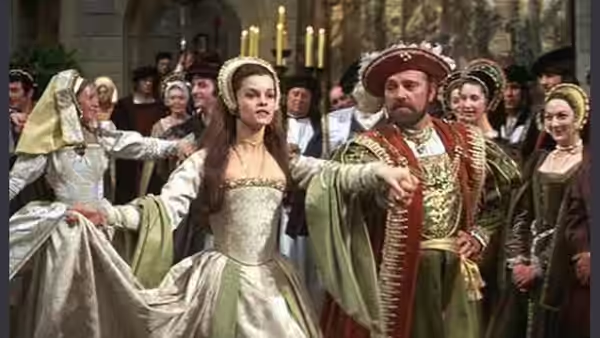
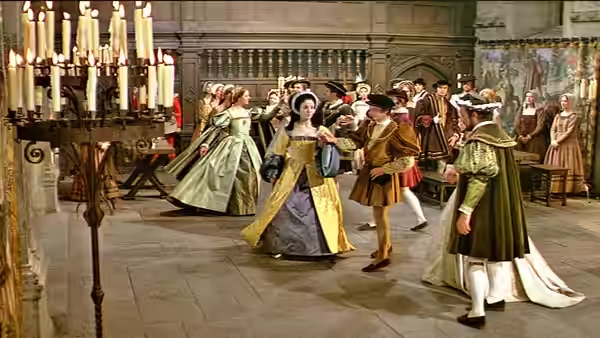
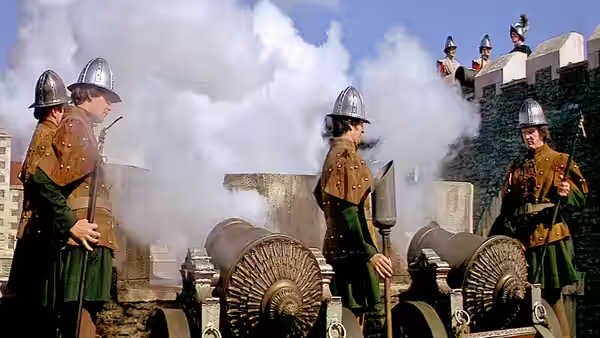
Maurice Carter’s production design gives them long stone halls, tapestries, fires, tables laid for forty. Margaret Furse dresses Henry in furs and gold and Anne in dark velvet and pearls, and the clothes are so heavy that everyone moves like a piece of furniture being shifted, which may be accurate. Arthur Ibbetson lights it all warm, candles and firelight on stone, and keeps the camera at a respectful middle distance, as if it had been let in on sufferance. Georges Delerue’s score, strings and recorders under the love scenes, does the emotional work that the staging leaves undone, and it is the second-best thing in the film.
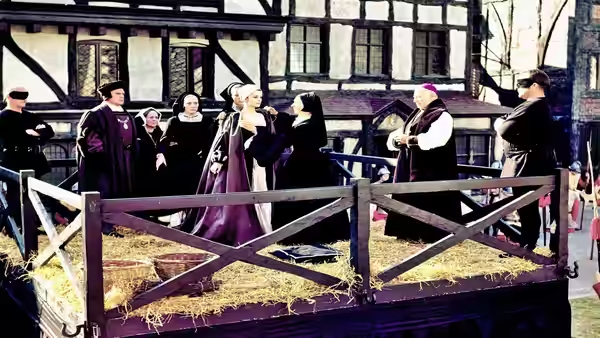
The trouble is the staging. Jarrott sets two people in a room and lets them talk, and then does it again, and Richard Marden cuts each scene to a close as if turning a page. The dialogue is good and the actors can speak it, but a film in which every scene is a conversation flattens out. The break with Rome, the fall of a chancellor, the oath put to Fisher (Joseph O’Conor) and Thomas More (William Squire): all of it arrives in the form of somebody walking in and telling us. By the middle hour we were checking how long was left, and we felt mean about it, because everyone on screen is plainly trying.
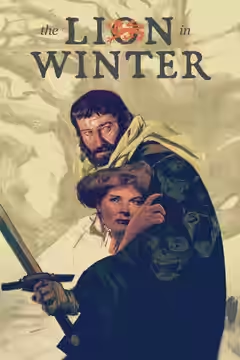
It is worth remembering what else was about. A Man for All Seasons (1966) and The Lion in Winter (1968) came from the stage too, covered nearby ground, and moved. This one stays closer to the play, to its credit as writing and its cost as cinema.
The reviews so far have been colder than we are, and we understand why, but they undersell Bujold. See it for her, and for Papas, and for Delerue. Sit somewhere comfortable; the chairs on screen look no softer than yours.