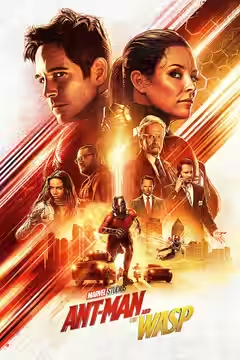
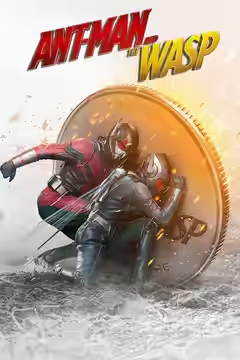
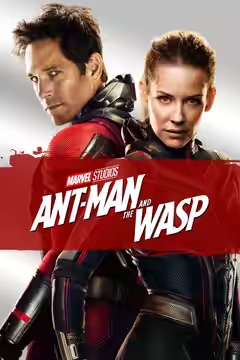
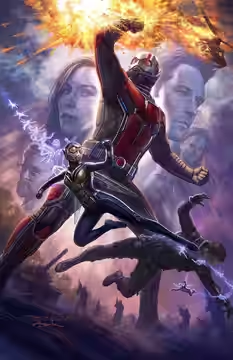
Peyton Reed’s sequel is light, quick and often funny, with Paul Rudd and Michael Peña doing most of the carrying. The plot is a three-way tug over a shrunken laboratory, and most of it had left us by the car park.
Three years after Ant-Man, Peyton Reed picks Scott Lang up where the bigger films dropped him: confined to his house in San Francisco, three days from freedom, teaching himself close-up magic. Ant-Man and the Wasp is the smallest Marvel film, and for a while that is a relief. The object everyone is chasing is a building that folds down to hand luggage, and the worst thing that can happen to the hero is a breach of his bail conditions. We enjoyed it, laughed a fair amount, and could not have told you the plot a week later.
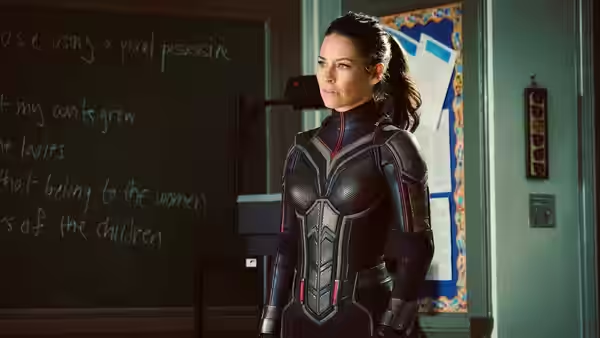
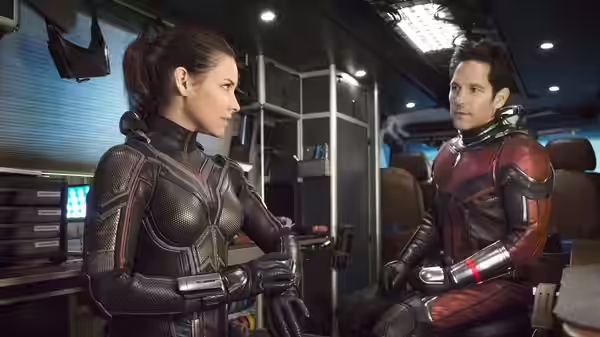
The cast is the reason to go. Paul Rudd, who shares the screenplay credit with Chris McKenna, Erik Sommers, Andrew Barrer and Gabriel Ferrari, plays Scott as a man permanently half a step behind. Evangeline Lilly gets the wings and the blasters and takes the action off his hands; her Hope is brisk, capable and faintly disappointed in everyone, and the film is right to let her lead the fights. Michael Douglas grumbles well. Michael Peña’s Luis narrates a story in his own voice while other actors mouth his words, as he did in the first film, and it is still the best joke the series has.
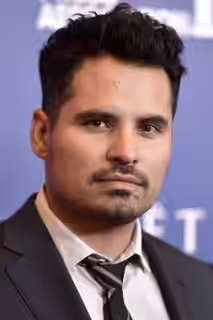
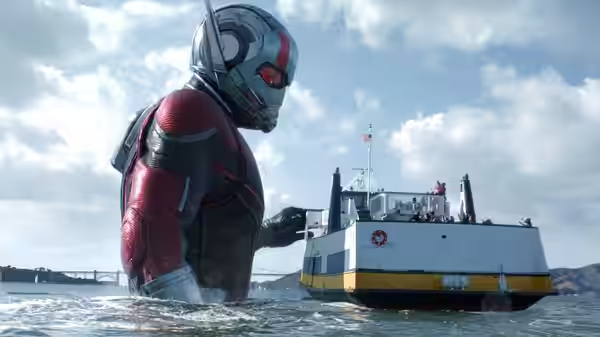
That scene, in which Luis is given a truth serum and cannot stop, had us laughing out loud. Rudd and Lilly bickering in Peña’s cadences works because everyone commits to it. The other big laugh is Scott stuck at the height of a schoolboy, shuffling through his daughter’s school in a hoodie. Reed knows the shrinking joke has only a few settings, too big, too small, wrong object, and he rings the changes patiently: a Hello Kitty Pez dispenser the size of a van, a car chase down the city’s hills in which the cars keep turning into toys.
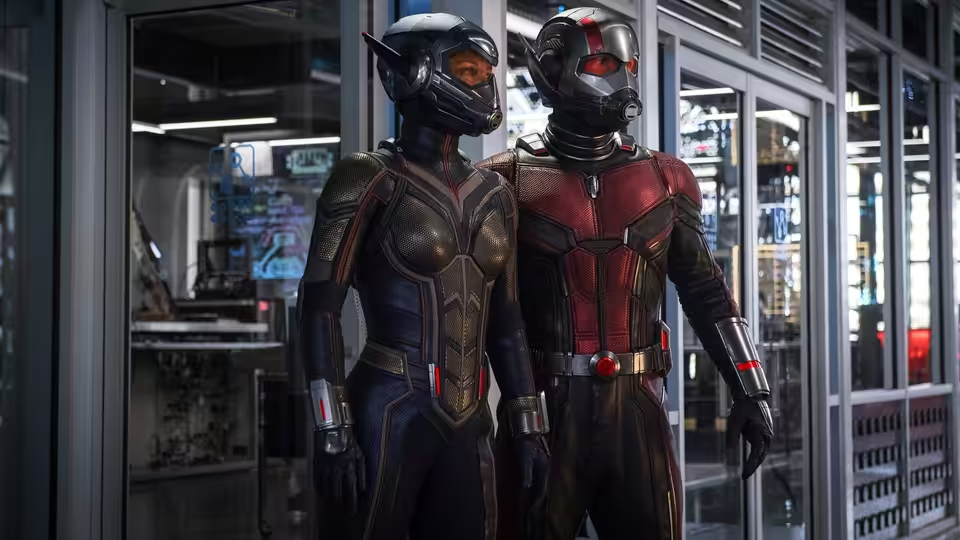
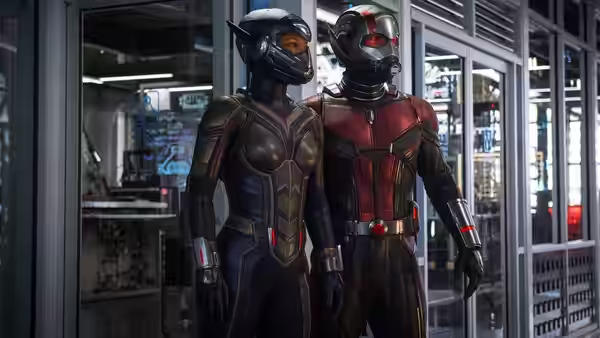
Dante Spinotti shoots San Francisco in flat, bright daylight, so it looks like the city until the effects take over. Shepherd Frankel’s laboratory is the one design idea with any wit, a whole building of brushed steel and hazard yellow that collapses to a case with a handle. Louise Frogley gives Lilly a suit that looks as if it has been through a few fights. Christophe Beck’s score is jaunty brass over the chases and soft and twinkly for the family scenes; it does its job and we could not hum a bar of it. Dan Lebental and Craig Wood cut the chases cleanly enough that you can always tell which car has just shrunk.
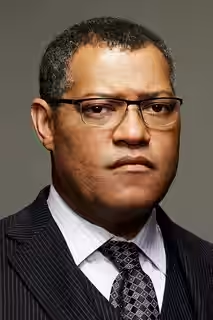
The trouble is the story: three parties passing one suitcase around for two hours. Walton Goggins’s Sonny Burch, a black-market dealer, exists to steal the lab, lose it and steal it again. Hannah John-Kamen’s Ghost is the more interesting problem. She is a woman whose body will not hold together, flinching through walls, and John-Kamen plays her with a tight, hurt physicality that makes you want the film to stop and look at her. It does not. Her history arrives as a speech from Laurence Fishburne’s Bill Foster, and the film moves on before it has decided how it feels about her. We were sorrier for her than the film seemed to expect, and then it asked us to enjoy watching her get hit.
Michelle Pfeiffer is billed sixth and is talked about far more than she is seen. Randall Park’s Jimmy Woo, the FBI man who keeps dropping round, is the one supporting player the script plainly likes. Bobby Cannavale and Judy Greer are back as the ex-wife and her husband and have almost nothing to do except be pleased.
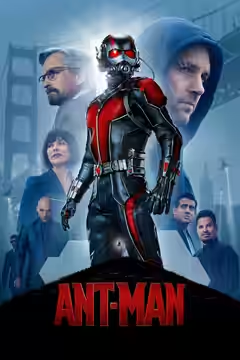
The 2015 film had a heist to organise and a man to rehabilitate, and the shrinking served both. Here the shrinking is the point and the story has been fitted round it. It is a lighter, faster, emptier film, and the Marvel entries that step away from the main storyline are usually the ones with room to be funny.
Watch it at home with someone who liked the first one and does not mind being told, twice, how the quantum tunnel works. It runs 119 minutes and carries a 12A, and the best jokes are in the middle, so put the kettle on early.