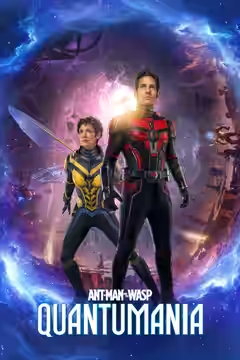
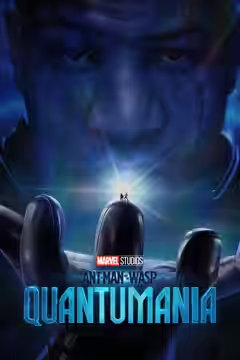
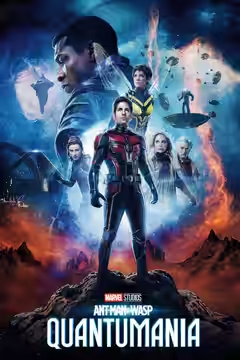
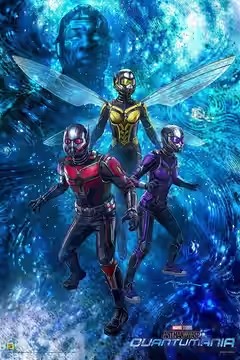
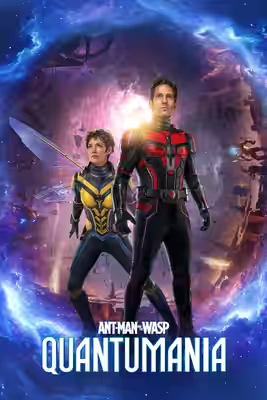
Peyton Reed’s third Ant-Man film trades heists and kitchen-table shrinking for an entire subatomic universe, and loses most of what made the series likeable on the way down. Jonathan Majors and Michelle Pfeiffer keep it from being a write-off.
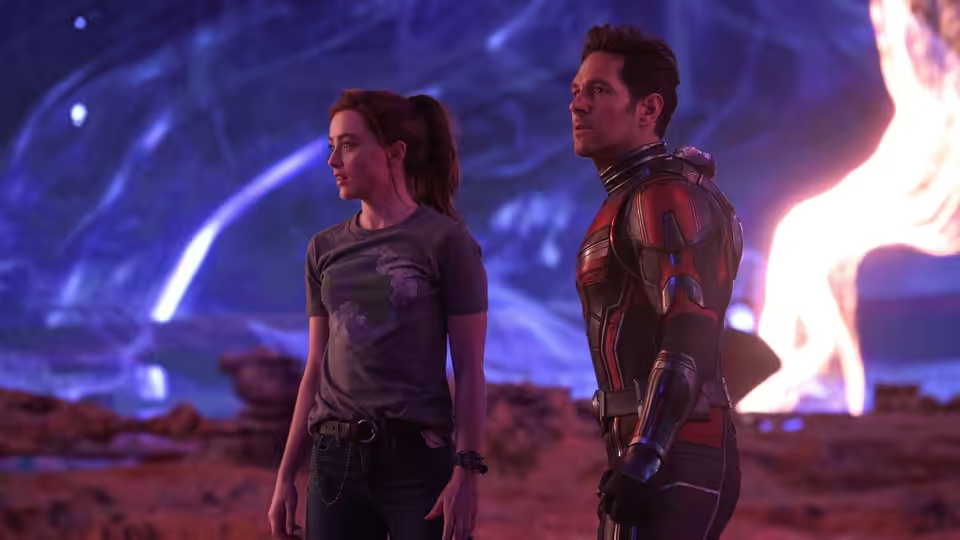
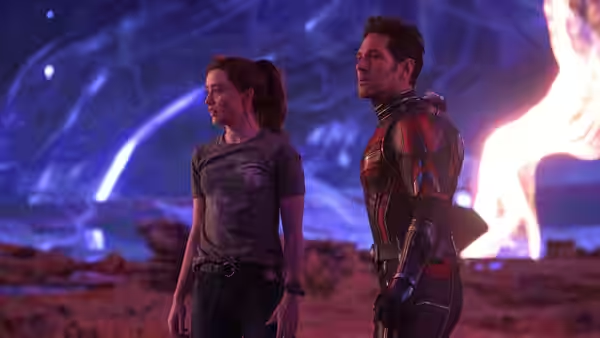
The first two Ant-Man films were the small ones. A heist, a suburban house, a fight on a toy train set. Quantumania drops Scott Lang and his family into the Quantum Realm for most of its 125 minutes and makes everything enormous: the cities, the armies, the villain, the stakes. The joke of the series was scale, and when everything on screen is already the wrong size there is no wrong size left to be. Peyton Reed has made the loudest of his three films and the least distinctive.
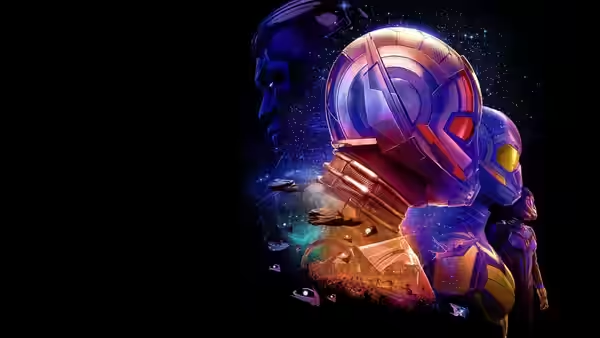
Will Htay’s Quantum Realm is not nothing. There is invention in the creatures and the places, and Sammy Sheldon’s costumes tell the locals from Kang’s forces at a glance. The trouble is that Bill Pope, who shot The Matrix, gives one place the same look as the next, and after half an hour we had lost track of where the family were. A world this strange ought to be easier to remember.
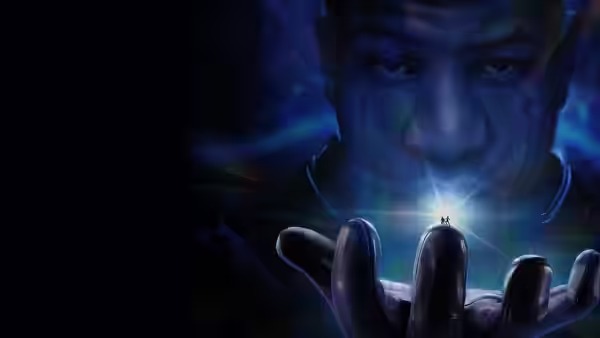
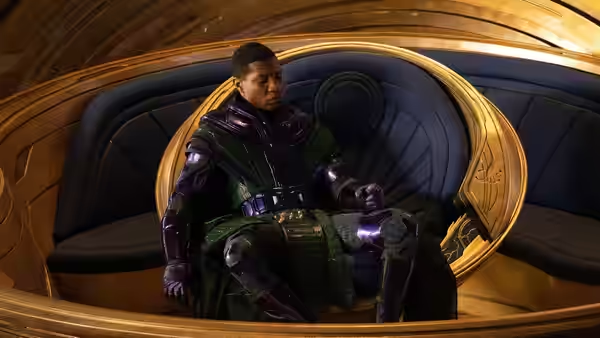
Jonathan Majors is the reason to see it. Kang is a conqueror who has run out of things to conquer, and Majors plays him tired, quiet and courteous, a man who has done all this before. He barely raises his voice. When he does, once, it lands like a door slamming in another room. His scenes with Michelle Pfeiffer are the best in the film, because Pfeiffer plays Janet as a woman who has kept a secret for years and is worn down by it; she is the only one of the family whose face changes when she looks at where they are. For perhaps fifteen minutes the two of them are in a better film.
The rest of the family fare less well. Paul Rudd has always played Scott as a decent man slightly out of his depth, and Jeff Loveness’s script gives him less to play than either earlier film did. Kathryn Newton’s Cassie is the conscience, which means she says the lesson aloud every twenty minutes or so. Evangeline Lilly’s Hope gets a suit and not much else. Michael Douglas talks to ants. The humour, once low-key and local, now arrives in set pieces: a Bill Murray cameo that plays like a favour being called in, a probability storm in which hundreds of Scotts argue with one another, a blob called Veb (voiced by David Dastmalchian) with a fascination for holes. We laughed at the blob, properly, and at little else.
Around the hour we realised we no longer cared whether anyone got home, which is an odd thing to feel about a film whose whole pitch is a family trying to get home. The reason is on screen. Adam Gerstel and Laura Jennings cut the action so that we are always inside a crowd and never sure where its edges are, and Christophe Beck and Michael Paraskevas’s score swells under everything, so a conversation about a dead world and a chase through a market carry the same weight.
Corey Stoll’s M.O.D.O.K. is meant to be both a threat and a punchline and manages neither. The last stretch is given over to what Kang will do next, which is to say to what the next several films will be about. We spent it looking for the exit, which the first two films never made us do.
Against Reed’s earlier films this is a clear step down; against the Marvel run as a whole it sits in the crowded middle. If you go, go for Majors, who does something patient and unusual with a part that could have been all shouting, and for Pfeiffer, who gives the franchise a human being to worry about. It carries a 12A. Watch it at home, where the haze is smaller and the two quiet people at the centre of it are easier to find.