Andrzej Wajda’s postwar drama is moving and occasionally overemphatic. Zbigniew Cybulski gives it the vulnerable human centre it needs, though the heavy symbolism sometimes insists on explaining what his performance has already made clear.
Andrzej Wajda’s Ashes and Diamonds is a moving war drama whose symbols sometimes get in the way of its people. We recommend it for Zbigniew Cybulski, who gives Maciek Chełmicki enough awkward humanity to resist being reduced to an illustration of Poland’s troubles. The country is emerging from war, but the film finds little reassurance in that fact. It approaches the uncertainty through drink, uneasy company and a performance that makes the political tensions feel painfully personal.
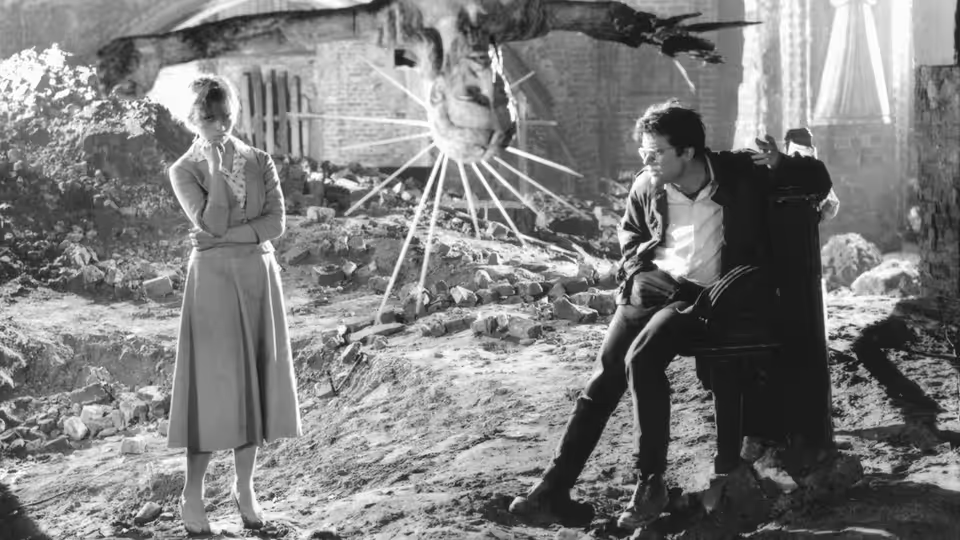
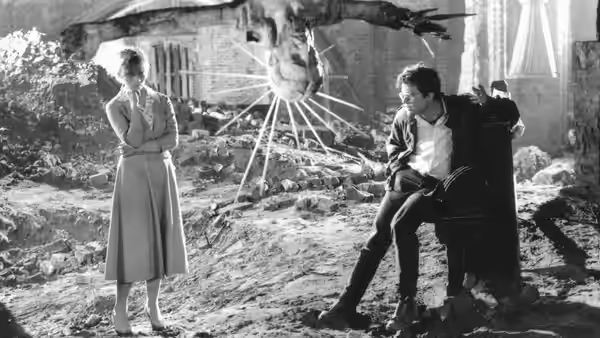
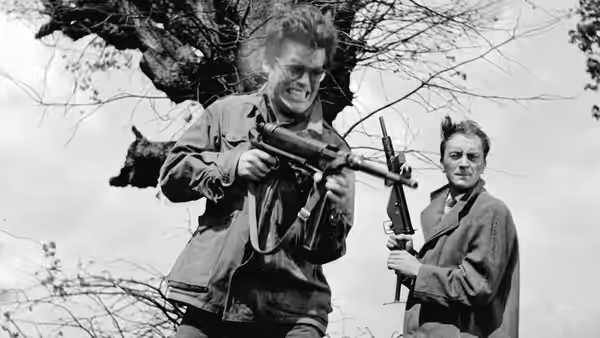
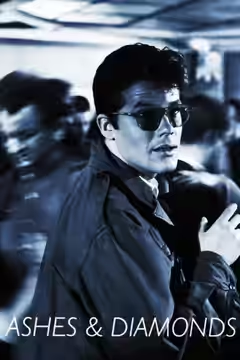
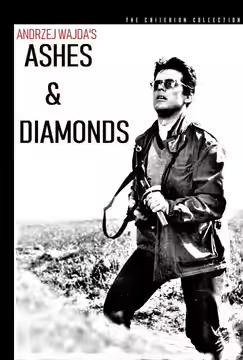
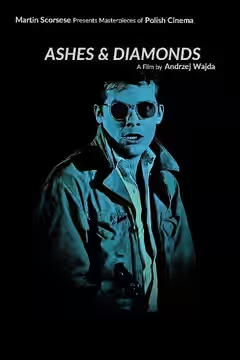
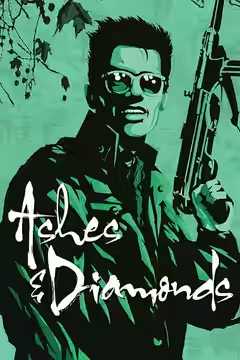
The dark glasses are the most obvious example of the film finding something tangible for its anxieties. They give us a face we cannot quite read, and the performance makes that difficulty matter: we keep trying to decide how much Maciek is concealing, even from himself. We were moved by the vulnerability Zbigniew Cybulski conveys behind those dark lenses. The glasses could have been an easy statement about youth and estrangement. He makes them feel like something this particular man needs to wear.
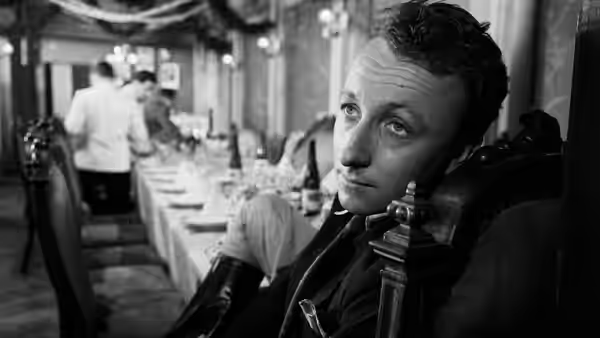
Jerzy Wójcik’s photography gives the hotel interiors a density that repays looking, even when the drama is asking us to concentrate on a face. Roman Mann’s production design helps make the hotel feel like a place where other people’s business is difficult to escape. The smoke and alcohol offer little sense of comfort; even company can feel oppressive here. These surroundings work better than some of the more insistent symbolism, because they let us feel the strain without having to identify an emblem for it.
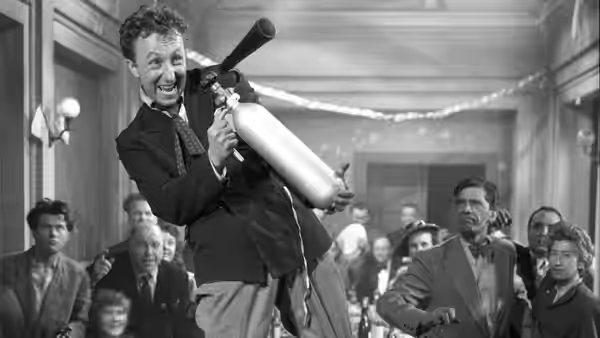
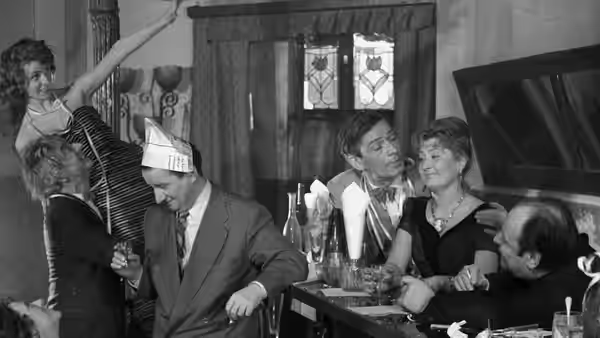
There is also room for farce, which is a relief in a film so conscious of the seriousness of its subject. The screenplay by Jerzy Andrzejewski and Andrzej Wajda allows human foolishness to interrupt the solemnity without making the uncertainty in Poland seem trivial. The drink helps: it stops this company looking like people assembled solely to explain a political position. We can recognise their weakness even when their circumstances seem remote. The humour makes the seriousness easier to bear.
Halina Nawrocka’s editing has to hold those changes of mood together, and the movement between farce and unease is generally persuasive. The difficulty comes when the expressionistic style insists that we pause to consider the significance of an image. Some of that emphasis is useful, but the accumulation can feel overbearing, particularly when the acting has already made the point. Andrzej Wajda occasionally seems reluctant to leave an image alone. A little less insistence would have helped us stay with the people.
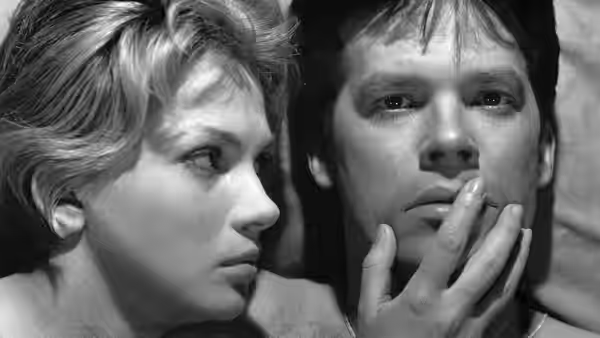
For a war drama, this is unusually interested in the awkwardness of being around other people, rather than simply the positions they hold. The romance matters for the same reason: it makes room for wants that cannot be settled by a political allegiance. At 103 minutes, the film gives these competing pressures enough space without turning into a historical survey. Its occasional overstatement is worth tolerating for the attention paid to human frailty. See it for Zbigniew Cybulski, and be prepared to forgive a few heavily underlined images.