Penny Marshall’s medical drama is worth an evening for Robert De Niro and Robin Williams, who make its concern for the patients convincing. The script and score could afford to press less hard.
Awakenings is a moving drama with a persistent habit of telling us how moved we ought to be. Penny Marshall approaches the treatment of post-encephalitic patients with tenderness, asking us to consider how much of a person can remain beyond anyone else’s reach. Steven Zaillian’s screenplay, drawn from Oliver Sacks’s work, makes a complicated medical subject accessible without burying us in explanations. It also makes the emotional questions rather tidier than we would like, particularly when illness becomes an invitation to appreciate ordinary life.
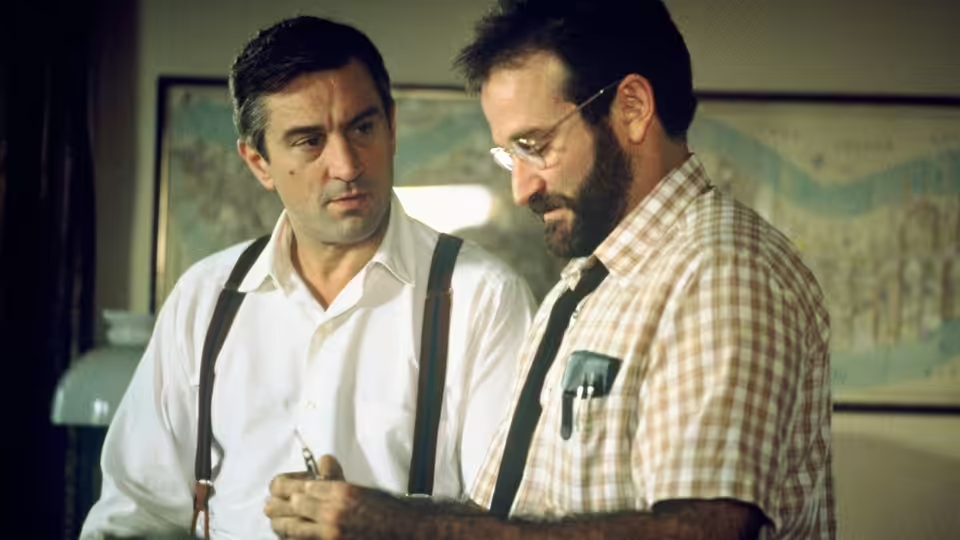
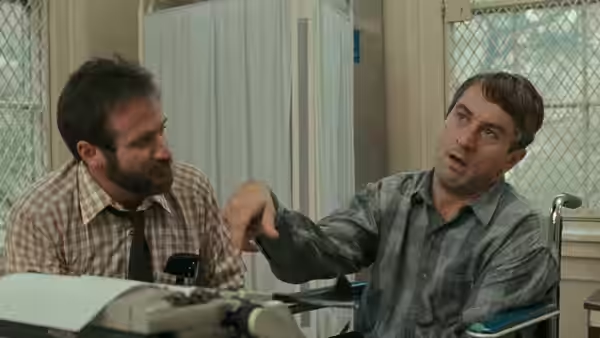
Robin Williams plays Malcolm Sayer with a reserve that makes his attention to other people matter. He allows uncertainty to remain visible, so the doctor’s concern does not feel like something the screenplay has simply instructed us to accept. We were moved by the awkward care he brings to his exchanges with De Niro, because he makes the effort of understanding another person seem difficult and worth continuing. Williams gives Sayer enough hesitancy to suggest that his own good intentions are not always much help to him.
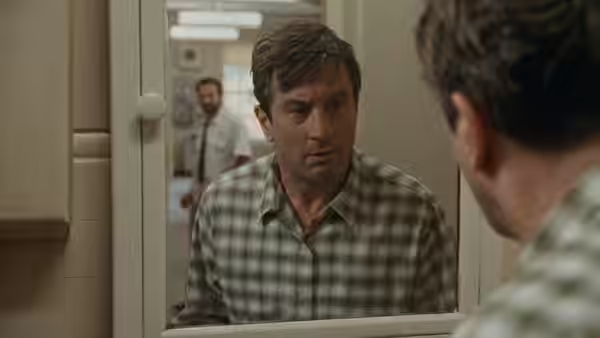
Robert De Niro’s Leonard Lowe is the more visibly demanding part, with its considerable burden of physical expression. There is a risk that we will spend our time assessing the actor’s technique, and occasionally the effort does draw attention to itself. But De Niro keeps Leonard’s individuality clear enough that we want to know about him beyond his medical condition. His performance gives Marshall’s concern for the patients substance, especially when Zaillian’s writing seems ready to settle for a general declaration about the value of being alive.
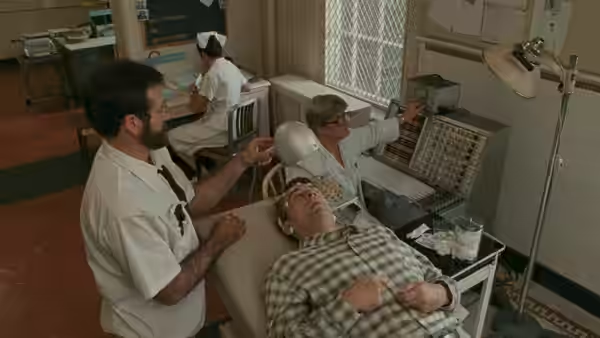
Miroslav Ondříček’s cinematography makes the small changes in the actors’ faces count, supporting performances that need our close attention. Anton Furst’s production design gives the clinical setting a solidity that helps the medical work feel credible. We appreciate how little either contribution competes with the people we are watching. Marshall’s direction is strongest in this quieter approach, allowing an actor’s uncertainty to hold our attention without immediately resolving it into something comforting.
Editors Gerald B. Greenberg and Battle Davis keep the medical story intelligible, though the pacing leaves too little room to sit with its difficulties. The film moves so neatly between emotional points that we begin to notice how carefully our responses have been anticipated. Randy Newman’s score compounds the problem by insisting on tenderness already present in the acting. We wanted it to quieten down and leave Williams and De Niro to finish the job, particularly when their restraint was doing enough.
Most critics disagree with us, judging the sentimentality more damaging than we do. We share their irritation at being prompted, but think they undervalue what the central performances achieve. Medical dramas can reduce patients to problems for a gifted doctor to solve, and Marshall does not entirely escape that habit. Yet De Niro gives Leonard enough individual presence, and Williams makes Sayer sufficiently uncertain, for their relationship to remain interesting beyond the question of whether a treatment works.
The script’s simplifications will frustrate anyone hoping for a more searching account of medicine and responsibility. For an evening built around two careful performances, though, we recommend it. Marshall gives those actors enough space to make the concern for her patients believable, even when she cannot resist helping them along. Bring tissues, and allow for the occasional sigh at the score.