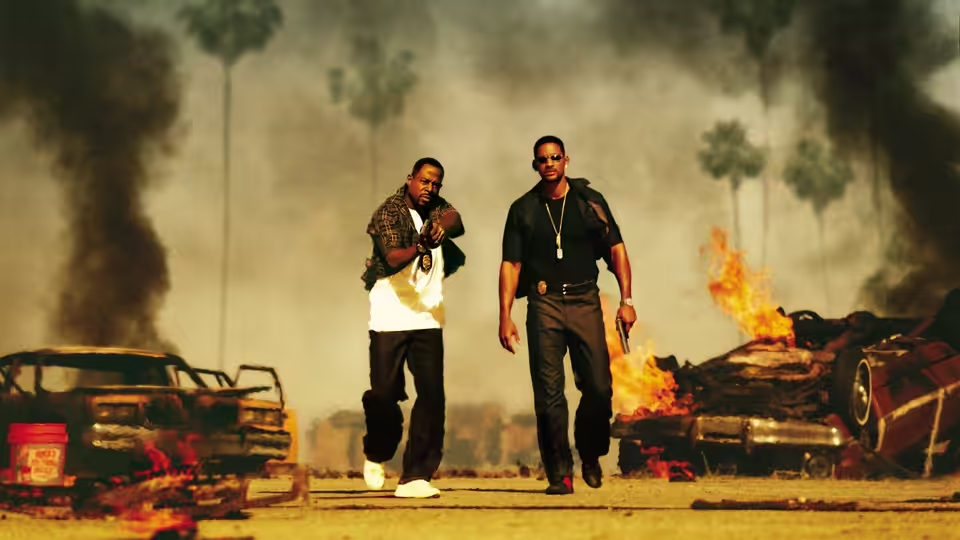
Michael Bay’s sequel has a fine highway chase and far too little reason to run for 146 minutes. Will Smith and Martin Lawrence supply a few decent wisecracks, but the repetitive destruction makes this a wearying evening.
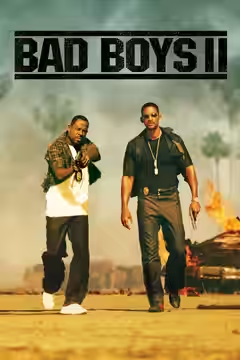
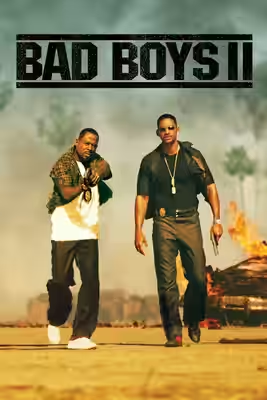
Bad Boys II is a poor buddy-cop sequel with enough skill in its action to make the rest more irritating. Michael Bay wants the pleasure of fast cars, violent collisions and two detectives who can talk over the commotion, and there is nothing inherently wrong with that. But at 146 minutes, the film keeps demanding fresh excitement from much the same combination of destruction and wisecracks. The detectives need time to become interesting company, and the script struggles to give them anything beyond another argument.
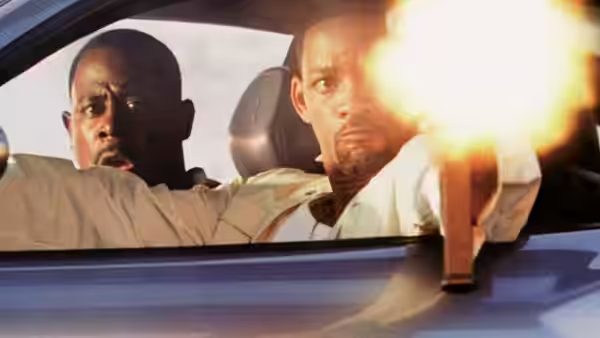
The first Miami highway chase shows what the director can do when movement is the main attraction. We were thrilled by it, because the stunts and the camera’s restless movement make the road itself feel unsafe. Cinematographer Amir Mokri gives the action considerable force, although the swirling camerawork becomes tiring when applied so persistently. The chase earns its length more convincingly than the film around it, and deserves credit even from viewers who have little patience for the rest.
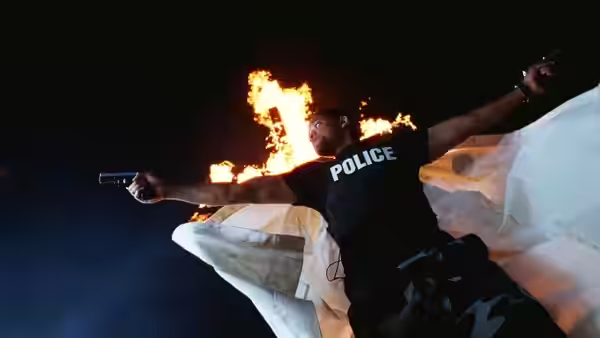
Editors Tom Muldoon, Mark Goldblatt and Roger Barton cut rapidly, but the film still feels slow because its action scenes repeat their effects. There is little time to register a stunt before another demand is made on our attention. After a while, another chase means waiting for the film to return to its detectives, and another conversation means waiting for the action to resume. We were bored by that alternation, particularly once the destruction stopped making the thin story feel any more urgent.
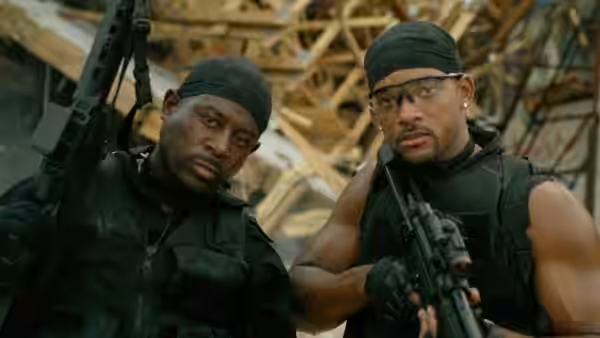
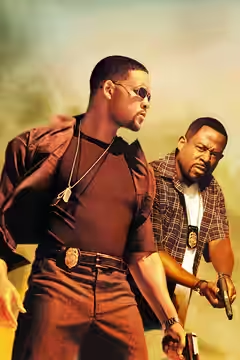
Will Smith’s Detective Mike Lowrey and Martin Lawrence’s Detective Marcus Burnett have some decent wisecracks, and the performers understand how to put them across. Those exchanges are welcome because they briefly give us something to follow besides movement. The screenplay by Jerry Stahl and Ron Shelton does too little to make the pair interesting beyond their next remark, while the juvenile humour soon becomes wearing. In a buddy-cop comedy, the company should be a reason to stay between action scenes; here, the dialogue often makes the wait harder.
The noisy action gives Trevor Rabin’s music little room to change the mood. The score cannot make repeated destruction feel fresh, though that is a great deal to ask of a composer. Dominic Watkins’s production design fares similarly: the places matter chiefly as things that can be damaged. After the first highway chase, the film gives us few reasons to care where the detectives go next, provided there is something there to wreck.
The nastier humour is a further problem, particularly the homophobia and misogyny. Neither makes the detectives more interesting, and both make it harder to enjoy their company when the shooting stops. The film is also too pleased with its violence to give the damage much human weight. These choices make the weak dialogue harder to forgive, even allowing for the broad and abrasive comedy being attempted.
Measured against the buddy-cop film’s modest requirements, this is an exhausting way to spend time with two stars who can be amusing together. A shorter version might have preserved that pleasure, rather than repeatedly testing how long it can survive without better material. Even viewers who mainly want cars wrecked may find 146 minutes more than they bargained for.