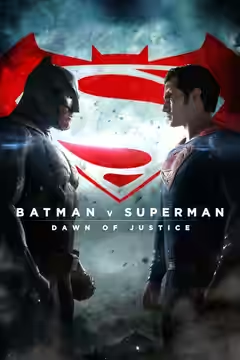
Ben Affleck’s bruised, brutal Batman and ten good minutes of Gal Gadot give Zack Snyder’s 152-minute collision a spine it never uses. The script runs four stories and several dreams at once, and the climax is a computer-made brawl in the dark.
Zack Snyder’s Batman v Superman: Dawn of Justice runs 152 minutes, and the best ten of them come first. Bruce Wayne (Ben Affleck) drives into Metropolis while the battle from Man of Steel is still overhead, gets out of his car and runs towards the dust, and the Wayne Financial tower comes down in front of him. Larry Fong shoots it from the pavement and David Brenner cuts it without a slow-motion flourish. For once Snyder shows us what his cities cost from the ground, and the film has a grievance it then spends two hours failing to build on.
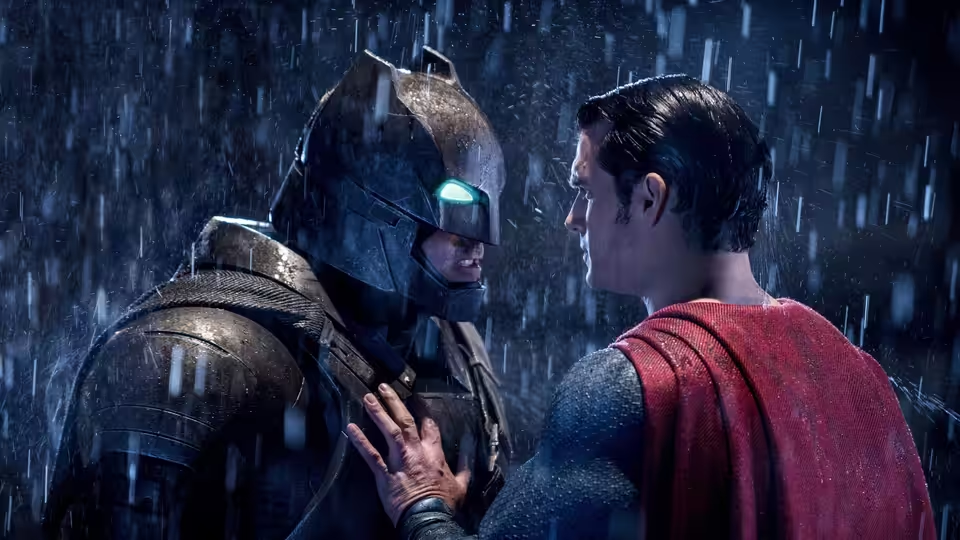
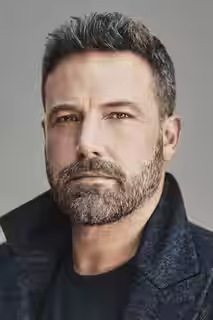
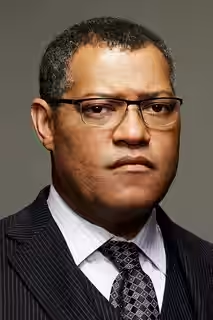
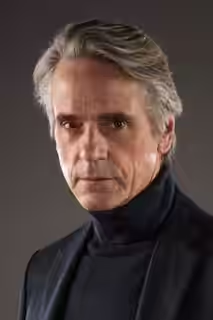
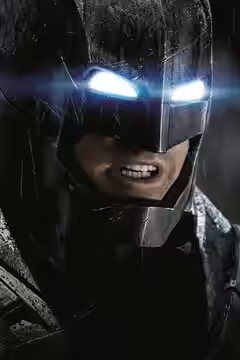
Affleck is the reason to stay. His Bruce Wayne is heavy, grey at the temples and openly cruel; he brands the criminals he catches. Jeremy Irons plays Alfred as a mechanic who has stopped pretending to approve, and their scenes in the glass lake house are the only ones where two people talk like adults. Michael Wilkinson gives Batman a bulky, plated suit and Affleck moves in it like a man who has been hit a great deal. One warehouse fight is cut by Brenner as a single readable brawl, the cleanest hand-to-hand action the character has been given on screen.
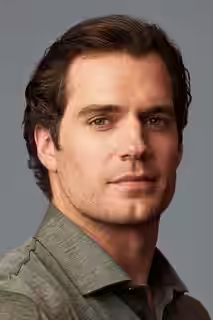
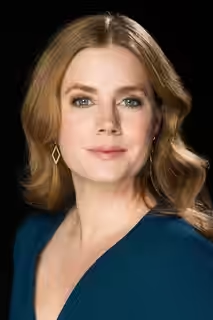
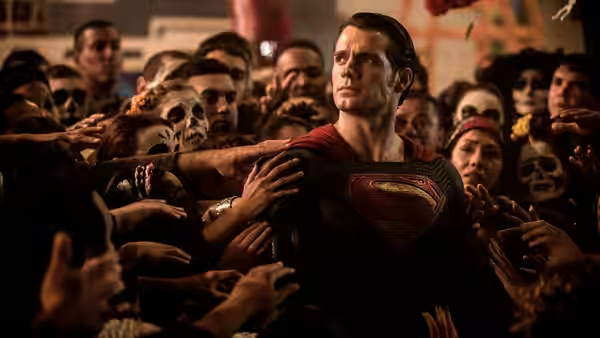
The Superman half is thinner. Chris Terrio and David S. Goyer’s script gives Clark Kent (Henry Cavill) a fair question, put to him by Senator Finch (Holly Hunter) at a hearing: who asked him to do this, and to whom does he answer? Cavill can play the doubt but is handed almost no lines to play it with, and Lois (Amy Adams) spends the film carrying a bullet from one expert to another. Hunter is dry and good and gone too soon.
Then there is Lex Luthor. Jesse Eisenberg plays him as a tech founder mid-breakdown, all tics and unfinished sentences, and he seems to be in a different, sillier film. We can see the argument: the one man in the picture who is not grieving should be unbearable. But every line is a riff, and by the end we wanted him to finish a thought. He is not frightening, and the plot needs him to be.
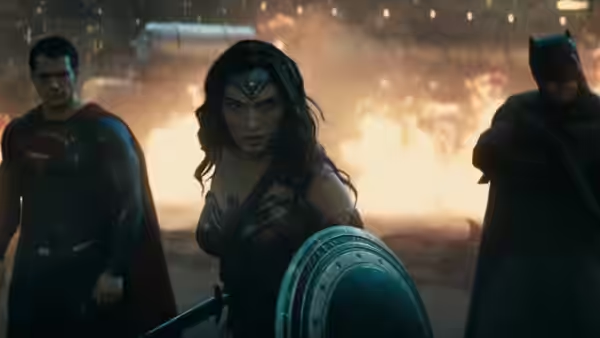
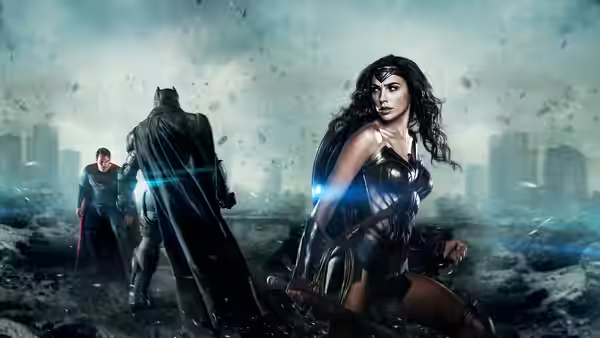
Structure is where it comes apart. The script runs a Batman story, a Superman story, a Luthor story and Diana Prince (Gal Gadot) at the edges of all three, and Brenner cuts between them so often that none breathes. Bruce keeps falling into dreams: a desert under a black sky, winged creatures, soldiers wearing his own insignia. They are handsome, mean nothing to anyone who has not read the studio’s plans, and we sat through them bored, then irritated at being set homework for films that did not yet exist. Gadot is a pleasure whenever she is on screen, and when Junkie XL and Hans Zimmer hand her a snarling electric riff the film wakes up for the length of the shot.
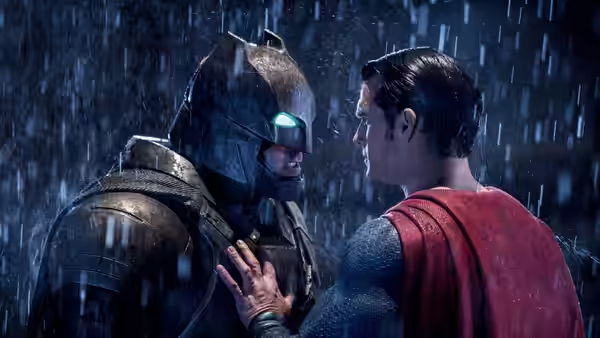
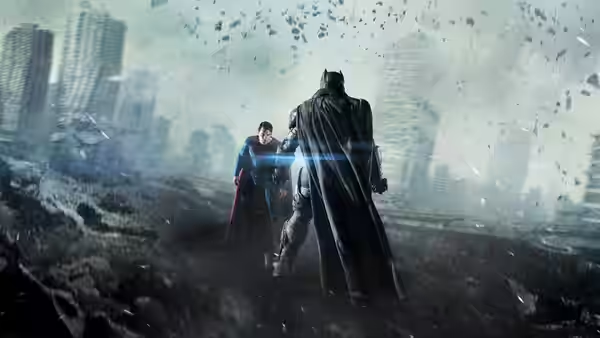
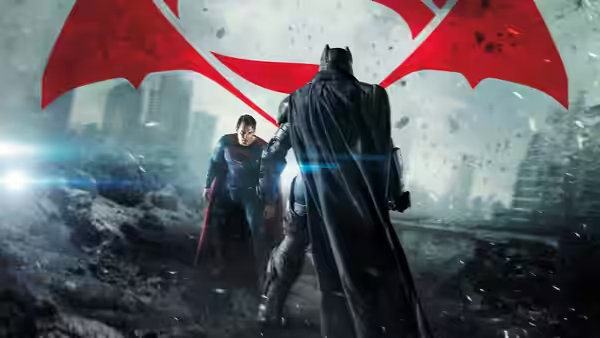
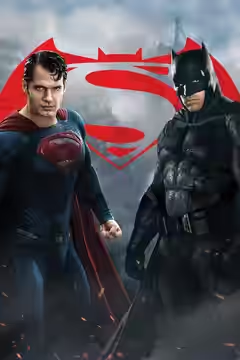
The fight in the title arrives late, lasts a few minutes and rests on reasons the script has assembled rather than earned. What follows we will not describe, except that the film stops being about two men and becomes a grey computer-generated brawl in a floodlit ruin, Fong’s greens and greys turning to mud and Patrick Tatopoulos’s wrecked Gotham buried under more wreckage. The last forty minutes are loud, dim and long.
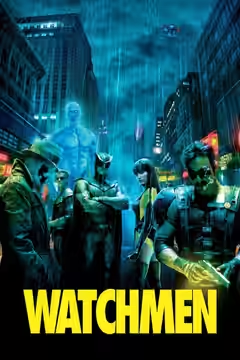
Snyder’s Watchmen was also long, solemn and about what a mask does to the person wearing it, and it worked because Alan Moore had done the thinking first. Here the thinking has been split between two writers and a franchise plan, and what reaches the screen is a set of good images without a story to hold them. Most critics were harder on it than we are, and we understand why: it has no jokes and its heroes kill. But Affleck and Gadot deserved better from the reception as well as the script.
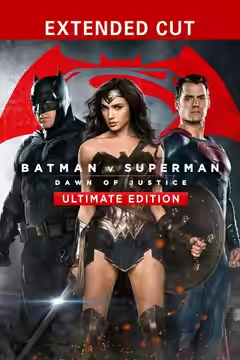
Watch it for the first hour, for Affleck and Irons, and for the moments Gadot is allowed into it. The 12A is right; there is a great deal of death and almost no blood. A longer cut exists; at 152 minutes this one feels like two films stapled together.