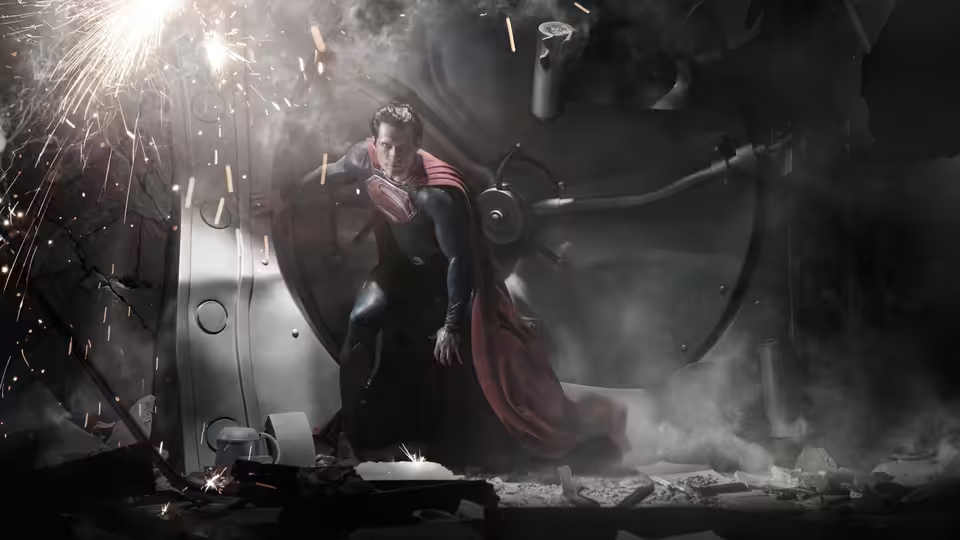
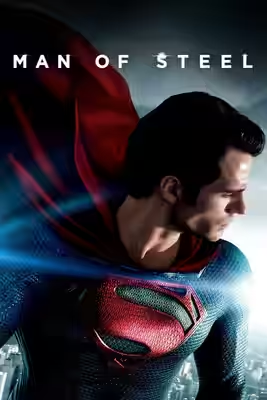
Zack Snyder’s Superman is grave, handsome and far too loud. The Krypton prologue and Kevin Costner’s Kansas scenes are the real thing; the final hour flattens a city and most of our goodwill with it.
Zack Snyder has set out to make a Superman film nobody could call light. Christopher Nolan produces and shares the story credit with the screenwriter David S. Goyer, and the plan is plain: treat the arrival of a man from another planet as something that would frighten us, and treat the man as someone taught from childhood to hide. For an hour it works, often better than we expected. Then the fighting starts, and by the end of the 143 minutes we had been worn down to indifference by a film that had earlier made us care.
Alex McDowell’s Krypton is the best thing in it, a world of sediment and bone, with ships that look grown rather than built and consoles on which beads of liquid metal rise and arrange themselves into moving pictures. Russell Crowe’s Jor-El rides a four-winged animal through a civil war. Ayelet Zurer, as Lara, has a few minutes and spends them on the right thing, a mother’s face as the capsule goes up. Michael Shannon’s General Zod arrives already at full volume, and on Krypton, with the ground coming apart, the volume is earned.
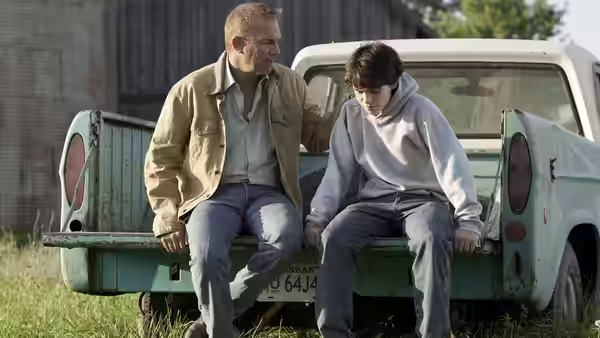
David Brenner cuts Clark’s childhood into his drifting adult years as memory, so that a burning oil rig is interrupted by Kansas. Young Clark locks himself in a school cupboard because he can hear every heartbeat in the building, and Diane Lane’s Martha sits on the other side of the door and tells him to make the world small. That scene moved us more than we thought a film of this size would manage; the boy is frightened of his own ears. Kevin Costner’s Jonathan, asked whether the son who has just lifted a school bus out of a river should have let the children drown, says ‘maybe’, and it is the one honest moral question the film asks. Costner plays the whole part at that pitch, a decent man not sure he is right.
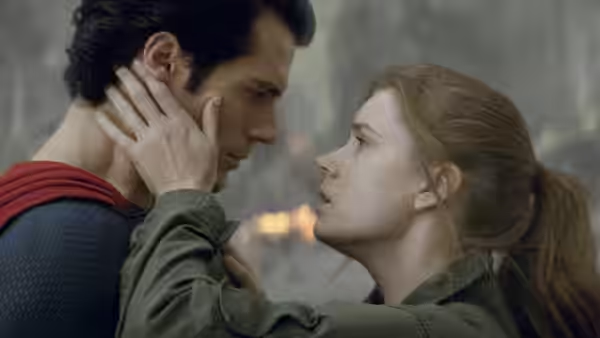
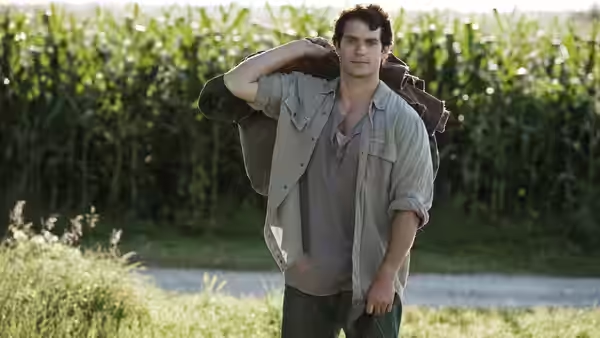
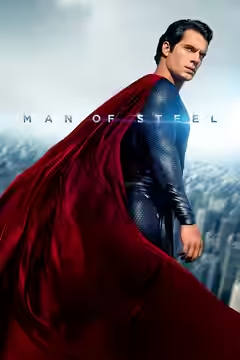
Henry Cavill has the build and, more usefully, the stillness. He says little, quietly, and is good at looking like a man who does not know what he is for. Amy Adams’s Lois Lane is a working reporter for the first hour, following footprints across the ice and tracking a stranger through small-town rumour, with a brisk, amused competence. Then the plot needs her in a particular place and she is put there, several times. Laurence Fishburne’s Perry White has a desk.
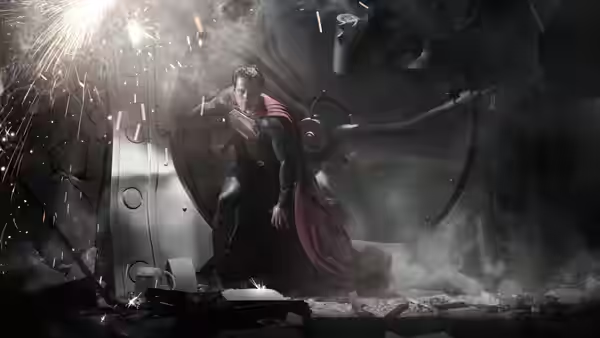
The last hour is the trouble. Zod’s people come down in Smallville and the fight goes through a petrol station and the main street, then moves to Metropolis, where buildings come down for the better part of half an hour. Amir Mokri shoots it handheld, with snap zooms and flare, as if a news crew were chasing gods; impressive for ten minutes, exhausting after twenty. Hans Zimmer’s score has a bank of drummers and a rising piano figure that is the warmest thing in the film; in the fights the drums become one more thing hitting us. Somewhere around the fourth office block we noticed we had stopped feeling anything, and then we were angry about it, because the first hour had been so careful about one boy and the second so careless about a city.
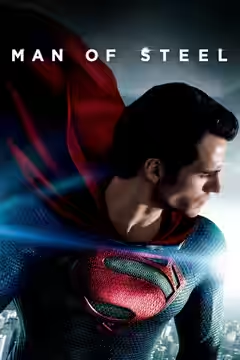
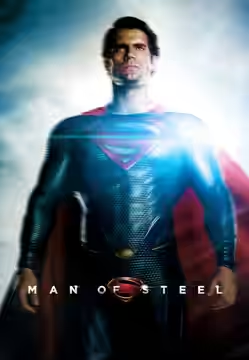
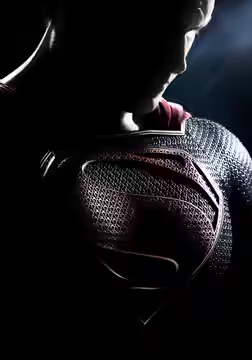
Shannon has one setting, and after Krypton it is the wrong one. Antje Traue’s Faora-Ul is the better enemy, a soldier who fights with economy and seems to enjoy it. Michael Wilkinson and James Acheson have remade the suit as something woven and dark, with the red trunks gone, and it looks better the longer it is worn.
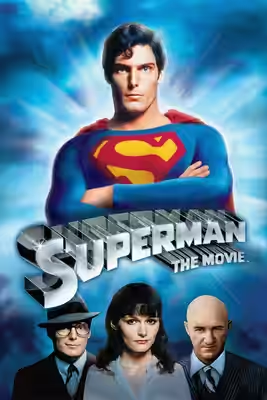
Richard Donner’s Superman (1978) had its hero catch a falling helicopter and a crowd cheer, and it understood why the cheer mattered. Here Superman catches almost nobody for the length of the Metropolis fight, and the film does not notice. The final minutes make a decision about who this Superman is that we will not describe. See the first hour with the lights down and the sound up; what follows is a long, loud demonstration of what the money bought. It runs 143 minutes and carries a 12A, which seems generous for a film in which a city comes down.