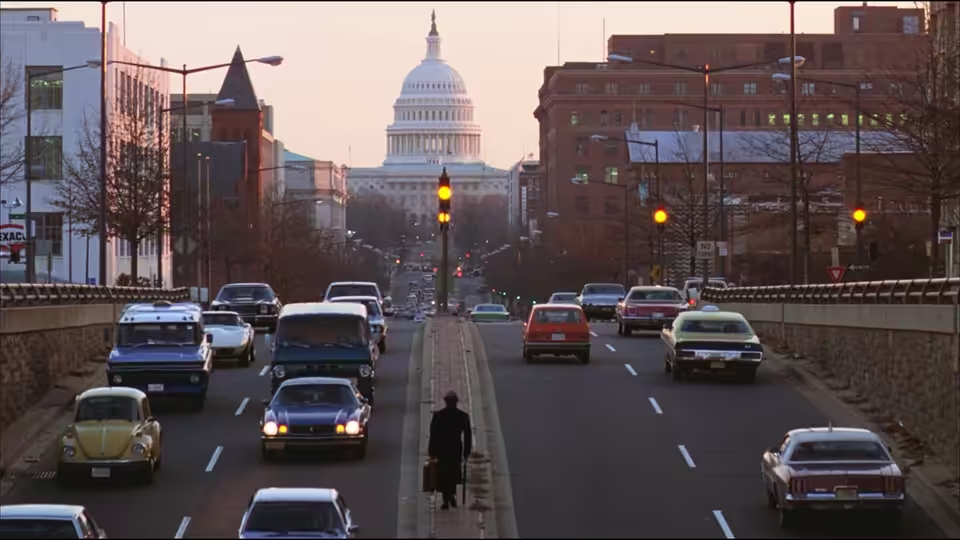
a pedestrian crossing a busy multi-lane road with traffic and the Capitol behind
Film review

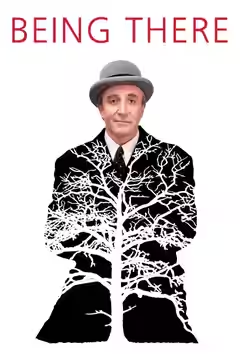
Being There

1979 · Directed by Hal Ashby · 2h 10m

In a sentenceA gardener talks about plants, and Washington decides he cannot possibly mean plants

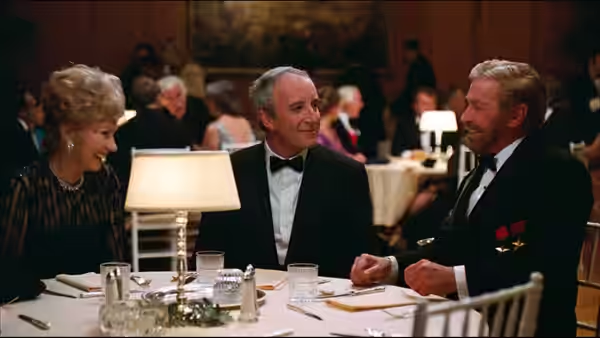
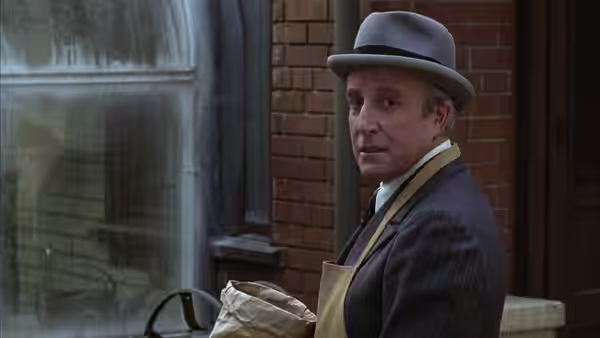
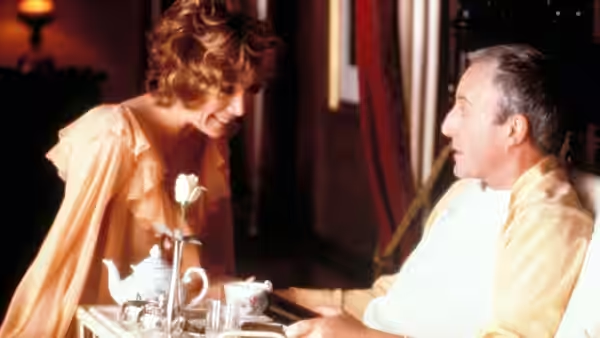
Chance (Peter Sellers) is a gardener who learns about the wider world from television. In Washington, his plain observations about plants are mistaken for statements about politics. Eve Rand (Shirley MacLaine) and Benjamin Rand (Melvyn Douglas) are among the people he encounters as he enters the company of the influential. Chance sticks to what he knows, but the people listening keep hearing something else. His limited experience does not stop them treating him as a sage. While he speaks literally, his new acquaintances look for meanings he has never put into his words.

Plays from YouTube when you press play; nothing loads from them until then.

Fi1m review

Peter Sellers is quietly funny as a gardener mistaken for a political thinker. Hal Ashby’s patient satire sometimes repeats itself, but its warmth and carefully judged performances make it worth the pauses.

Hal Ashby’s Being There is a patient, funny satire about how eagerly important people will supply the wisdom they want to hear. We recommend it warmly, with a warning that its central joke occasionally takes longer than it needs. Chance, played by Peter Sellers, is a gardener whose ordinary observations are received as political wisdom. The comedy gives his listeners plenty of time to explain what they believe he means, while we know he means nothing of the sort.

Peter Sellers keeps Chance’s manner so level that there is no reassuring nudge to tell us when to laugh. He never lets us think Chance knows more than he is saying. We laughed at the solemn attention paid to his gardening remarks, then felt uncomfortable about how readily everyone accepted them. The performance offers no suggestion that Chance is secretly enjoying a successful fraud, which leaves the people listening responsible for their own mistakes.

Jerzy Kosiński’s screenplay depends on Chance’s remarks being plain enough for us to understand why he says them, yet broad enough for somebody else to hear reassurance. That can sound like a mechanical way of writing comedy, and occasionally it is. Much of the pleasure comes from the courtesy with which these people listen, interpret and convince themselves. Hal Ashby gives their certainty room to become funny without having anyone announce the joke or explain it afterwards.

Caleb Deschanel’s cinematography feels suitably formal, and Michael D. Haller’s production design gives the powerful a convincing air of settled importance. Chance looks sufficiently at home for us to understand why his listeners might not question him. Don Zimmerman’s editing leaves space for a remark to sit, be considered and acquire an importance it does not deserve. The unhurried presentation helps us believe in these encounters, even when the conclusions drawn from them are ridiculous.

Shirley MacLaine, as Eve Rand, supplies warmth without making the film demand affection for everybody in it. Melvyn Douglas gives Benjamin Rand enough feeling for his interest in Chance to register as something more than a set-up for another misunderstanding. Their performances matter because the central role is deliberately so restricted; other people must provide the emotional changes that Chance cannot. Johnny Mandel’s music suits that gentler approach, supporting the tenderness without insisting that we find the gardener adorable.

At 130 minutes, the film does not always find enough new possibilities in its premise. Once a listener has confidently misunderstood Chance, the next listener has to do more than repeat the error with greater consequences. Some exchanges leave us ahead of the characters for too long, waiting for another variation on a joke we have already enjoyed. A little more resistance from the people accepting him might have sharpened these stretches without requiring the film to become louder or crueller.

Even then, the care taken with Chance keeps the laughter from settling into an easy mockery of his limitations. Political satire can become tiresome when it offers nothing beyond the satisfaction of feeling cleverer than everybody on screen. Here, the supporting performances complicate that satisfaction, particularly when somebody’s interest in Chance begins to feel affectionate. Watch it with someone who is happy to let a silence run.
Critical consensus AI synthesised

86
Positive
11
Mixed
0
Negative
0

The reviews are uniformly positive, with praise clustering around Peter Sellers’ tightly controlled performance as Chance, the gardener whose ordinary observations are mistaken for political wisdom. Most critics admire how little Sellers does to make the misunderstanding convincing. Hal Ashby’s muted direction is another point of agreement: the measured pace gives the comedy time to work and allows poignancy into the satire. Several reviews also single out Melvyn Douglas, while the targets of public credulity and empty rhetoric draw consistent appreciation.

The differences concern the strength of that praise rather than any outright rejection. The New York Times calls the premise fragile even while admiring the acting and unhurried handling. Slant Magazine finds blunt edges in the satire, tempered by Ashby’s bemused approach. Enthusiasm ranges from measured approval to wholehearted admiration, with no negative verdict among these eleven reviews.

Radio Times
★★★★★ · Calum Baker
100

Peter Sellers delivers a masterful, stripped-back performance as the simple gardener Chance in this memorable satire, the last of his films released in his lifetime. Hal Ashby maintains a muted tone throughout that highlights the poignant elements in the story of a man mistaken for a political sage by Washington elites.

Read the full review →
RogerEbert.com
1 January 1980 · ★★★★/4 · Roger Ebert
100

The film pulls off its risky one-joke premise with confidence and is one of the most provocative movies of the year. It features Peter Sellers in a narrow, perfectly controlled performance as the simple gardener whose truisms are mistaken for wisdom.

Read the full review →
Little White Lies
8 September 2016 · Adam Woodward
90*

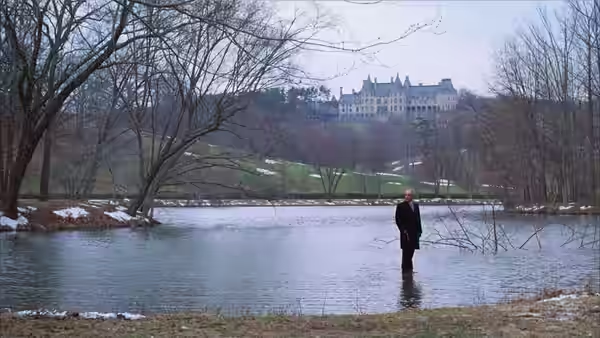
Sellers is at his understated best as the simple-minded gardener Chance in Ashby’s elegantly understated black comedy, his final film released while alive. The haunting closing long-take of Chance walking on water stands out as a powerful image of illusion, interpretation and the idea that life is a state of mind.

Read the full review →
The Hollywood Reporter
19 December 2016 · Ron Pennington
90*

Jerzy Kosinski’s delightful parable elevates the film into one of the most charming pictures of the year. Hal Ashby’s direction perfectly realizes the offbeat humor and gentle satire, with Sellers delivering his best performance as the childlike Chance.

Read the full review →
Variety
31 December 1978
90*

This is a highly unusual and unusually fine film, a faithful but imaginative adaptation that marks a significant achievement for Hal Ashby and Peter Sellers' most smashing work in years. Sellers' performance is the centerpiece, supported by subtle work from Shirley MacLaine and a spectacular turn by Melvyn Douglas.

Read the full review →
The New Yorker
7 January 1980 · Roger Angell
85*

Peter Sellers has the penetrating vacuity exactly right in this film about a moronic gardener who rises through misapprehensions to advise the powerful. Hal Ashby's direction makes the movie deeper and classier than the source novel, aided by a spectacular Melvyn Douglas performance.

Read the full review →

Straight answers AI written, from our review

Is Being There worth watching?
Being There is worth watching for anyone who enjoys patient satire, and we scored it 84. Peter Sellers keeps the gardener so level that the laughs come from the powerful people explaining what he must mean, though at 130 minutes the joke sometimes repeats itself. Watch it with someone happy to let a silence run.

How long is Being There, and what is it rated?
Being There runs 2h 10m. It is a comedy and drama film.
Where can I watch Being There in Poland?
Being There is not on any streaming or rental service in Poland at the moment. It is available in 16 other countries; change your country at the top of the page to see where. Availability is checked daily.
How violent or frightening is Being There, and is it suitable for children?
Being There carries a UK 12 certificate and contains nothing frightening or violent that we noted. Its comedy comes from a gardener's plain remarks about plants being taken for political wisdom, so the film is gentle rather than shocking. Younger children are more likely to be bored than upset, since the humour depends on following what adults get wrong.
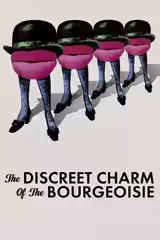
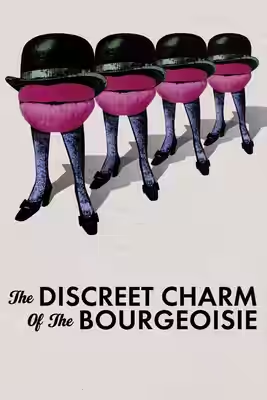
How does Being There compare to The Discreet Charm of the Bourgeoisie?
Being There is the warmer of the two films, and The Discreet Charm of the Bourgeoisie the stranger and drier. Ashby lets a gardener's remarks be mistaken for wisdom with real affection for some of the people listening, while Buñuel's interrupted dinners are colder and more absurd. Both repeat a joke longer than they need; choose Ashby for tenderness, Buñuel for unsettling composure.
Is Being There based on a true story or a book?
Being There is based on a novel by Jerzy Kosiński, not on a true story, and Kosiński also wrote the screenplay. The film follows a gardener whose literal observations about plants are received in Washington as political insight. Knowing the book is not necessary; the film explains its own joke through the people who keep mishearing him.
What should I watch after Being There?
After Being There, try The Discreet Charm of the Bourgeoisie (1972, Fi1m 83): For more composed absurdity among people who assume their status explains everything. Then Perfect Days (2023, Fi1m 83): A quieter companion, attentive to routine and a man others might overlook.

Cast

Awards

Academy Awards, 1980

Nominated
Best Actor
Won
Best Supporting Actor

If you liked this, try…

  1. The Man in the White Suit (1951) · not reviewed yetAnother innocent unsettles powerful people who prove remarkably inventive at protecting themselves.

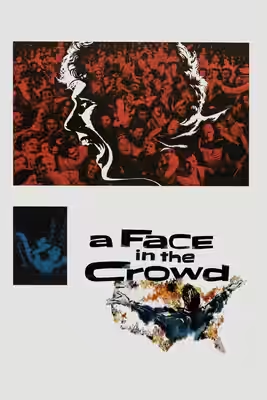
  2. A Face in the Crowd (1957) · not reviewed yetA harsher account of television charisma and the people who mistake it for leadership.

  3. The Discreet Charm of the Bourgeoisie (1972, Fi1m 83)For more composed absurdity among people who assume their status explains everything.

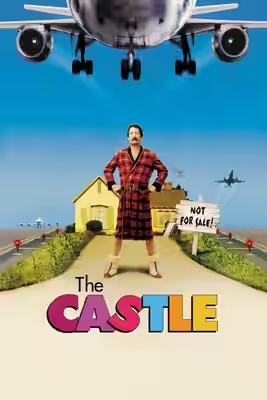
  4. The Castle (1997) · not reviewed yetA gentler encounter with class and authority, grounded in one family’s stubborn decency.

  5. Perfect Days (2023, Fi1m 83)A quieter companion, attentive to routine and a man others might overlook.

Free account

Know what to watch tonight

Two lists that know where things are streaming, collections you can share, your own score beside ours, and Discover that remembers what you have seen.

  • Want to see, sorted by what is streaming now
  • Seen, with your score out of ten
  • No adverts, ever