Kenneth Branagh’s black-and-white memoir of a Belfast boyhood is warmly acted, especially by Judi Dench and Ciarán Hinds, and its opening riot frightened us. After that it settles for being charming, and the Troubles wait politely at the end of the street.
Kenneth Branagh has gone back to the street he grew up on. Belfast is a memoir of August 1969 as seen by a nine-year-old called Buddy, and Branagh has written and directed it himself. It is his warmest film and one of his least demanding, and it is a good deal tidier than the events it describes.
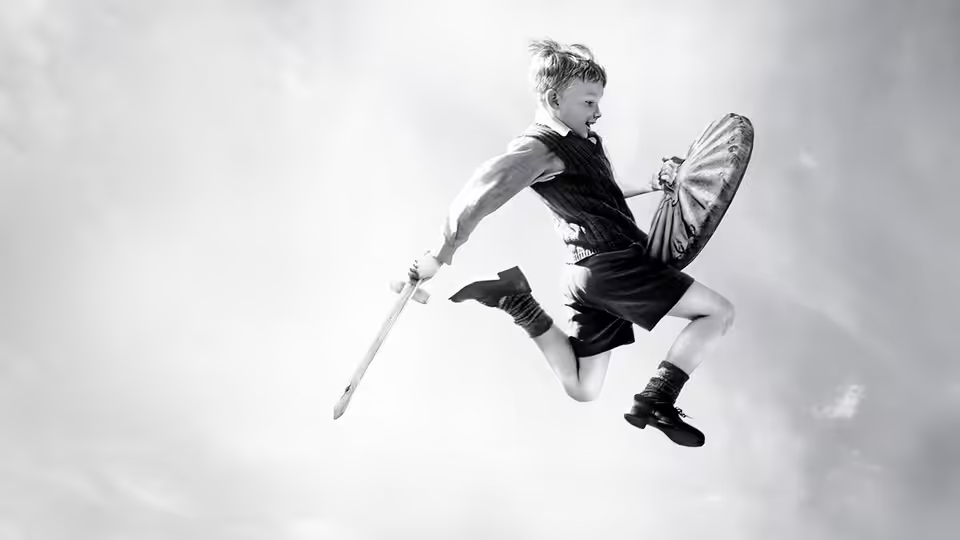
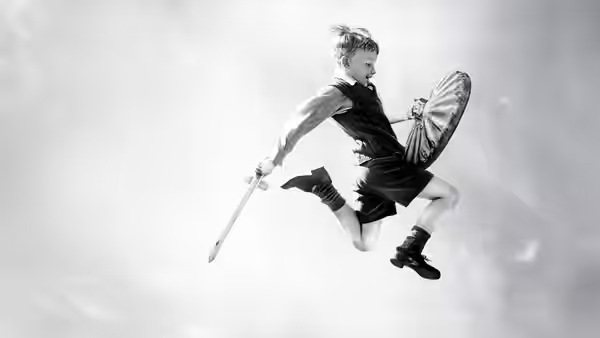
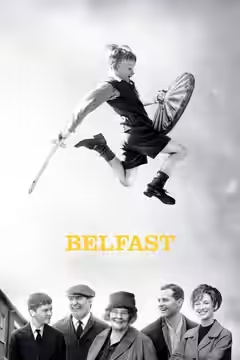
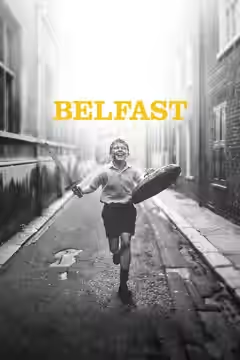
It begins well. Colour shots of today’s city give way to a wall; behind it, 1969, in black and white. Buddy (Jude Hill) is in the street with a wooden sword and a dustbin lid for a shield when a crowd appears at the end of the road with bricks and petrol bombs. Haris Zambarloukos keeps the camera at the boy’s height and turns it round him as the noise closes in, so we never see where the men are coming from, only that they are coming. We were frightened, and we had not expected to be.
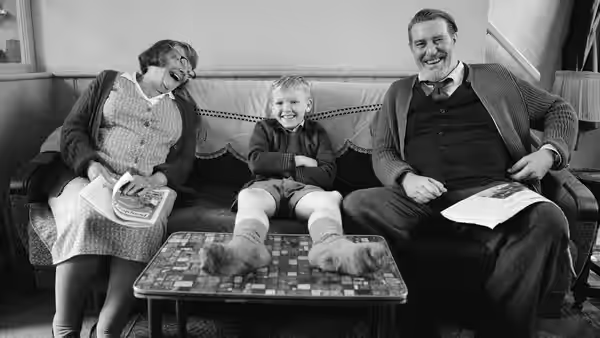
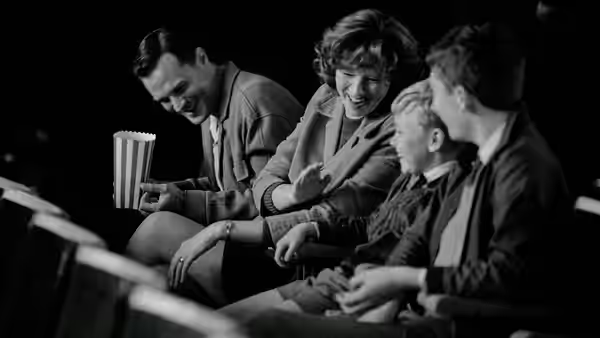
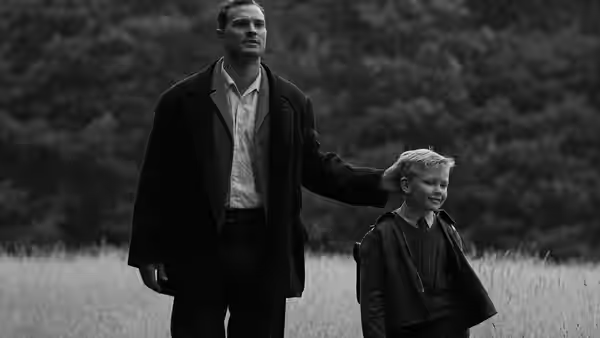
Then a string of short scenes. Pa (Jamie Dornan) works in England and comes home when he can. Ma (Caitríona Balfe) keeps the house and the bills and her temper, mostly. Granny (Judi Dench) and Pop (Ciarán Hinds) sit in their kitchen and bicker. Buddy goes to school, moons over Catherine (Olive Tennant), gets into trouble with his cousin Moira (Lara McDonnell) and goes to the pictures. Úna Ní Dhonghaíle cuts these as anecdotes, few of them longer than a couple of minutes, and the film runs 98 minutes and feels shorter.
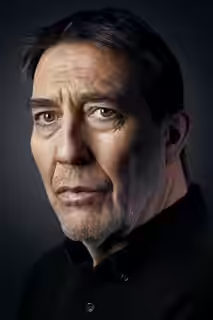
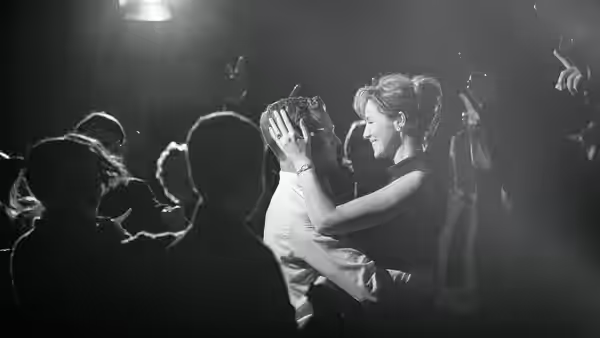
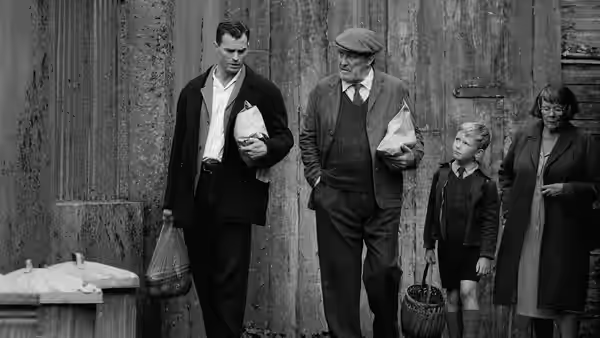
The cast is the reason to see it. Hill is open and quick and never mugs, and Branagh lets him listen rather than perform. Dench and Hinds are the best thing in it: two old people who have been married too long to be polite and too long to leave, and Hinds gives Pop the timing of a man who has told these stories before. Balfe is worried and sharp and lit as if she were the star of a different film. Dornan is steady, and late on he sings in a social club, and it moved us more than we expected. The reason is not the song but the people around him: by then we have spent an hour with all of them, and Balfe’s face while she watches him does the rest.
Zambarloukos’s monochrome is silvery and clean, and when the family goes to the cinema or the theatre, the screen and the stage are in colour while the audience stays grey. Jim Clay’s street is a set and looks like one: the brickwork is too even, the washing too white, and there is no litter anywhere. Charlotte Walter’s dresses for Balfe look to have come from the shop that morning. Van Morrison’s songs sit under nearly every transition, and about half of them are pulling their weight.
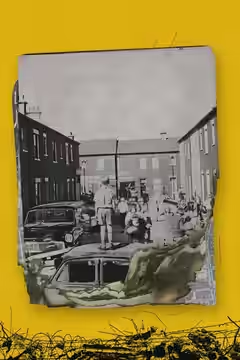
The trouble is the Troubles. The Catholic neighbours are driven out in the first ten minutes and scarcely mentioned again. Billy Clanton (Colin Morgan) turns up in a leather jacket to lean on Pa, and Branagh cuts to a Western on the telly so we know what kind of scene this is, and it is the wrong kind. The family’s argument about whether to leave is played three or four times with the same lines, and by the third we had stopped worrying about the outcome. That is honest to a child’s view, but it leaves the film stuck at the end of its own street.
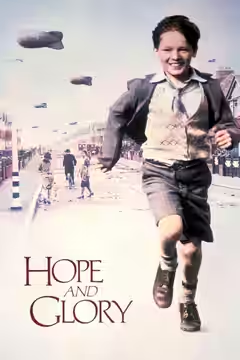
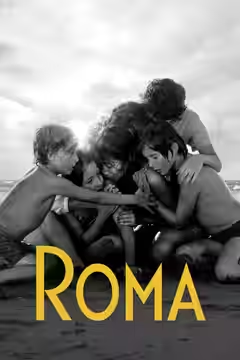
John Boorman’s Hope and Glory (1987) remembered the Blitz as a boy’s great adventure and never let us forget how much the boy was missing. Alfonso Cuarón’s Roma (2018) put a black-and-white childhood in front of a country tearing itself apart and explained neither. Branagh explains, and softens, and reassures. He was there and we were not, so perhaps that is how it felt. It is not how it reads.
See it for Hill, Dench and Hinds, and for the first ten minutes. Do not expect to learn anything about 1969 that you did not already know. It carries a 12A, and most people will leave it feeling well disposed towards their own families, which is a real thing for a film to do, if a modest one.