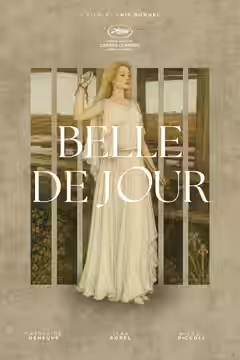
Luis Buñuel’s Belle de Jour is funny, unsettling and worth the discomfort, with Catherine Deneuve giving its sexual fantasies a troubling calm. The coolness can keep us at a distance, but the film’s suspicion of respectable behaviour remains persuasive.
Belle de Jour is a sly, unsettling film about a woman’s desires and the respectable behaviour expected of her, and we recommend it with one reservation: its coolness sometimes keeps us further away than it needs to. Luis Buñuel lets Séverine’s imagined experiences enter her daily life without giving us a reliable way to separate them. He also declines to make her explain herself. Catherine Deneuve makes her worth watching closely.
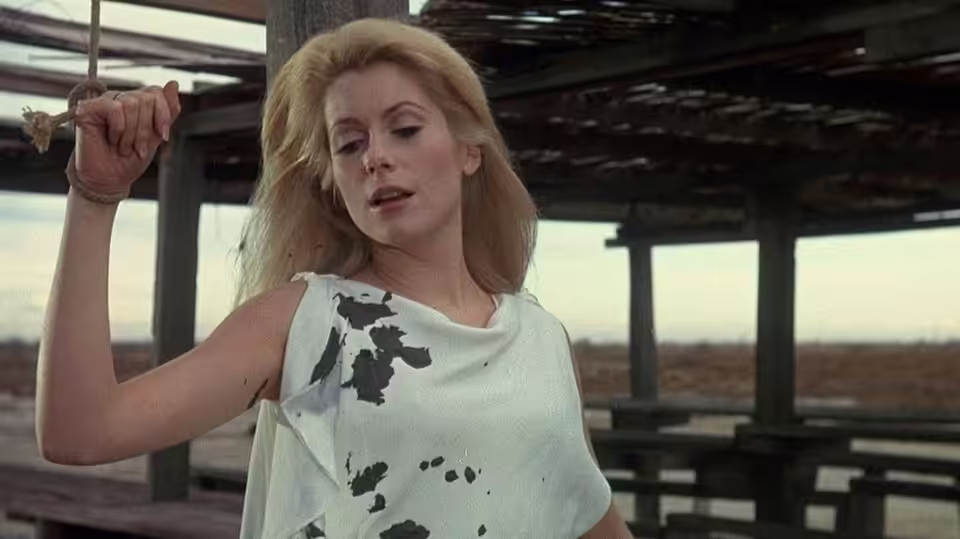
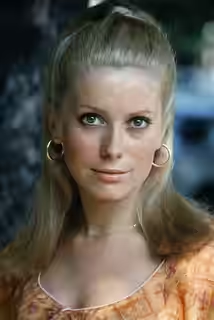
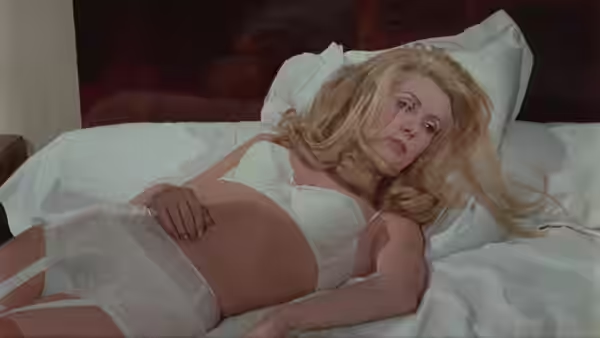
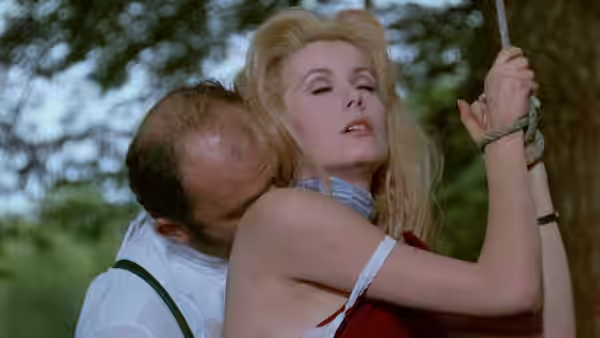
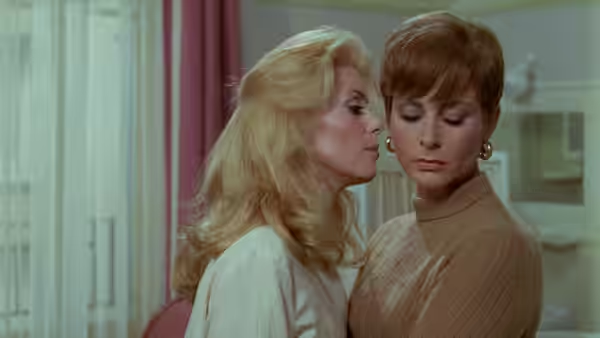
Her performance is controlled enough to make a small change of expression worth watching. We found her composure unsettling, because her face remains so guarded as the film moves into sexual fantasy; it gives us no comfortable cue for how to react. The temptation is to call Séverine cold and think we have understood her. The performance makes that judgement feel premature. Her restraint allows us to sense a private life without pretending we have been given unrestricted access to it.
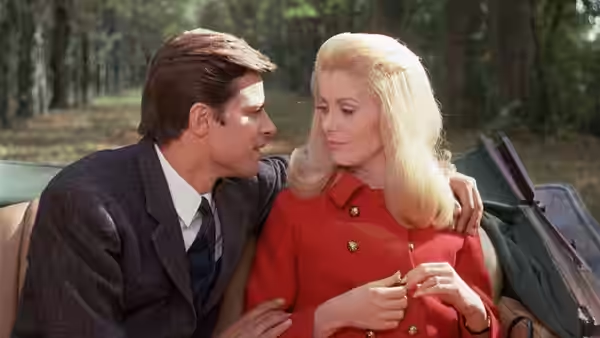
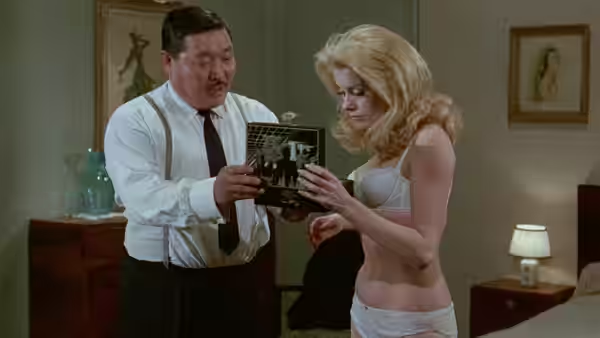
Sacha Vierny’s colour photography and Yves Saint Laurent’s costumes make the attention paid to appearances tangible. The couture gives us something precise to look at when Séverine’s thoughts become difficult to follow, and its elegance makes the contrast with her fantasies uncomfortable. Robert Clavel’s production design supports that concern with how things look to other people. We admire the polish, though sometimes we become absorbed in it and lose touch with Séverine’s discomfort.
Louisette Hautecoeur’s editing does crucial work in the movement between memory, fantasy and ordinary experience. The transitions do not behave like helpful labels, and trying to classify every passage soon becomes a distraction. What matters is that Séverine cannot imagine desire entirely free of the pressures around her. The director keeps the uncertainty clear enough to follow, which is a harder task than simply confusing us, and the editing gives those changes an unforced rhythm.
The screenplay by Luis Buñuel and Jean-Claude Carrière is particularly sharp about the power men retain even in Séverine’s fantasies. Even in imagination, she has not simply left other people’s demands behind. There is dry comedy in the failure of respectable behaviour to settle any of this, though the humour never makes Séverine’s unease seem trivial. Anyone expecting an erotic drama to reveal a secret and then explain its heroine will have to adjust; the writers leave a good deal unexplained.
Our reservation concerns that same distance. The writers give us plenty to think about, but at times the cool handling makes Séverine seem like someone being studied, and we wanted more contact with her ordinary feelings. Catherine Deneuve’s restraint remains absorbing even when the film around her risks becoming too pleased with its ambiguity. A little more warmth would have helped in these stretches without requiring her to explain every thought.
At 101 minutes, it does not overstay its uncertainties. The pleasure lies in attending to the central performance, the careful costumes and the way the film quietly makes our judgements less secure. We would recommend it to anyone prepared for an erotic drama that can be funny without becoming comfortable. If you need a firm explanation before the evening is over, choose something else.