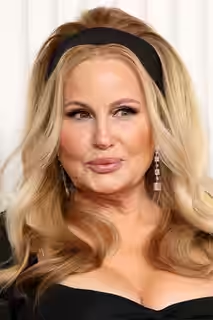
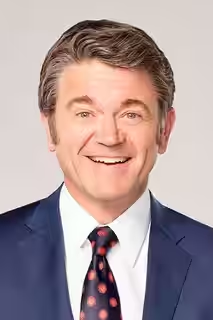
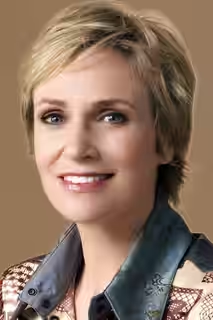
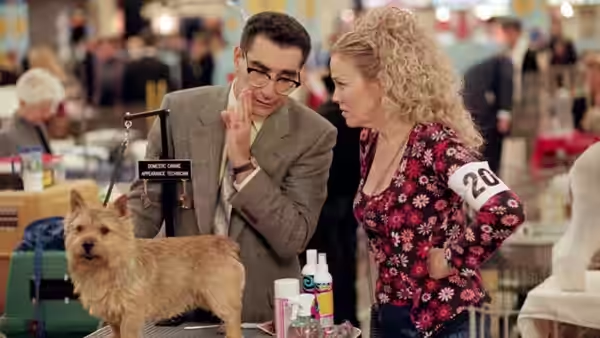
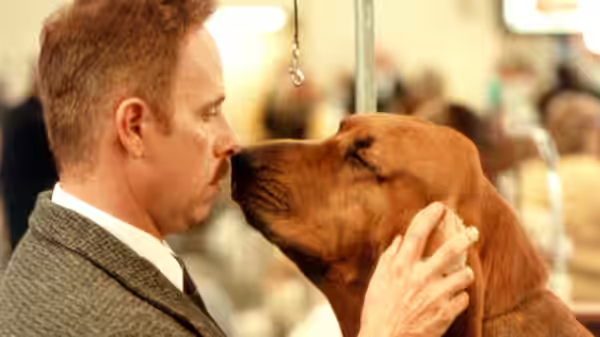
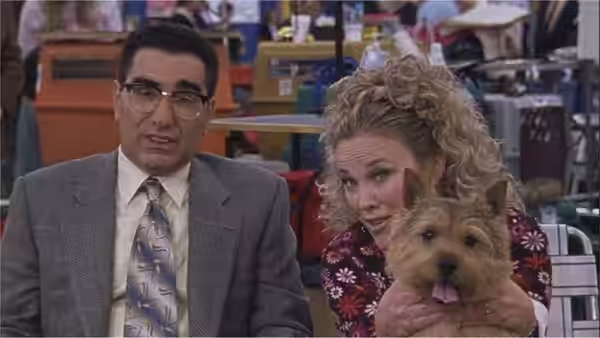
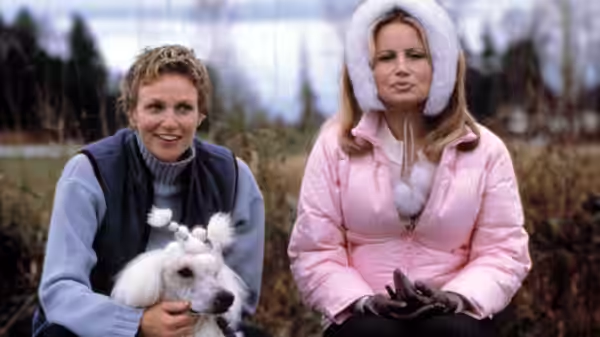
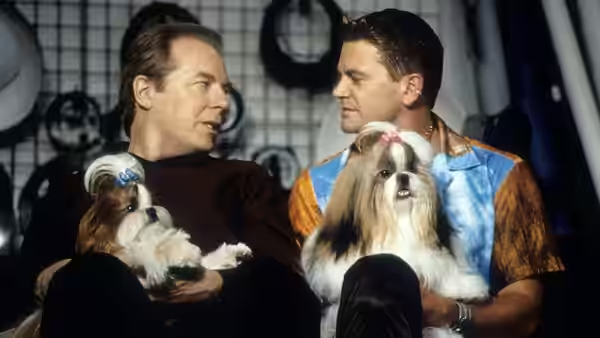
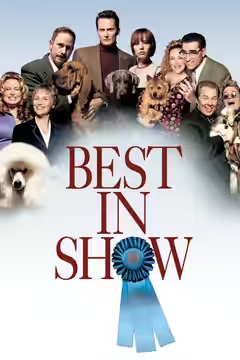
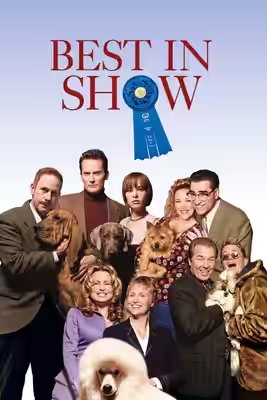
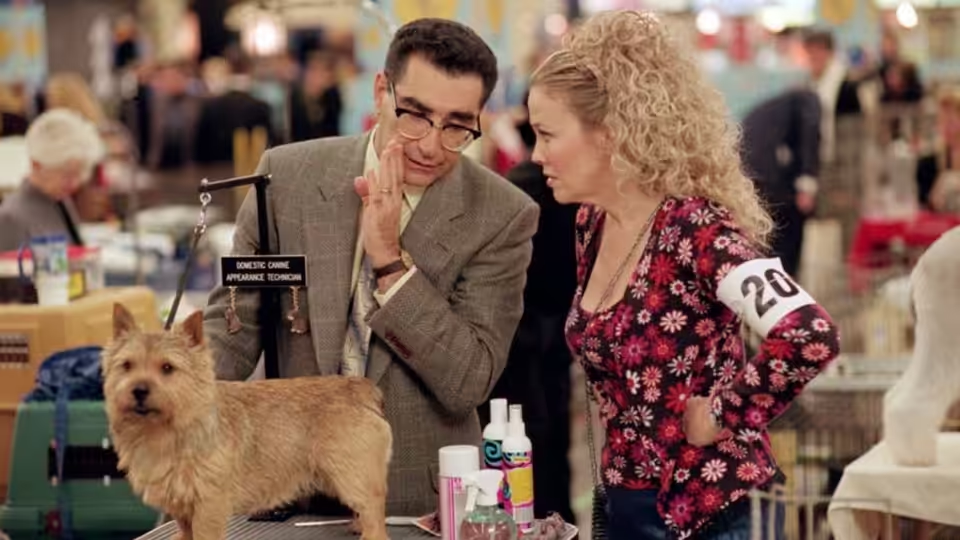
Dr. Millbank (Bob Balaban) and Sherri Ann Cabot (Jennifer Coolidge) examine a terrier at the show
Film review

Best in Show

2000 · Directed by Christopher Guest · 1h 31m

In a sentenceThe dogs have been trained to behave in public, which puts them well ahead of their owners

Owners prepare their dogs for the Mayflower Dog Show, bringing their own anxieties, relationships and expectations into the competition. Christopher Guest plays Harlan Pepper, Eugene Levy and Catherine O’Hara play Gerry and Cookie Fleck, and Michael Hitchcock and Parker Posey appear as Hamilton and Meg Swan. Interviews and documentary-style footage follow the competitors as the prospect of being judged puts the humans under pressure. Jennifer Coolidge, Jane Lynch, Michael McKean and John Michael Higgins also feature in the ensemble, while Fred Willard plays Buck Laughlin, an announcer providing commentary on the proceedings.

Plays from YouTube when you press play; nothing loads from them until then.

Fi1m review

Christopher Guest’s dog-show comedy is funny and generous towards people who make generosity difficult. Fred Willard supplies the biggest laughs, though a few routines settle into repetition before the film is finished.

Best in Show is an excellent ensemble comedy with a modest ambition: to spend time with dog-show competitors and find out what makes them so difficult. Christopher Guest understands that their hopes have to matter if we are going to keep watching them. The competition is allowed to seem important, even when the behaviour around it is absurd. Guest and co-writer Eugene Levy give the owners enough space to explain themselves at length, and usually a little more space than is wise.

The mock-documentary format helps because these people are eager to be understood, without necessarily being good at explaining themselves. Roberto Schaefer’s photography suits that plain approach: nothing in the interviews feels more important than the person attempting to explain themselves. Robert Leighton’s editing is most effective when it gives us time to register how little a speaker has helped their case. The improvised exchanges have the awkward changes of direction of an actual conversation, and the actors listen without visibly preparing for their next turn.

Catherine O’Hara and Levy do particularly well with the discomfort beneath the chatter. As Cookie and Gerry Fleck, they make embarrassment feel habitual rather than something invented for the current joke. Parker Posey brings a more abrasive energy to Meg Swan, and Guest’s Harlan Pepper is funny without seeming to realise that he might be. These are broad comic performances, but the actors rarely give the impression that they are waiting for us to congratulate them on being clever.

Fred Willard’s Buck Laughlin is less restrained, to the film’s considerable benefit. We laughed hardest at his commentary, because he delivers foolish observations with the assurance of a man doing a useful public service. Willard never seems embarrassed for him, and that is what makes the performance work: the announcer cannot hear how he sounds. It is the sort of broad turn that could easily overwhelm an ensemble, but here it gives the quieter conversations a welcome change of pace.

Joseph T. Garrity’s sets give the social caricatures somewhere plausible to belong, which matters when the performances grow broad. Monique Prudhomme’s costumes are funny in the same unforced way: we can believe these people chose these clothes. CJ Vanston’s music is welcome for not competing with the voices. We need to hear how seriously these people take themselves, and the funniest passages need little encouragement beyond that.

The limitation is repetition, and it is noticeable even at 91 minutes. Once we understand a character’s particular anxiety, some later exchanges give us another helping without finding much new in it. Guest’s approach to mock-documentary comedy depends on our enjoying the company long after we recognise the type, and not every character can sustain that attention. Leighton’s shifts between competitors cannot always disguise how often the film returns to the same comic pattern, though the individual performances remain enjoyable.

It is still easy to recommend to anyone who enjoys people talking themselves into trouble. We would happily spend another evening with this ensemble, including the characters we would avoid at an actual dog show. Watch it with someone who enjoys an awkward conversation, and allow time afterwards to disagree about which owner would be hardest to sit beside.

Critical consensus AI synthesised

78
Positive
11
Mixed
1
Negative
0
The Guardian
9 March 2001 · Peter Bradshaw
90*

The dog-show mockumentary is a little gem of a comedy structured around real laughs and gags, using talking-head interviews and pseudo-vérité footage to follow the Mayflower Dog Show competitors and their pooches.

Read the full review →
The Hollywood Reporter
11 September 2000 · Kirk Honeycutt
90*

The critic finds the mockumentary frequently sidesplitting, with neurotic human owners outshining their dogs and fresh takes on familiar gags. Specific praise goes to the ensemble's improvisational skill, the comic costumes and sets, and standout bits from the TV commentators.

Read the full review →
The New York Times
27 September 2000 · Critic's Pick · Stephen Holden
90*

The critic finds the film every bit as funny as Guest's previous mockumentary Waiting for Guffman, praising its clever improvisational caricatures of dog owners and their neuroses. The yuppie couple and the milquetoast husband with his hot-blooded wife are singled out for their hilarious scenes.

Read the full review →
The AV Club
29 September 2000 · Scott Tobias
85*

The review calls the film an unbridled success that recycles the mockumentary formula effectively for affectionate caricature of dog-show obsessives. It singles out the cast's warmth in making stereotypes inclusive and Fred Willard's hilarious announcer turn as a highlight.

Read the full review →
Evening Standard
10 April 2012
80*

Best In Show is a worthy addition to canine movies that forensically lays bare the foibles of human owners rather than mocking the dogs, with owners spiraling out of control in obsessions while their pets look on. Guest's improvised mockumentary style captures fresh, real-time conversations and ultimately evokes compassion for the characters.

Read the full review →
Los Angeles Times
27 September 2000 · Kenneth Turan
70*

The critic calls the film a low-key but sharp and amusing mockumentary whose humor fits the frenetic world of dog shows, noting it has both bark and bite despite being more hit-or-miss than Guest's prior work. The irrepressibly buffoonish play-by-play announcer is singled out as the standout element.

Read the full review →

Straight answers AI written, from our review

Is Best in Show worth watching?
Best in Show is worth watching for anyone who enjoys people talking themselves into trouble, and we scored it 84. Christopher Guest’s mock-documentary about dog-show competitors is funny and generous towards difficult people, with Fred Willard’s announcer supplying the biggest laughs. A few routines settle into repetition before the 91 minutes are up, but the ensemble stays good company throughout.
How long is Best in Show, and what is it rated?
Best in Show runs 1h 31m. It is a comedy film.
Where can I watch Best in Show in Malaysia?
Best in Show is available to rent from Apple TV from RM 9.90. Availability is checked daily; the links above go straight to each service.
How does Best in Show compare to Local Hero?
Best in Show is the broader and funnier of the two, while Local Hero is the gentler and more affectionate. Both watch a small community of eccentrics without contempt, but Guest lets his owners embarrass themselves in mock-documentary interviews, whereas Bill Forsyth’s coastal comedy moves at a slower pace and cares more about place. Choose Guest for laughs, Forsyth for warmth.
What should I watch after Best in Show?
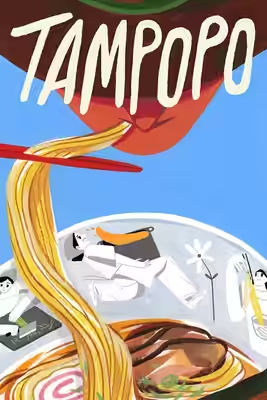
After Best in Show, try Tampopo (1985, Fi1m 84): Food inspires similarly elaborate behaviour, with room for tenderness amid the absurdity. Then Local Hero (1983, Fi1m 86): A small community of eccentrics, observed with patience and a welcome lack of contempt.

Cast

Awards

Canadian Comedy Award for Best Performance by a Female – Film, 2001

Won
Canadian Comedy Award for Best Performance by a Female – Film

If you liked this, try…

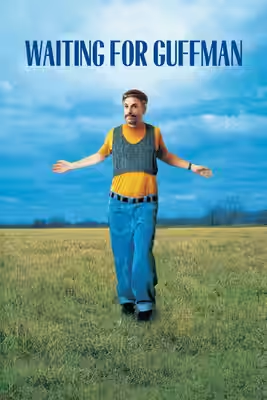
  1. Waiting for Guffman (1996) · not reviewed yetGuest applies the same patient scrutiny to amateur performers and their considerable expectations.

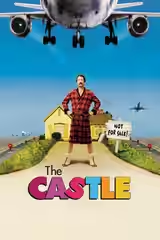
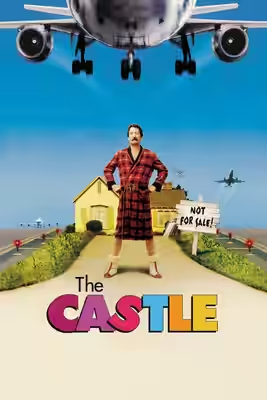
  2. The Castle (1997) · not reviewed yetAnother affectionate ensemble comedy about people whose modest ambitions deserve to be taken seriously.

  3. Tampopo (1985, Fi1m 84)Food inspires similarly elaborate behaviour, with room for tenderness amid the absurdity.

  4. Local Hero (1983, Fi1m 86)A small community of eccentrics, observed with patience and a welcome lack of contempt.

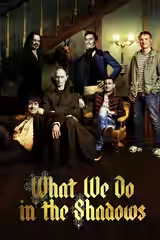
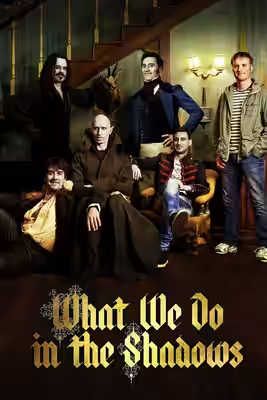
  5. What We Do in the Shadows (2014) · not reviewed yetHousehold routines expose the pettiness of vampires who believe they deserve more respect.

Free account

Know what to watch tonight

Two lists that know where things are streaming, collections you can share, your own score beside ours, and Discover that remembers what you have seen.

  • Want to see, sorted by what is streaming now
  • Seen, with your score out of ten
  • No adverts, ever