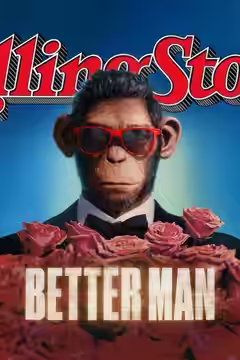
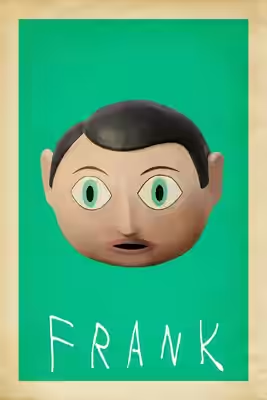
Michael Gracey’s Robbie Williams biopic casts a CGI chimpanzee as its star and stages its musical numbers with real nerve. The story around them is the one every pop biopic tells, and it is told at length.
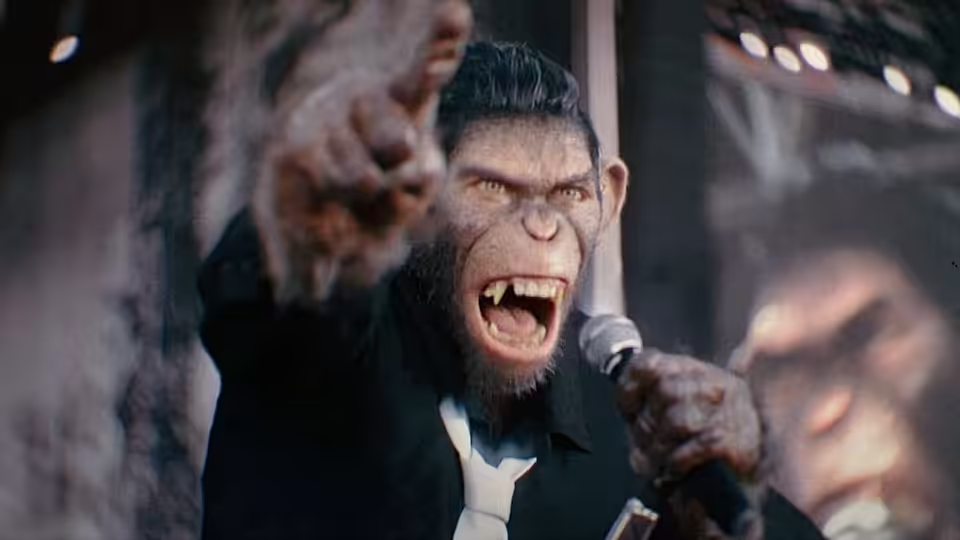
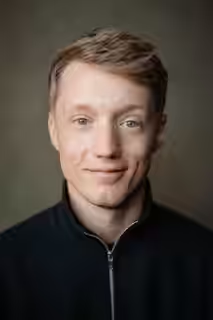
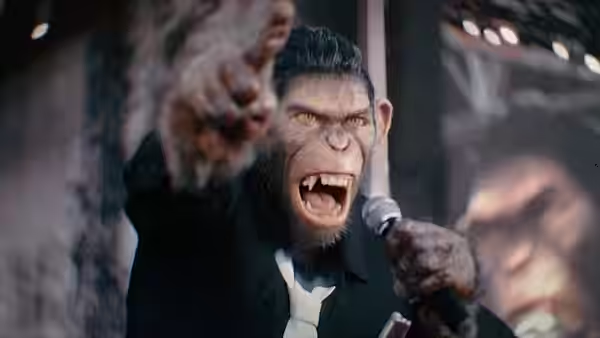
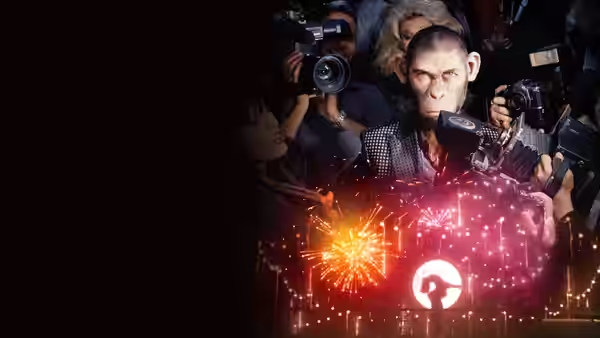
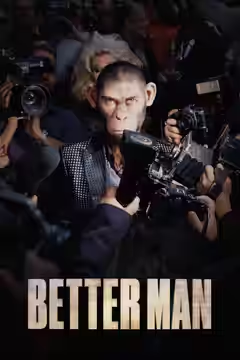
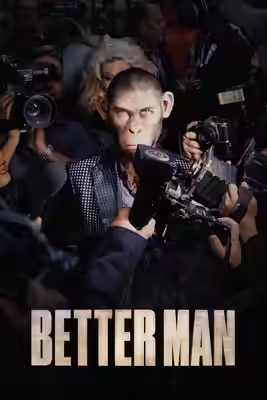
The idea is on the poster. Robbie Williams, the Stoke boy who joined Take That at sixteen and spent the next decade being famous and unhappy in public, is played here by a chimpanzee. Williams narrates, Jonno Davies supplies the body and the face underneath the fur, and Michael Gracey, who made The Greatest Showman, directs as if this were the most natural thing in the world. It is a good film with a handful of sequences we would put against anything in the genre, and it is also a standard pop biopic that runs to 135 minutes and ends in a chair opposite a therapist.
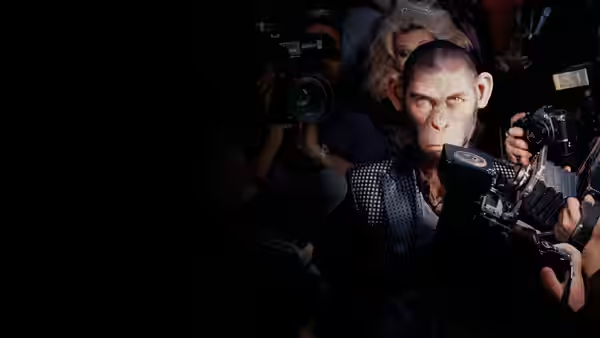
The chimp works, and it works because nobody explains it. Janet, Betty and Peter talk to him as a son and grandson. Nigel Martin-Smith auditions him as a teenager. The girls at the stage door scream at him. Within ten minutes we had stopped seeing an effect and started seeing a face, and Davies’s performance is the reason: the shoulders go up when the boy is frightened, the chin goes out when the man is being cocky, and the eyes do most of the work in between. When the film wants us to notice the ape again, it can, and it saves that for the moments when Williams is behaving worst.
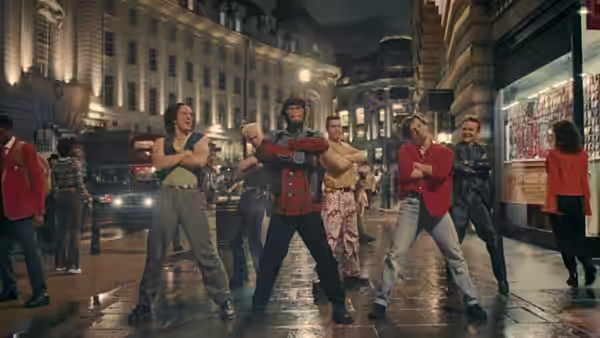
The musical numbers are the argument for seeing it. “Rock DJ” is staged as one continuous shot with the five members of Take That charging down Regent Street, in and out of shops and buses, growing from nobodies to stars as they go, and we laughed out loud with pleasure at the sheer cheek of it. Erik Wilson shoots it and everything else with a warm, grainy light that makes the nineties look like a photograph found in a drawer. Five editors are credited, Spencer Susser, Patrick Correll, Lee Smith, Martin Connor and Jeff Groth, and the numbers move as if one pair of hands had cut them. Batu Sener’s score threads the songs into the story rather than stopping the story for them, which is rarer than it sounds.
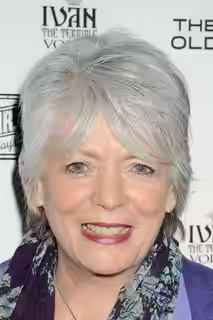
The Stoke scenes are the film’s other strength. Joel Chang’s production design gives the family a narrow terraced house with a telly in the corner and a father who wants to be on it, and Cappi Ireland’s costumes carry Robbie from school jumpers to the leather and eyeliner of the Take That years without a wink. Steve Pemberton plays Peter as a man who loves his son and loves an audience more, and Alison Steadman’s Betty moved us more than we expected. There is a scene of her and the boy in the front room, nothing happening, her hand on his head, that told us more about where his need to be looked at came from than the narration managed in two hours.
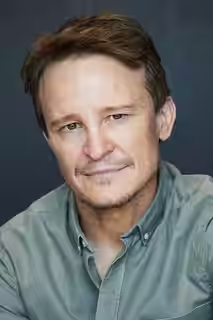
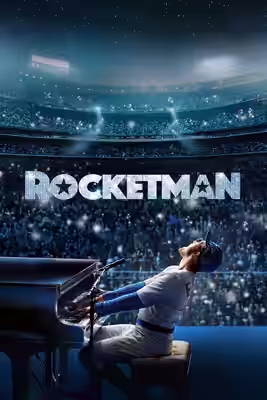
Because the narration does manage a great deal. Williams’s voice-over is funny and candid about the envy that drove him, particularly of Jake Simmance’s Gary Barlow, and then it keeps going, telling us what a picture has just shown us. The shape of the story is the shape of Bohemian Rhapsody and Rocketman: the rise, the excess, the collapse, the recovery, in that order. Damon Herriman’s Martin-Smith is a villain from a pantomime. The other three members of Take That are so lightly drawn that we could not have told you which was Howard Donald. In the last half hour, when the film sets its demons up as literal figures to be confronted and talked at, we grew restless, and then we grew a little annoyed, because the man who had just given us Regent Street was now giving us a lecture.
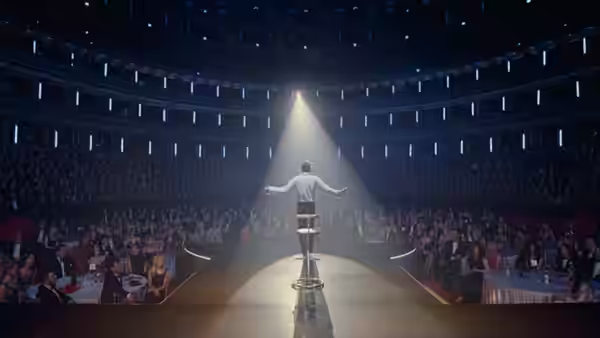
There is one late set piece we will not describe, at the Knebworth shows, in which Gracey turns a concert into something closer to a battle. It is the moment the chimp idea pays off in full, and it is the most frightening thing in the film. It is also followed by twenty minutes that undo some of its effect.
Against Gracey’s own standard this is a clear step up. The Greatest Showman was all surface; this one has a person in it, even if the person is an ape. Most critics have been warmer than we are, and we understand why. The highs are high. Worth your evening if you know the words to “Angels”, and probably even if you do not.