Dexter Fletcher’s Rocketman is an enjoyable musical biography, carried by Taron Egerton’s singing and a willingness to let fantasy take over. The drama between the songs is much more ordinary.
Dexter Fletcher makes Rocketman enjoyable by giving Elton John’s songs something to do beyond marking stages in a career. They can carry a scene, change its mood or send it somewhere that ordinary dialogue could not plausibly go. We recommend it as a musical, with reservations about Lee Hall’s screenplay, which repeatedly falls back on familiar explanations for a famous man’s unhappiness. The musical numbers keep finding ways to surprise us after the story has become predictable.
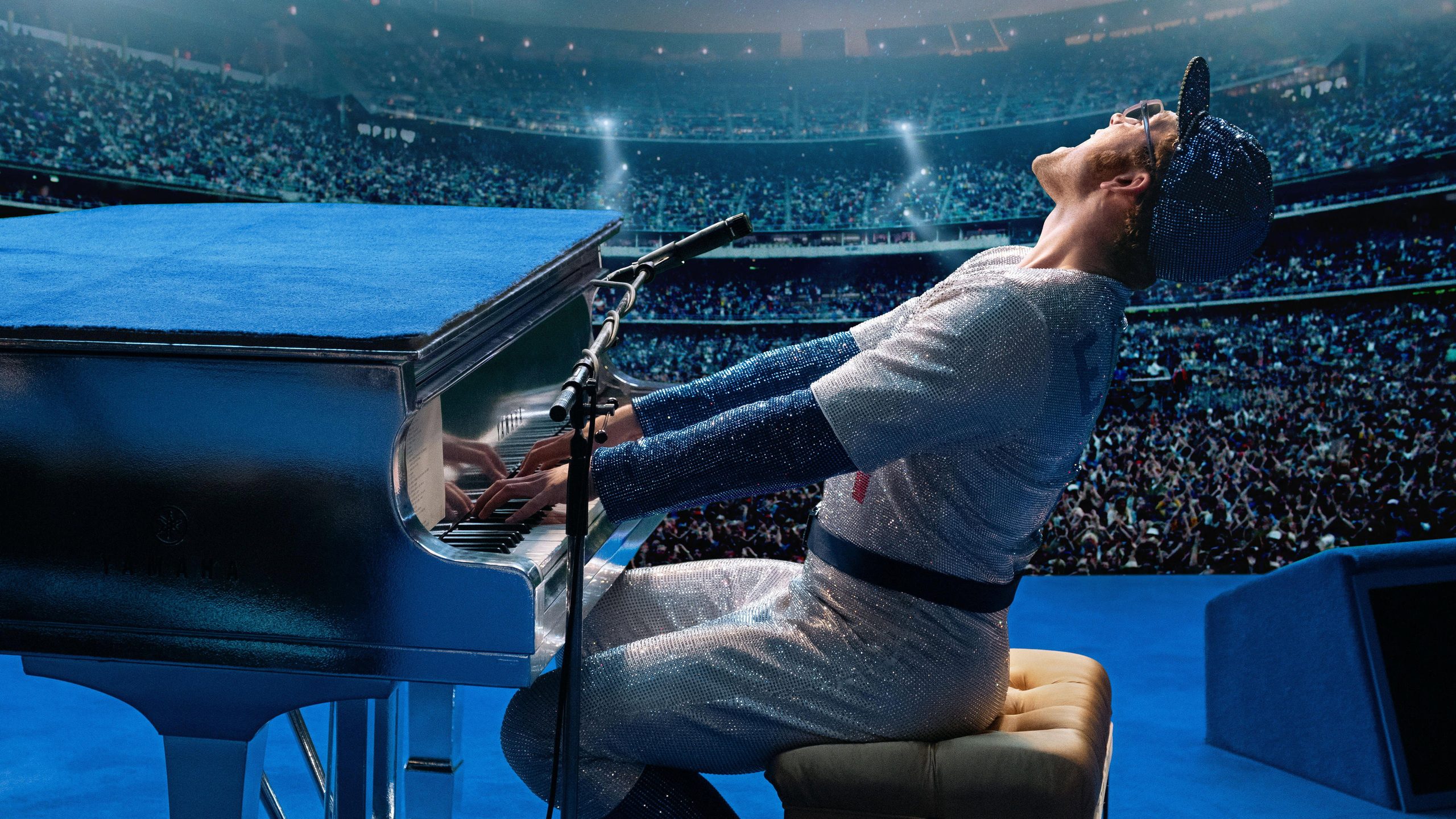
Taron Egerton gives Elton John enough personality to hold our attention through those predictable passages, and doing his own singing matters. The voice sounds like it belongs to the person working through these feelings, rather than to a recording laid over an impersonation. He makes the wish to be heard feel urgent, even when the surrounding drama has already explained that wish quite thoroughly. His singing allows vulnerability to remain audible without making every song sound like a plea.
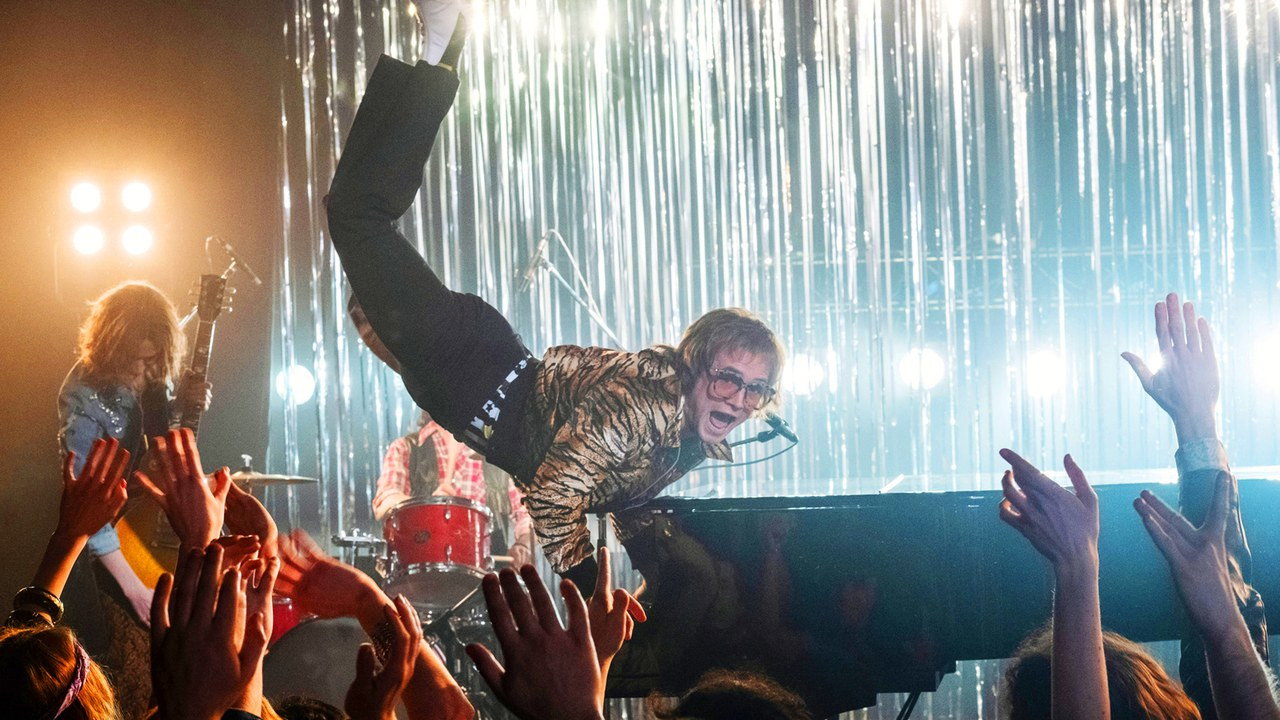
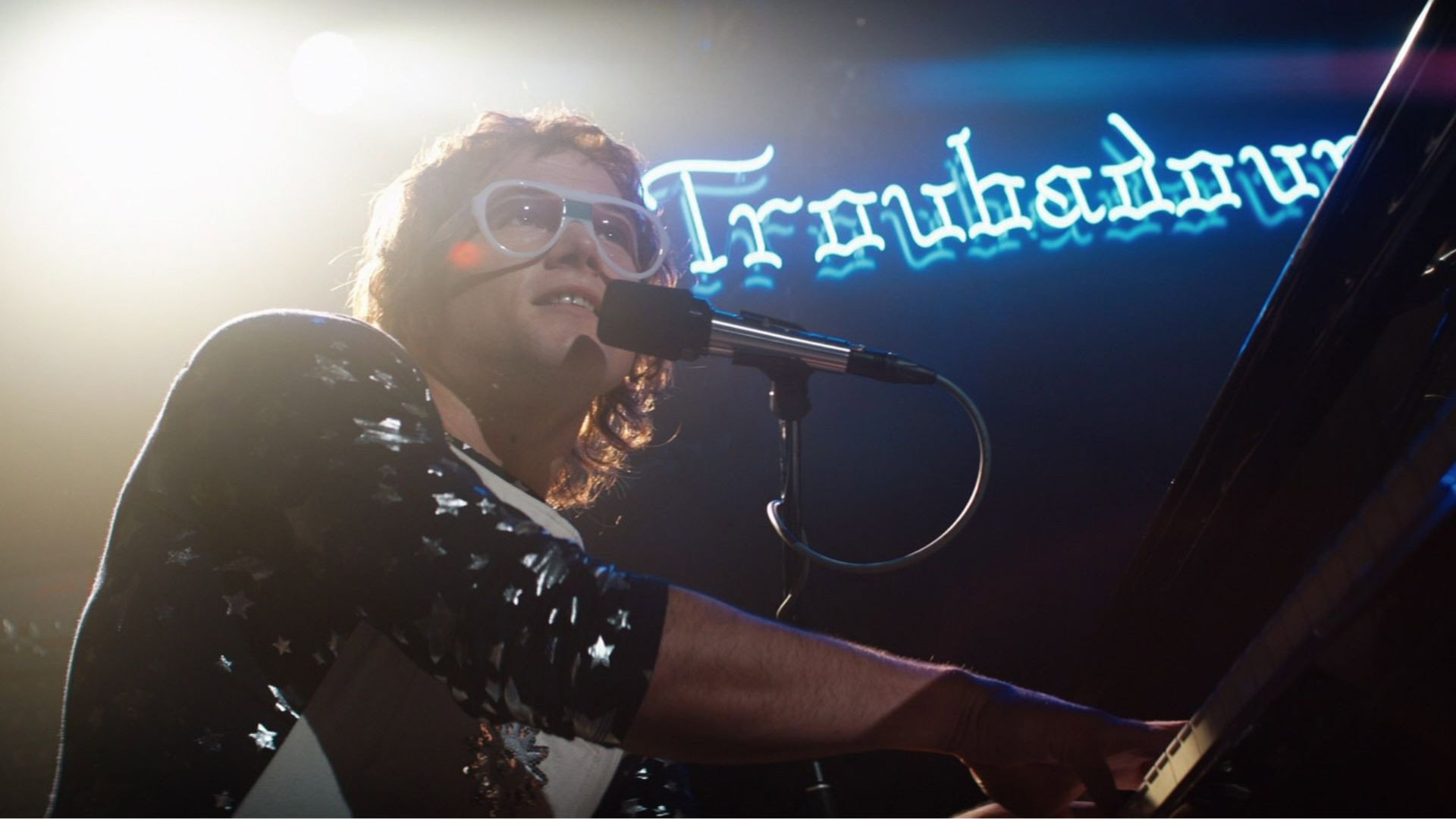
We were delighted by the levitation at the Troubadour, because it lets the audience share the performer’s exhilaration in a way that dialogue never could. It is an extravagant effect with an immediately understandable feeling behind it. George Richmond’s cinematography keeps the spectacle readable, letting us enjoy the bodies in the frame rather than struggle to follow the staging. The director trusts the musical number to tell us why being on stage matters to this particular man.
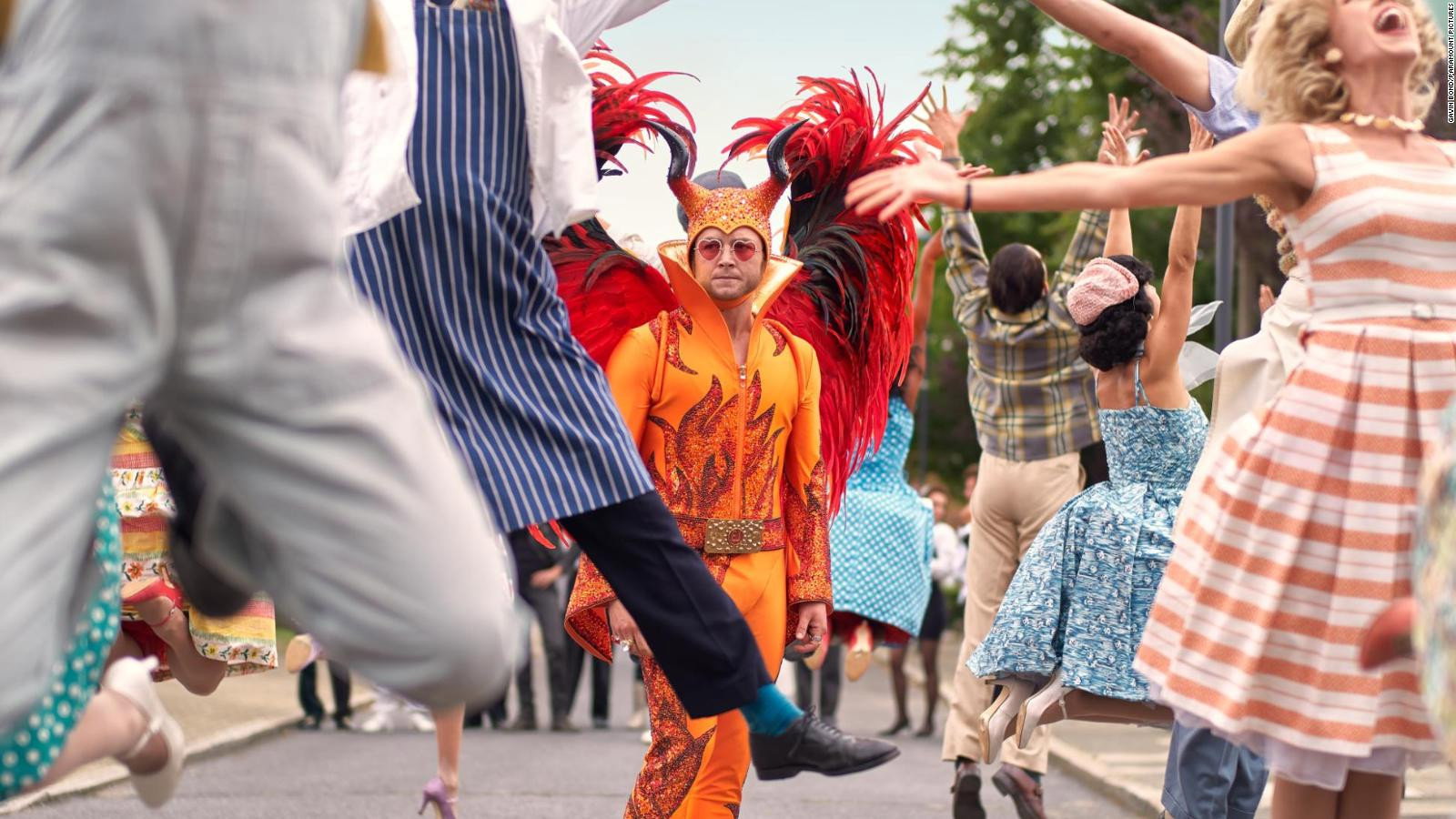
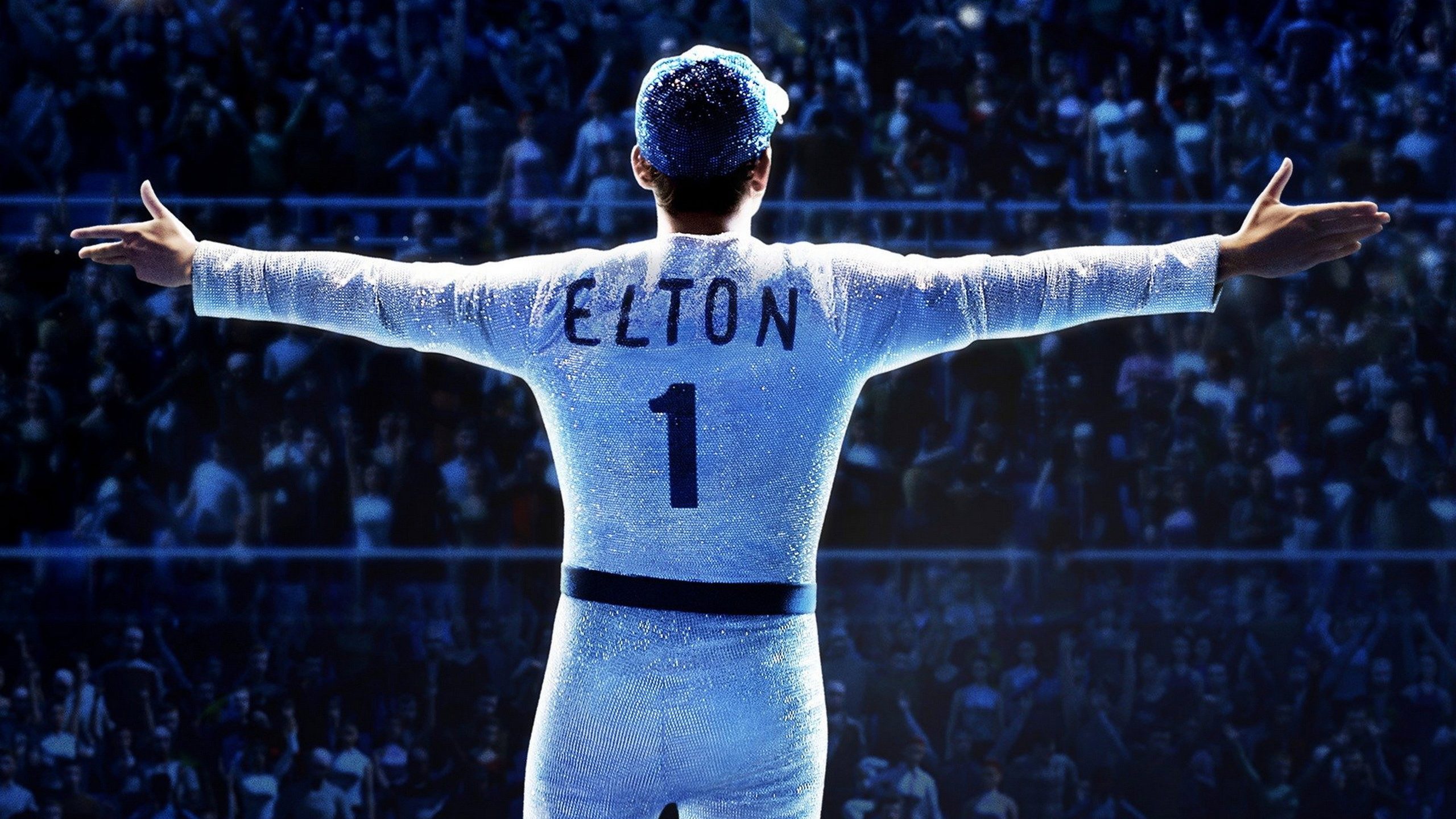
Julian Day’s costumes are part of that pleasure, extravagant enough to belong in a film where ordinary behaviour can turn into a musical number. Marcus Rowland’s production design supports the same freedom, giving the performances surroundings that welcome excess without distracting us from the singer. That visual abundance works well while people are singing. In the dramatic scenes, it sometimes makes us wish that comparable care had gone into giving the supporting characters more to say.
Lee Hall is candid about addiction and sexuality, and the film benefits from treating both as substantial parts of its subject’s life. The problem is how regularly a scene arrives to explain another piece of pain, as though understanding a person were a matter of completing a list. We know too quickly what each disappointment is meant to teach us about Elton John. There is little room for an encounter to leave us uncertain about someone, or for a character’s motives to remain complicated.
Chris Dickens’s editing is most persuasive when the songs are moving the story along; the stretches between them are less lively. That unevenness matters because the film asks us to invest in the unhappiness as much as enjoy the performances. Matthew Margeson’s music has a less conspicuous task beside the familiar songs, and its support works without competing for attention. The numbers themselves do the most convincing work of explaining how this man feels.
For all its fantasy, Rocketman remains recognisable as a musical biography about talent, excess and the difficulty of living with success. It does not escape the genre’s habit of making a complicated life look tidier than it could have been. But the singing and staging give us enough pleasure, and enough feeling, to make the familiar story worth an evening. Choose it for the musical numbers, and be prepared for some rather routine conversations between songs.