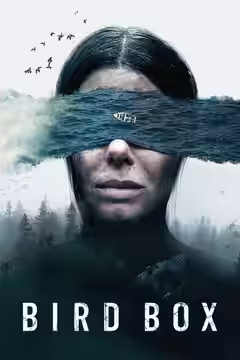
Sandra Bullock makes the desperation in Bird Box convincing. Susanne Bier finds some frightening moments in the blindfold premise, but thinly written survivors and uneven suspense make the stretches between them drag.
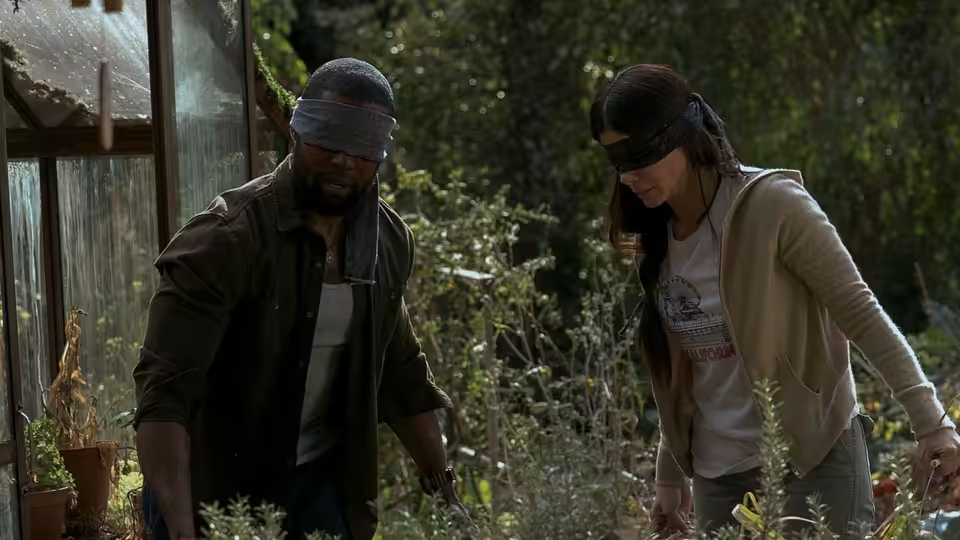
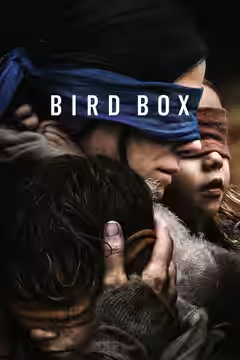
Bird Box has a useful horror idea: make looking dangerous, then require people to keep moving. Susanne Bier understands how quickly a blindfold can make an ordinary journey feel impossible, and the film is effective whenever it concentrates on that difficulty. We found it a disappointing thriller despite those passages, because its survivors rarely become interesting enough to sustain the quieter stretches. At 124 minutes, it gives us plenty of time to recognise the familiar business of frightened people struggling to trust one another.
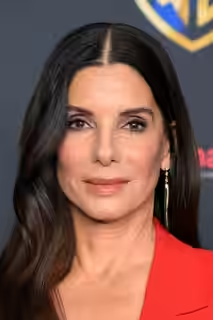
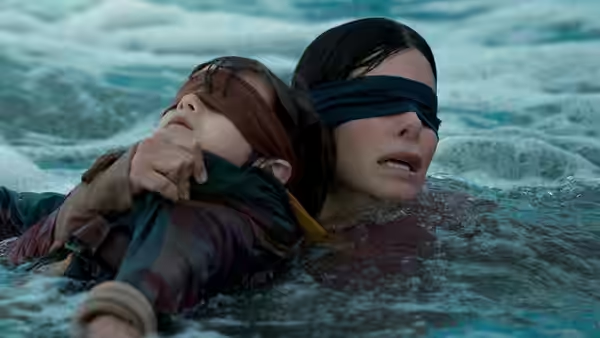
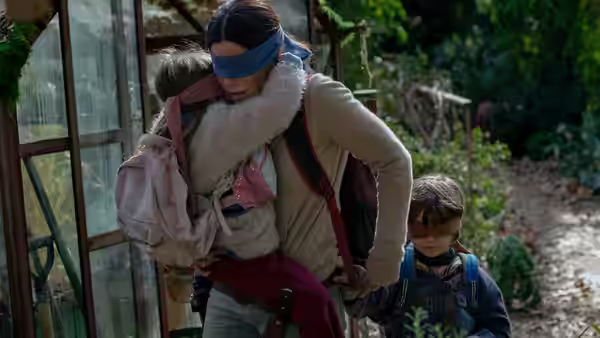
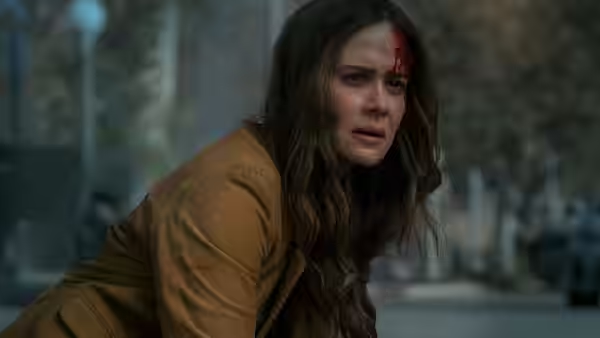
Sandra Bullock supplies much of the reason to stay. Her Malorie Hayes has a tightly controlled fear that makes survival seem exhausting, and she resists the temptation to make every anxious moment an outburst. We can believe that this woman has more immediate concerns than being liked. The film also wants to examine motherhood under pressure, but that part of Eric Heisserer’s screenplay remains sketchy. The performance makes the subject feel important without the writing having much to say about it.
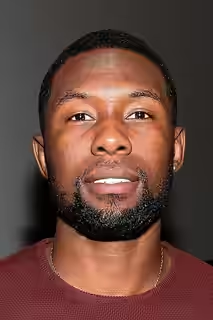
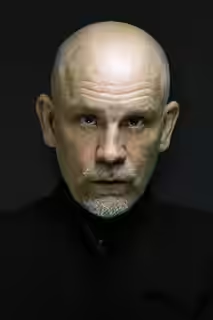
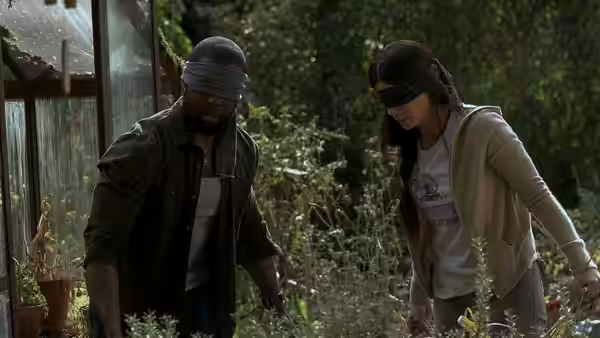
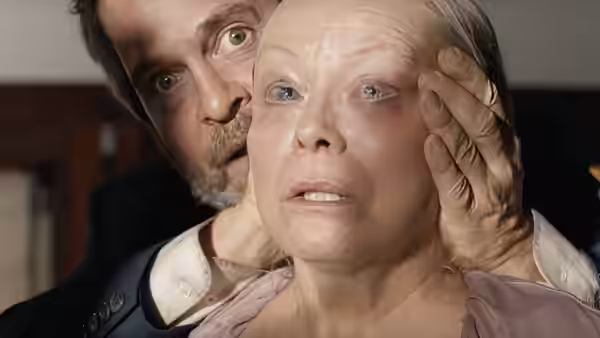
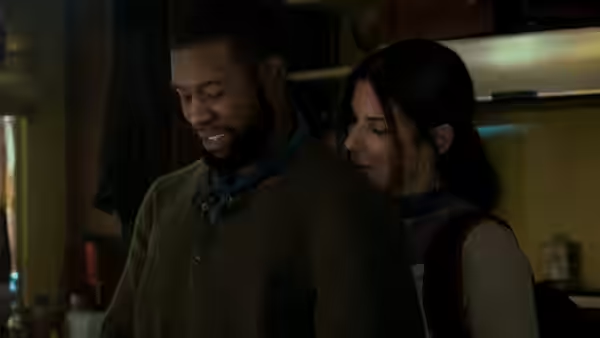
Trevante Rhodes helps as Tom, bringing a steadiness that makes the shared danger feel real. Elsewhere, the ensemble is given so little room that the presence of John Malkovich as Douglas promises more than the writing delivers. There are enough people here for suspicion and disagreement to develop into something particular, but too often they remain a collection of reactions to trouble. Their exchanges too rarely suggest lives beyond the immediate crisis. The actors keep trying to supply what the dialogue leaves out.
The blind navigation sequence is where the premise earns its keep. We were tense watching the car move without its occupants being able to look outside; even a routine journey becomes difficult to bear. Salvatore Totino makes the natural surroundings look indifferent to the people trying to cross them, which is more unsettling than another exchange of panicked dialogue. Trent Reznor and Atticus Ross add an ominous score that keeps the threat present without requiring a creature to fill the screen.
Ben Lester’s editing moves between time periods, a choice that offers more structure than a straight sequence of escapes would have done. It also keeps interrupting whatever tension has begun to build. Just as we settle into one set of immediate difficulties, the film asks us to become interested in another, and the characters are not strong enough to make the switch rewarding. The flashbacks take up attention that the central journey needs, leaving the suspense to start again too often.
Jan Roelfs’s production design leaves a similar impression of missed possibilities: the surroundings do little to distinguish this catastrophe from other survival thrillers. Keeping the creatures unseen is a defensible choice, and we do not need a detailed explanation of them to be frightened. Horror can make a great deal of what remains outside the frame, provided the people inside it command our attention. Here, too many passages simply ask us to accept that something alarming is nearby, without making the waiting itself disturbing.
The frustration is how readily the film becomes involving when it gives its actors something immediate to manage. A tighter version might have made more of the blindfolds without needing to explain the creatures or enlarge the cast. Go in for Sandra Bullock, if at all; the scares are too intermittent to justify the evening by themselves.