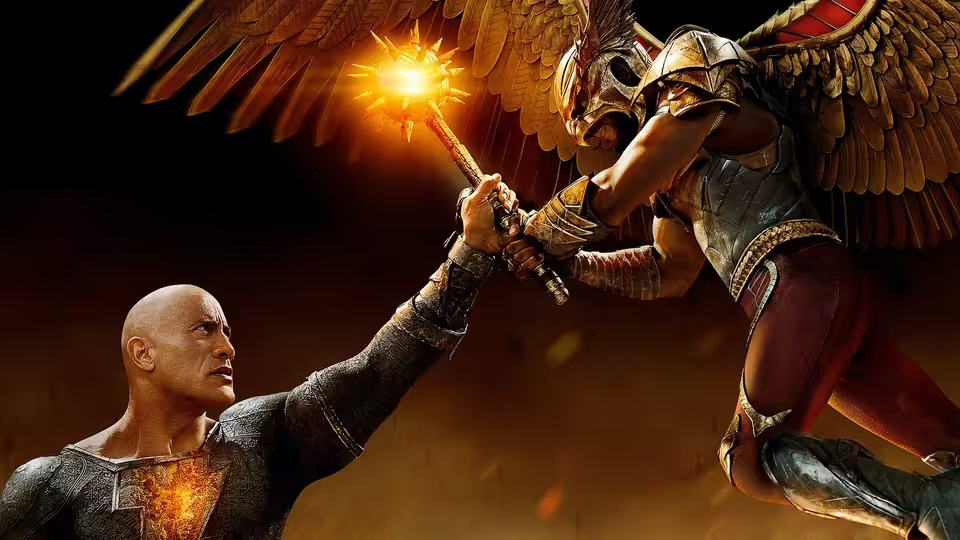
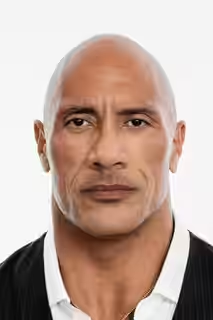
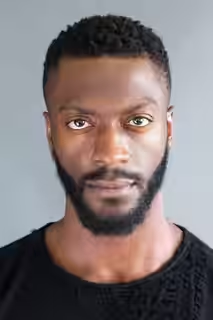
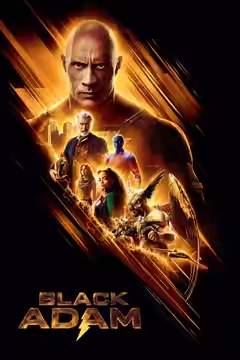
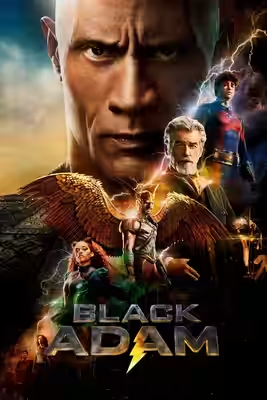
Pierce Brosnan and Aldis Hodge supply welcome personality, but Black Adam is a noisy, overcrowded superhero film with too little interest in its own moral questions. Dwayne Johnson gets too few chances to be interesting.
Black Adam wants us to take a ruthless superhero seriously, then keeps crowding him with the business of introducing everybody else. Jaume Collet-Serra finds some nasty pleasure in the action, but the film is too hurried and too thinly written to make its moral questions matter. There is a worthwhile superhero film to be made about the frightening uses of extraordinary strength. This one rarely stays with a question long enough to become uncomfortable, and 125 minutes is a considerable time to spend avoiding the most interesting part of the premise.
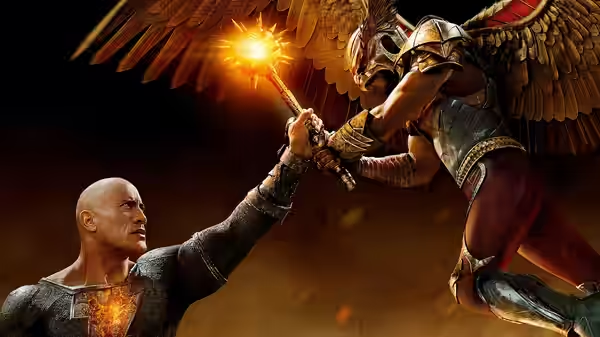
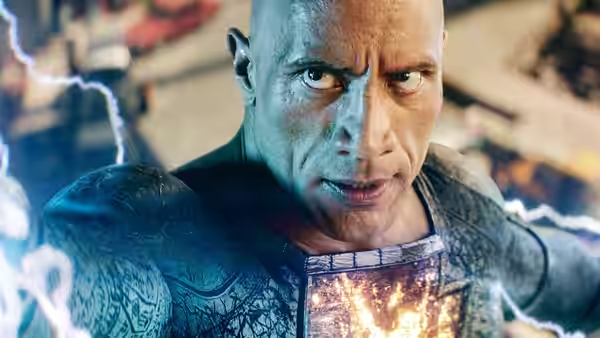
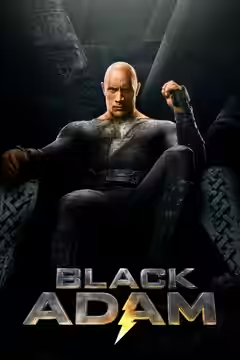
Dwayne Johnson plays Black Adam with a severity that initially suits the threat. The stillness suggests someone who does not need to persuade anybody, and the early bursts of violence briefly give that confidence a purpose. We were jolted by the ferocity of the early fights, which briefly make superhuman strength feel dangerous. But the performance stays so fixed that the character’s conflict barely develops, and the film keeps asking that same stern expression to do more work.
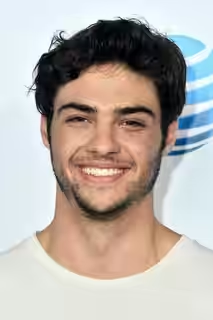
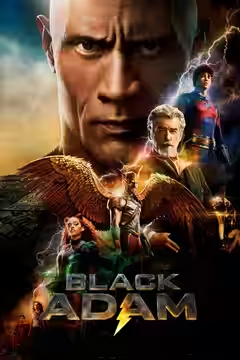
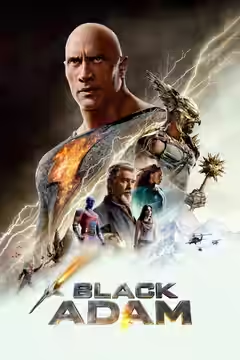
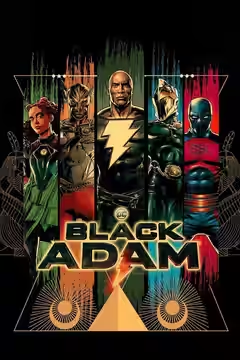
Pierce Brosnan does better as Dr. Fate, allowing a little dry amusement into a film that badly needs it. Aldis Hodge gives Hawkman a sense of leadership, and their presence makes the Justice Society more inviting than the central performance. Noah Centineo finds some agreeable foolishness in Atom Smasher, though there is not enough space for the ensemble to become people we know. These actors suggest that a quieter scene might be worth having. The film is generally in a hurry to interrupt them.
The screenplay by Adam Sztykiel, Rory Haines and Sohrab Noshirvani raises questions about superhero morality without giving the characters enough room to test their positions. A ruthless protector should create difficult choices, especially for those expected to welcome the protection. Here, the crowded plotting makes those questions feel like subjects brought up between fights and then dropped when another fight is due. By the standards of superhero origin stories, the failure is basic. We need to understand why this particular person matters before being asked to care about a larger collection of heroes.
Lawrence Sher’s cinematography is most persuasive when the action briefly acquires a nasty physical edge. Too much of the film has a gloomy, artificial look, and the effects weaken our sense that these bodies have weight. That also works against Tom Meyer’s production design, since the surroundings struggle to register as places worth protecting. Through much of the fighting, the effects keep drawing attention to themselves.
Michael L. Sale and John Lee’s editing compounds the problem by rushing past what might make an encounter distinct. Movement and impact pile up, but the choreography is too often difficult to follow. Lorne Balfe’s music adds to the pressure without providing much relief, and the relentless noise eventually flattens the excitement. We were tired of the fighting well before the film had finished supplying it.
There are enough promising moments to make the disappointment irritating. The supporting cast can hold attention without another collision, and the opening aggression has some bite. But neither is enough to recommend sitting through so much repetitive combat and so little character development. Come for Pierce Brosnan only if a few droll moments justify an evening of fighting.