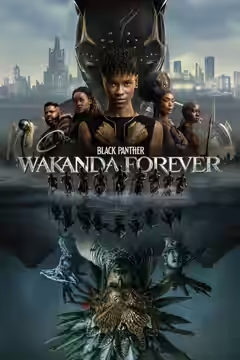
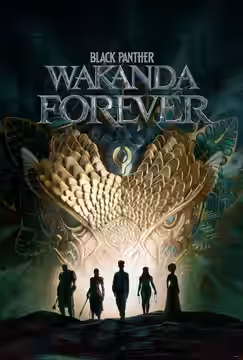
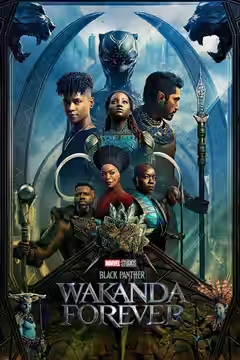
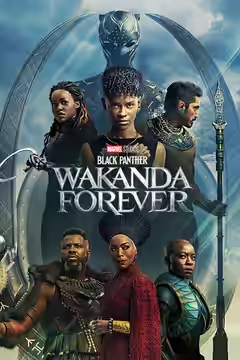
Ryan Coogler mourns Chadwick Boseman with dignity, and the grief is the best thing here: Angela Bassett, the white funeral, the long silence. Around it he has to build a Marvel film, and the Marvel film keeps getting in the way.
Ryan Coogler’s sequel to Black Panther (2018) had to be made without the man it was built around. Chadwick Boseman died in 2020, and rather than recast, Coogler and his co-writer Joe Robert Cole let T’Challa die in the opening minutes, off screen, of an illness his sister could not cure. The film is then about the people he left behind, and it is at its best whenever it trusts that. It is at its worst whenever it remembers that it is also a 162-minute Marvel film with a new villain, a new nation, a new young hero and a CIA subplot to fit in, and it remembers often.
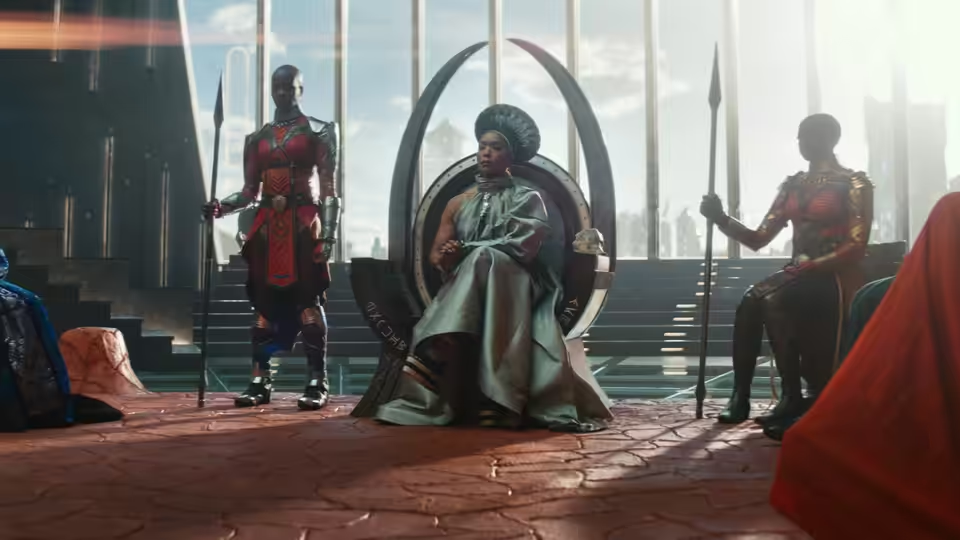
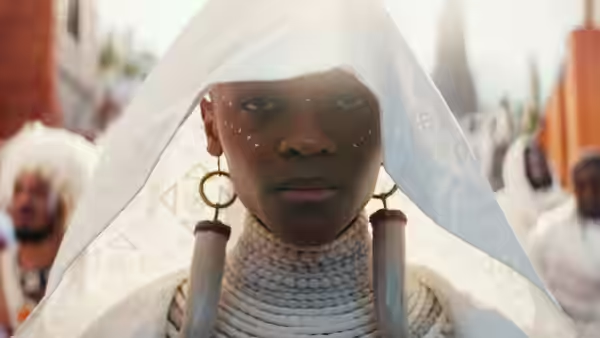
The funeral is the finest stretch. Ruth E. Carter dresses the whole country in white, the procession dances the coffin through the streets rather than carrying it, and Ludwig Göransson’s score drops to drums and voices. For a long while nobody says anything. We were moved more than we expected to be, and the reason is plain: a franchise that usually cannot stop explaining simply stands back and lets a country grieve, and the cast, who lost a colleague, are not asked to pretend otherwise. Angela Bassett plays Ramonda as a woman who has put her grief away in order to govern. Her address to the United Nations is delivered by someone who has decided never to raise her voice again, which is why it counts when she does. Letitia Wright’s Shuri has concluded that science failed her brother and is now angry at everyone, her mother included.
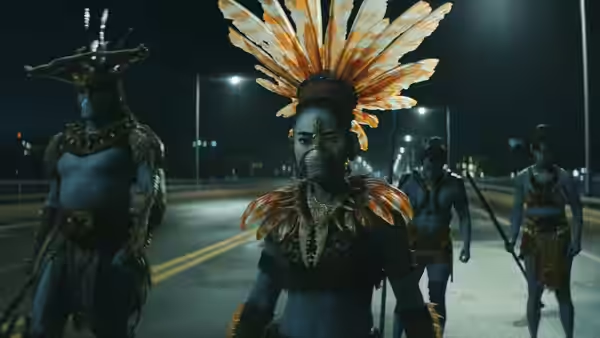
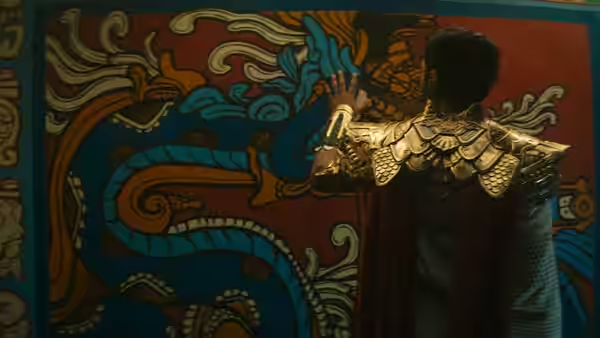
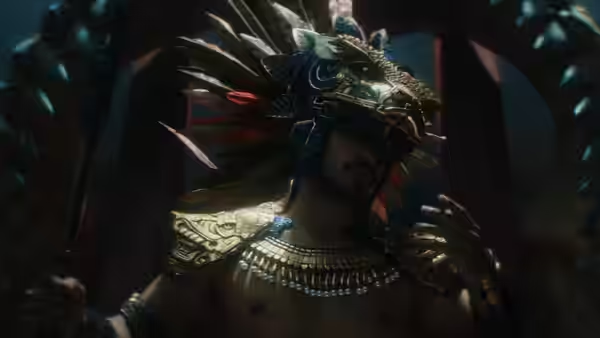
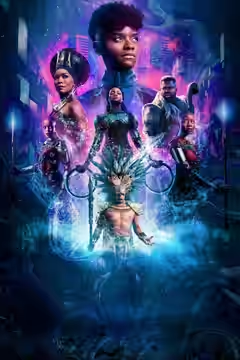
Tenoch Huerta’s Namor is the best new thing in it. He walks out of the surf and addresses a queen as an equal, and he has a case: the surface world is now hunting the same metal his people live on. Hannah Beachler’s Talokan is a proper place, a city on the sea floor lit by an artificial sun, its stonework and Carter’s feathered headdresses drawn from Mesoamerica rather than from other superhero films. The script gives Namor a history and takes its time over it, and it understands that he and Wakanda want the same safety and disagree about how to get it. When the film is a quarrel between two hidden nations, it is good.
It keeps leaving that quarrel. There are three editors credited, Michael P. Shawver, Kelley Dixon and Jennifer Lame, and the film moves like something cut by three people. Scenes are cut off before they finish, and the film breaks away to check on Martin Freeman’s Everett Ross and Julia Louis-Dreyfus’s Valentina Allegra de Fontaine, who belong to another story and, we suspect, to a future one. Dominique Thorne’s Riri is bright and likeable and is here chiefly to be introduced. Winston Duke’s M’Baku gets the few laughs and Michaela Coel, as Aneka, gets almost nothing. Autumn Durald shoots Wakanda in warm daylight and does it well; underwater she has dark blue on dark blue, and the closing battle on a ship at sea is fought in a grey haze in which we could not always tell who was on which deck.
Somewhere past the two-hour mark we were tired, and then cross about being tired by a film whose first twenty minutes had bought so much goodwill. The length is not the problem in itself. The problem is that the length is spent on the parts the studio needs rather than the parts the film needs, and the film knows the difference, because whenever it returns to Bassett or Huerta it steadies at once.
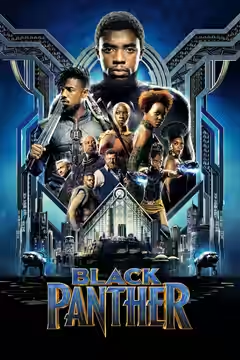
This is more sombre than the first film and less sure of itself. Black Panther had a villain whose argument was the film’s own, and it moved. This one has a villain nearly as good and a plot that keeps ushering him off screen to make room for people who will matter later. Coogler’s Creed (2015) also handed a legacy to someone who had not asked for it, and did not need a second nation or a second war to do it.
See it for the funeral, for Bassett and for Huerta. It is worth an evening if the genre is yours, and it will be a long one. It carries a 12A, which is fair, and runs 162 minutes, which is not.