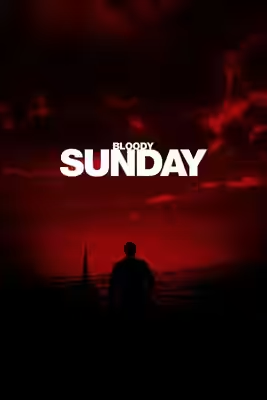
Paul Greengrass reconstructs a day in Derry in 1972 handheld, almost unscored and cut to black between scenes, with James Nesbitt as march organiser Ivan Cooper. It left us shaking. Its weakest scenes are those that try hardest to be fair to the army.
The film came out in Britain on 25 January 2002, thirty years almost to the day after the event. Paul Greengrass, who wrote and directed, took a decision early that governs everything else: no flashbacks, no captions, no narrator, one Sunday in Derry from dark to dark in 107 minutes. It is a hard, honest film and we recommend it. It also has a flaw, and the flaw is the army; we will come to that.
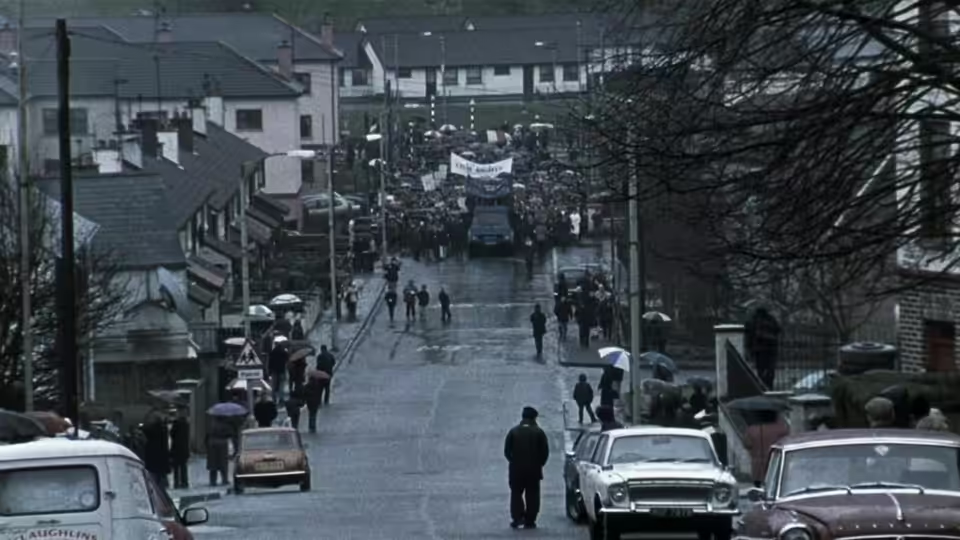
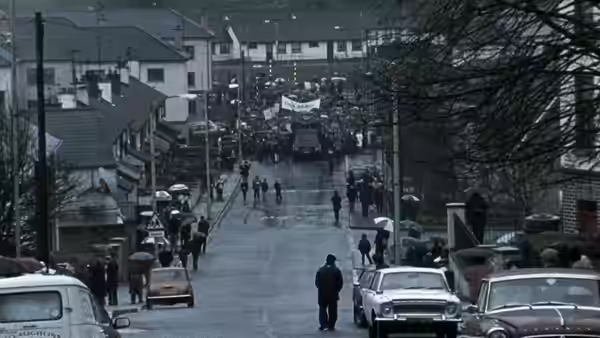
Ivan Strasburg shoots everything handheld, in daylight that looks as if it came through net curtains, and the camera is usually half a second late, swinging to find whoever has just spoken. Clare Douglas cuts each scene into black before it has finished. A kitchen, dark. A barracks briefing, dark. The day comes to us in pieces with gaps between them, which is how witnesses remember, and it means we never settle. Dominic Muldowney is credited with the music and we noticed almost none of it; what we heard was Land Rovers, loudhailers and radio traffic. John Paul Kelly’s Bogside is wrecked cars across the road, grey flats and painted gable ends, and within twenty minutes we knew which street led where. That matters later.
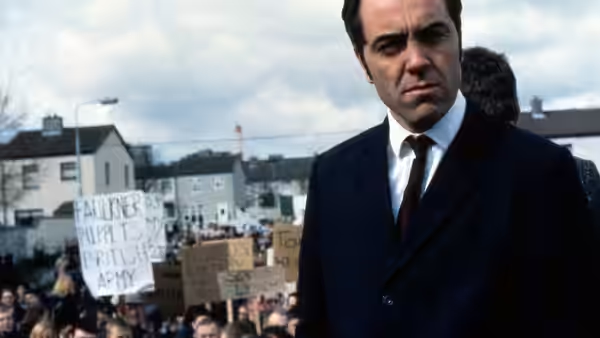
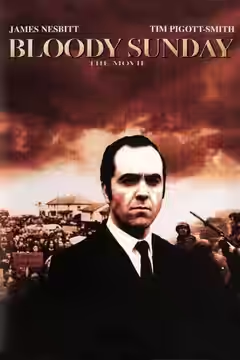
James Nesbitt plays Ivan Cooper, the Protestant MP leading the march, as a man who cannot stand still. He is out before his wife is awake, in Dinah Collin’s good dark overcoat, shaking hands at every corner, telling the priests it will be fine and the young men at the barricade that the march is theirs if they stay in it. He has a joke for everyone and we believed he had used all of them before. Around him Greengrass sets Mary Moulds as Bernadette Devlin and Gerard Crossan as Eamonn McCann, sharper and less hopeful than he is, and Allan Gildea as his fellow organiser Kevin McCorry. Declan Duddy’s Gerry Donaghy, seventeen and just home from prison, spends the morning promising his sister Mary (Joanne Lindsay) and his girl (Edel Frazer) that he will keep out of trouble.
Behind the wire, Tim Pigott-Smith’s Major General Ford wants the Parachute Regiment sent in to arrest stone-throwers, and Nicholas Farrell’s Brigadier Maclellan does not want to give the order and knows he will. Pigott-Smith plays Ford with the calm of a man who has already written his report, and these scenes are good. The ones below them are not. Greengrass gives us the paratroopers in the back of their lorries, one keen, one uneasy, one saying nothing, and the writing thins until we could feel the film being fair. Some critics call it even-handed; we found it dutiful, and we think the film would lose nothing if the army were Ford, Maclellan, Christopher Villiers’s Major Steele and James Hewitt’s Colonel Tugwell, and nobody below the rank of major.
Then the march reaches the barrier, part of it turns for Free Derry Corner and part of it does not, and the film changes. We will not describe who the day takes. The title tells you what happens, and knowing does not help. What got at us was the plainness: no slow motion, no music, no cutaway to a face for our benefit, just Strasburg running with people who are running and Douglas cutting on where they are, so we always knew who was behind which wall. We came out shaking, and not in the way action films mean. We were angry too, which is what Greengrass wanted, and he had earned it.
Two things to know before you start. The film assumes you know what internment was, why the march was banned and who Bernadette Devlin was, and it will not stop to tell you; a viewer coming to it cold will spend the first twenty minutes catching up. And it takes a side without pretending otherwise. The one speech it stops for is Cooper’s, to a room of journalists late that night, and Nesbitt delivers it in the voice of a man who has not sat down since dawn. We thought it the right speech. Not everyone will.
It is a 15, and there is less blood on screen than the certificate suggests; the horror is in the sound and in the sudden emptiness of a street. Watch it in one sitting with the volume up, and keep the rest of the evening free. You will not want to do anything else with it.