Jay Roach’s harassment drama has enough force to justify an evening, chiefly through Charlize Theron and Margot Robbie. Its hurried storytelling and gentle treatment of the women’s politics keep it from going much deeper.
Jay Roach’s Bombshell is a worthwhile but limited drama about harassment at Fox News, with performances that give its brisk account more weight than the writing supplies. Charles Randolph’s screenplay wants to take us through the workplace quickly and make its chains of power easy to follow. That approach keeps the film accessible, though it also encourages us to accept people before we have properly considered them. The strongest passages give the women time to hesitate, rather than hurrying them towards the next explanation.
Charlize Theron’s Megyn Kelly is compelling because the performance keeps us alert to how much professional confidence can conceal. Even a pause feels like a decision about what can be said without consequences. The physical resemblance is striking, but the guarded delivery gives us something to watch once recognition has worn off. Nicole Kidman is persuasive as Gretchen Carlson, though Charles Randolph gives her too little room; her experience deserves more attention than this crowded account can spare.
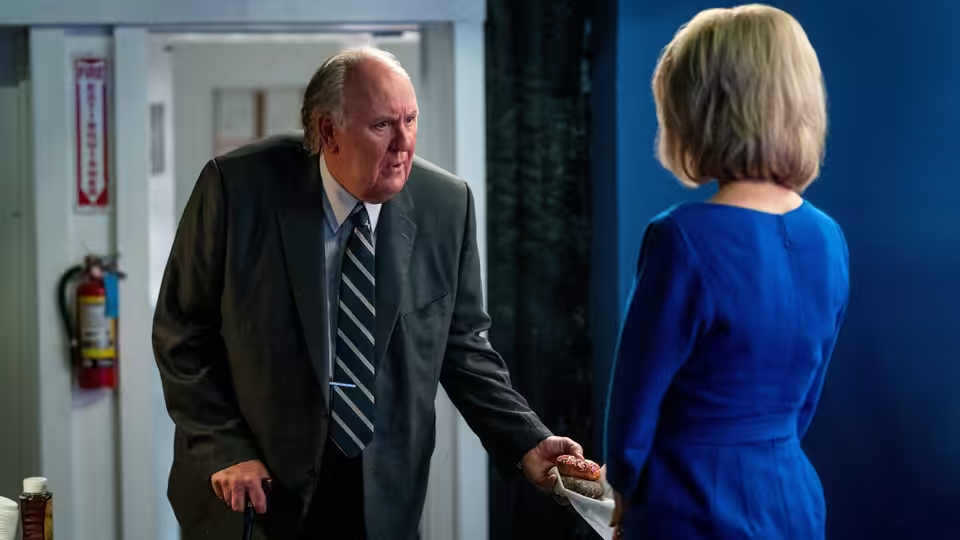
Margot Robbie gives Kayla Pospisil an eagerness that makes her first encounter with Roger Ailes difficult to sit through. We were horrified by the pressure in that office, because she makes the effort to remain agreeable feel like work she cannot safely stop doing. John Lithgow allows Roger Ailes enough ordinary authority to make the intimidation credible. He does not need to announce the danger with every line. The scene understands how wanting a job can make resisting its gatekeeper harder.
Barry Ackroyd and Chris W. Johnson’s cinematography keeps our attention on people assessing one another inside the newsroom. The watchfulness is useful: faces matter here because everyone is trying to read a situation without disclosing too much. Mark Ricker’s production design supplies a credible workplace for these uncomfortable encounters, making the intimidation harder to dismiss as something separate from the daily business. The women-only lift scene is especially effective, allowing the shared space to suggest pressure without another explanation of the company hierarchy.
Jon Poll’s editing gives the film considerable forward movement, but it also leaves some conversations feeling rushed before they have been understood. The briskness helps when the job is simply to keep a large workplace legible. It becomes a problem when a woman’s response needs time to register and the film is already moving on. Theodore Shapiro’s music fits that impatient energy, though we wanted less encouragement to treat the next development as entertainment. The performances supply discomfort more persuasively than the surrounding bustle does.
The larger weakness is the treatment of the women’s politics. A workplace drama can take harassment seriously while examining what its central characters have helped their employer do. Here, the women’s relationship to Fox News receives too gentle an inspection, as though further scrutiny might make sympathy harder to secure. We do not need them made easier to like, and the screenplay’s caution makes them less interesting. Questions about their own influence within the company are raised without being pursued for long.
At 109 minutes, Bombshell is unlikely to test anyone’s patience, but its speed should not be mistaken for completeness. The acting and the scenes of coercion justify a qualified recommendation, particularly for those interested in how intimidation becomes routine at work. Leave time afterwards to argue about whom the film lets off lightly.