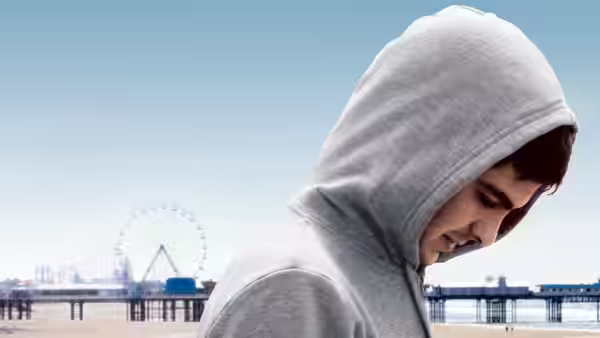
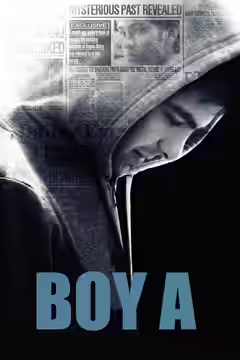
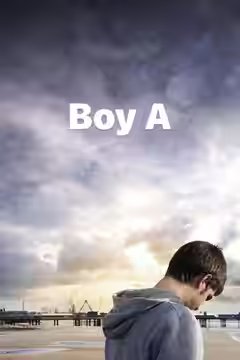
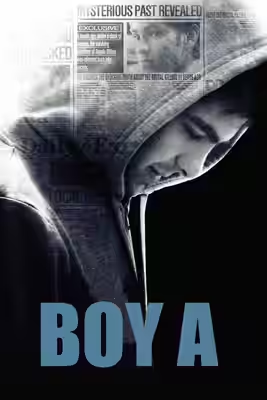
John Crowley’s film about a man released and renamed after a childhood crime is quiet, decent and held together by Andrew Garfield, who plays a grown man with a boy’s reflexes. The ending hurries what the first hour earned.
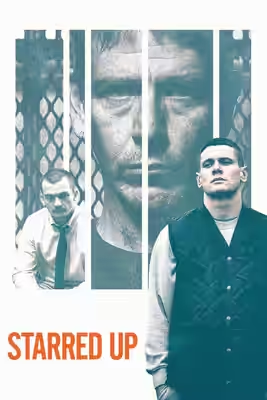
John Crowley’s film, adapted by Mark O’Rowe from Jonathan Trigell’s novel, begins with a young man being handed trainers and asked what he wants to be called. He picks Jack. He has been inside since he was a boy, for something the whole country remembers, and Terry (Peter Mullan), his caseworker, sets him down in Manchester with a flat, a job and a name nobody will recognise. The tagline asks who decides whether he gets a second chance. The film’s answer is that everyone does, including people who have never met him.
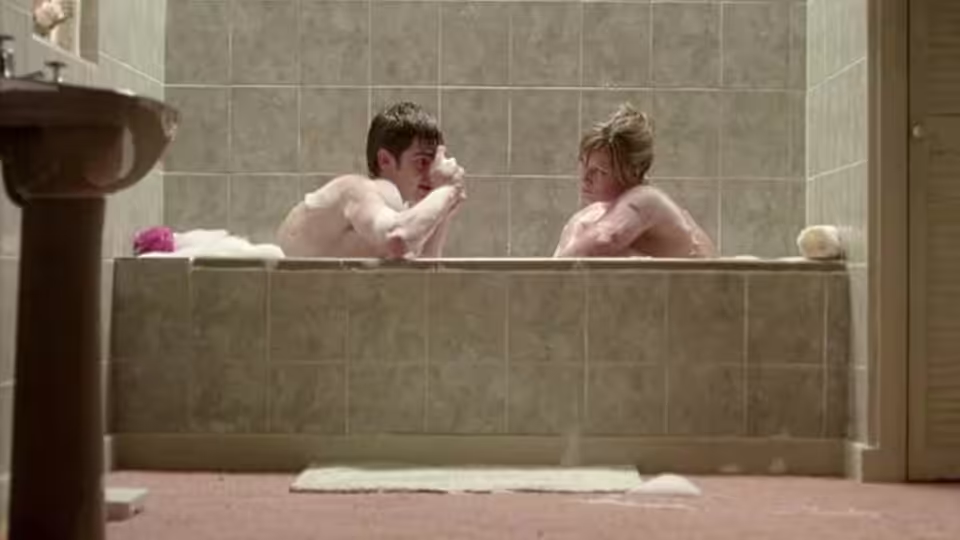
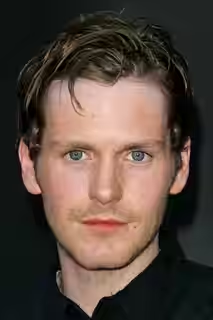
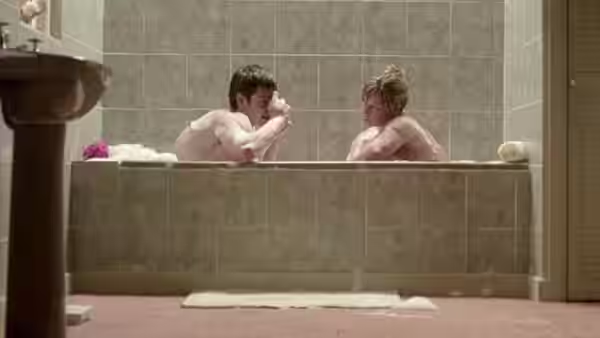
It is a good film, plainly made, and for most of its 106 minutes it trusts its actors to carry it. Andrew Garfield plays Jack as someone who learned his manners from staff and nothing from friends. He says thank you too often. He stands in doorways waiting to be asked in. When Chris (Shaun Evans), from the delivery firm, drags him to a club and puts a pill in his hand, Garfield’s face does the thing the film depends on: a grown man having a first time at everything, pleased, and terrified of being seen to be pleased. For the first hour Crowley simply watches him, and he is right to.
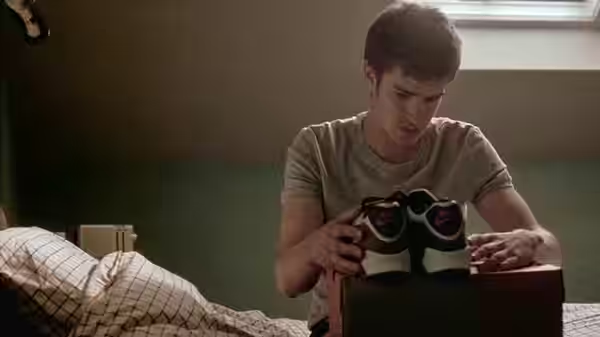
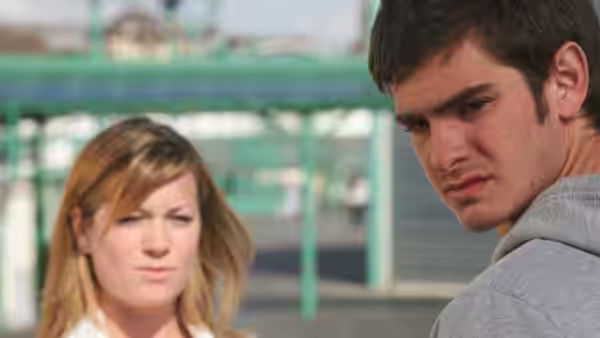
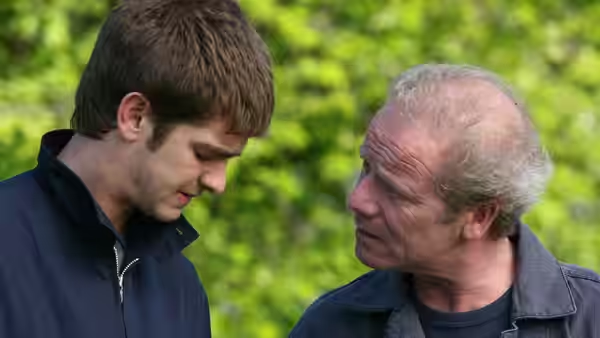
We were moved by it, more than the modest filmmaking led us to expect, and we can say where. It was Jack alone in the flat on his first night, trying the trainers on and saying nothing. Later it was Michelle (Katie Lyons), the receptionist, asking where he grew up, and Jack building an answer out of what Terry told him to say. Lyons plays Michelle as a woman who has decided to like him before she has worked him out, and their courtship, over sandwiches and bad jokes in the firm’s kitchen, is written without condescension. Mullan plays a man whose kindness has a cost at home, paid by his son Zeb (James Young), who watches his father give a stranger what he never got himself.
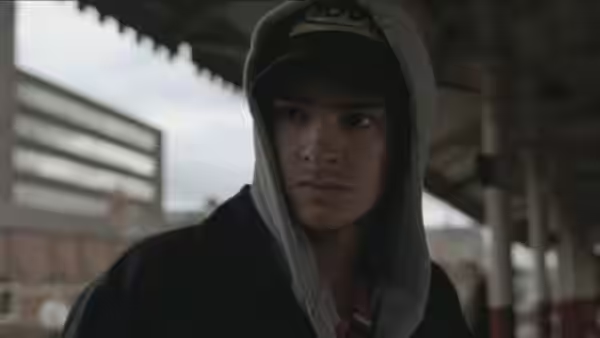
Rob Hardy shoots the present in grey Manchester daylight, handheld and close, so that Jack is nearly always in frame with something behind him he cannot see. The flashbacks, in which Alfie Owen plays the boy he was, Eric Wilson, and Taylor Doherty the friend, Philip Craig, who finds him being bullied, are warmer and hazier, summer light on scrubland and railway cuttings. That is right: this is how Jack remembers it, the one good year. Lucia Zucchetti cuts between the two times without announcement, often on a sound, the best thing in the film’s construction; we simply find ourselves in the past. Jon Henson gives Jack a bedsit with a kettle and nothing on the walls, and the firm a yard of vans and a kitchen. Paddy Cunneen’s score is spare, piano mostly, and stays out of the way until the end, when it does not.
The trouble is the plot, which in the second half starts arranging things. A stroke of luck puts Jack’s face in the local paper, and from there the script moves him towards the ending it wants rather than the one the character would find. The childhood crime, when we see it, is staged as though the film did not trust us to have felt its weight. And the finish, which we will not describe, is played and scored at a size the film had until then refused. The last ten minutes belong to a louder, lesser film.
The reviews so far are split between warm and cool, and the cool ones are not wrong about the contrivances. We think they underrate how much the first hour does, and how seldom a British film about a working-class young man makes nobody a type. Crowley and O’Rowe made Intermission (2003) together, a noisy ensemble piece; this is its opposite, small and watchful, and it suits them both.
See it for Garfield, Mullan and Lyons, and for the hour in which it lets them be people. When the music swells, the script has taken over. It carries a 15.