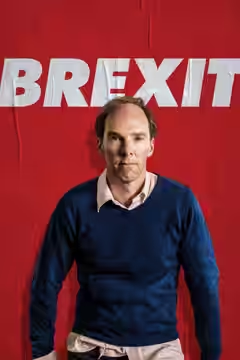
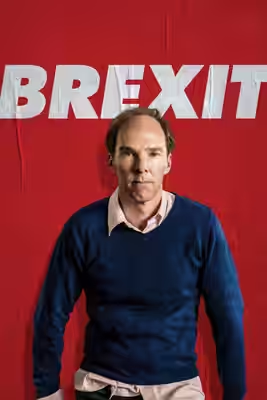
Benedict Cumberbatch holds together a brisk, limited drama about political persuasion. There is enough here for anyone interested in campaign machinery, though its fascination with Dominic Cummings makes its explanations of Brexit feel too convenient.
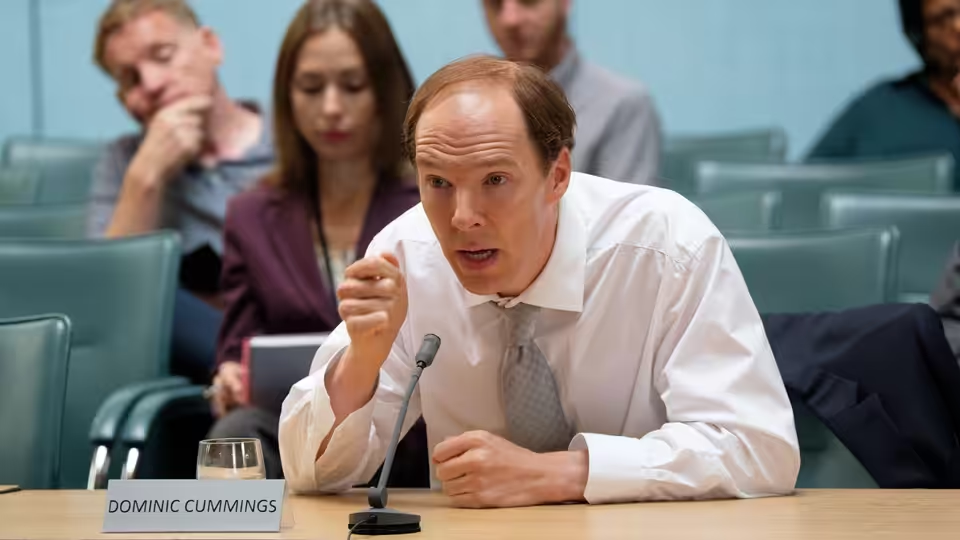
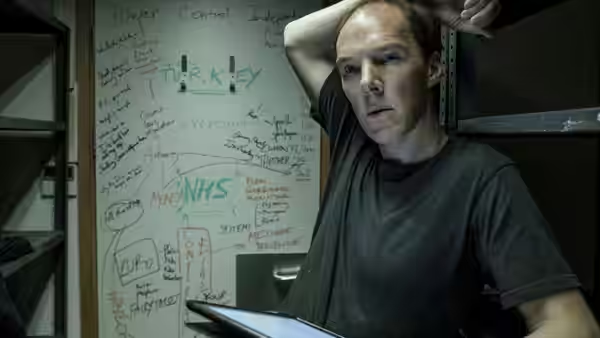
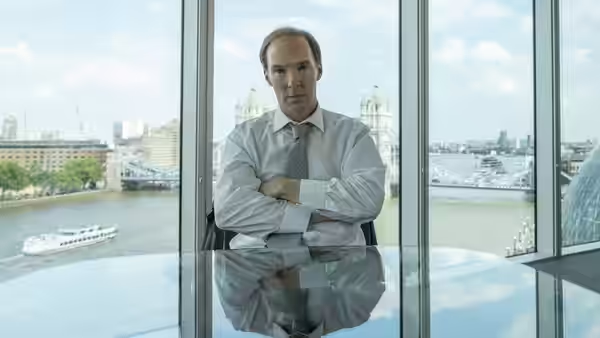
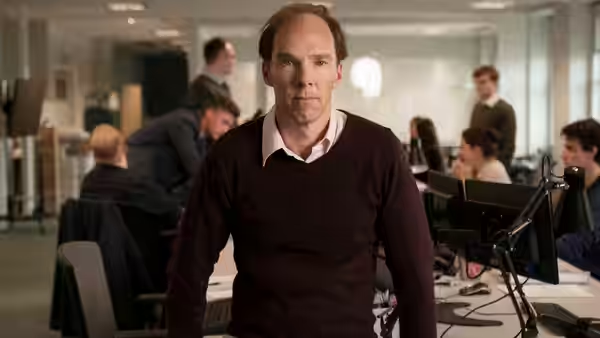
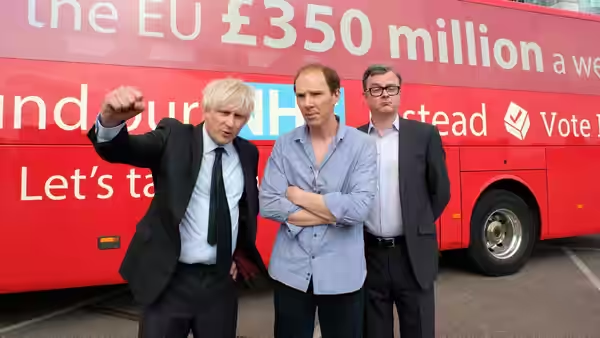
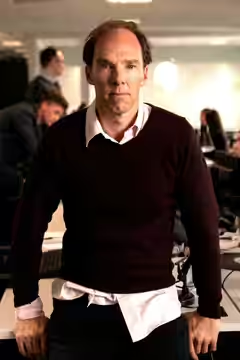
Brexit: The Uncivil War works reasonably well as a drama about campaign tactics, provided we do not mistake it for a sufficient explanation of Brexit. Director Toby Haynes and writer James Graham make Dominic Cummings the chief source of interest, and Benedict Cumberbatch gives them plenty to work with. There is pleasure in following somebody who thinks he has spotted what everyone else has missed. There is also a risk in letting his account dominate a film about so many other people.
The lead performance gives the strategist enough ambiguity to resist becoming a straightforward hero. His confidence is compelling even when we distrust it, and his outsider status makes it tempting to take his side. Rory Kinnear, playing Craig Oliver, supplies a useful competing presence, though the film gives him less hold on our attention. We wanted more time away from the central character, partly because the actor playing him is so effective at making everyone else seem secondary.
The script makes the work of reaching voters easy enough to follow without demanding prior interest in campaign management. We were unsettled by its attention to data-mining and social-media targeting. The disturbing part is the suggestion that a campaign can learn enough about people to find the message they are least equipped to resist. The film makes those techniques comprehensible, although the ease with which they seem to explain political behaviour ought to make us cautious.
Matthew Cannings’s editing does useful work keeping the explanations from stalling the film. Danny Cohen’s cinematography contributes to its polished, readily digestible feel, making this difficult subject comfortable to watch. Ed Turner’s production design is similarly unobtrusive, leaving the performers to supply most of the friction. Daniel Pemberton’s music adds to that sense of momentum, sometimes more insistently than the material needs. These contributions help the drama move along, but they also encourage us to enjoy the campaign’s ingenuity before questioning it.
The film’s treatment of racism and xenophobia is too slight for a drama so interested in what moves voters. Several explanations of Brexit jostle for space without receiving enough time to become convincing. The result is that the campaign mechanics are often clearer than the motives of the people being addressed. We come away with a strong impression of Dominic Cummings and a much weaker understanding of why his audience might listen.
As a political procedural, it has a useful curiosity about how persuasion works. We do not need a film to cover every cause of a national decision, and following campaign staff is a reasonable choice. But the attention given to its central strategist encourages a larger claim for his importance than this narrow account can justify. The script needed to question his importance more firmly, particularly when it had already made him such engaging company.
Give it 92 minutes if campaign technique already interests you. We would not offer it as an introduction to the reasons people voted as they did, and its confidence can be misleading to anyone expecting that. Keep some scepticism for the clever men, even when the film is enjoying their company.