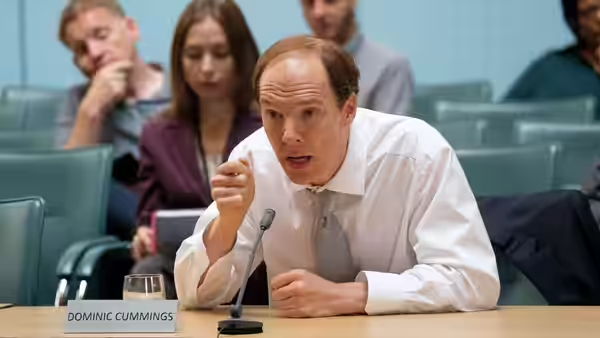
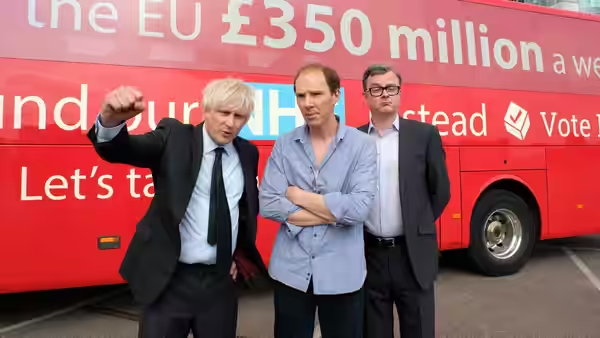
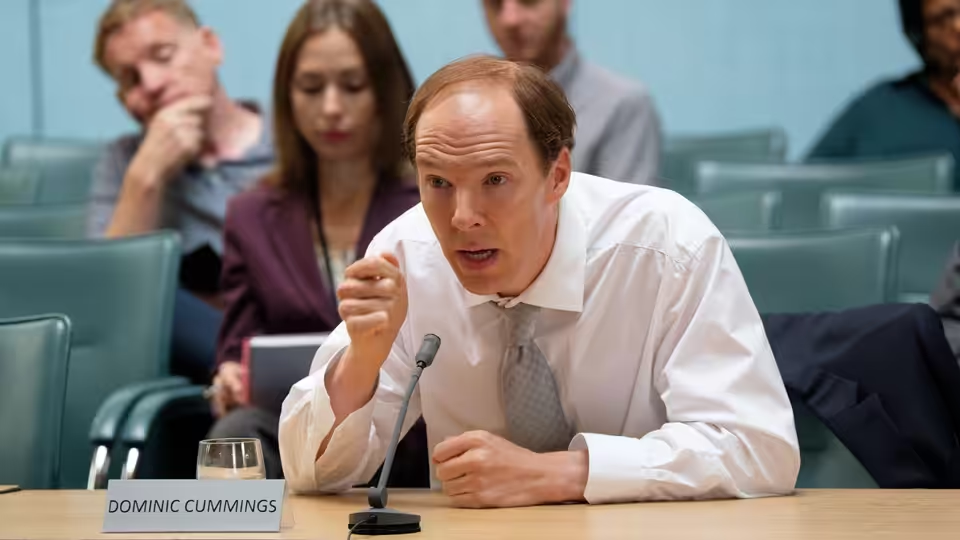
Dominic Cummings (Benedict Cumberbatch) speaks into a microphone at a parliamentary hearing
Film review

Brexit: The Uncivil War

2019 · Directed by Toby Haynes · 1h 32m

In a sentenceBenedict Cumberbatch is alarmingly good company for a film about being manipulated

During the Brexit referendum campaign, Dominic Cummings (Benedict Cumberbatch) sets out to secure a Leave vote through data-mining and social-media targeting. His outsider approach puts the methods of political persuasion at the centre of the contest. Matthew Elliott (John Heffernan) and Craig Oliver (Rory Kinnear) are among the campaign figures trying to understand and influence the electorate. The strategists face competing explanations of what people want, and must decide which messages will persuade them. The drama follows the work of shaping those messages and finding the voters most likely to respond.

Plays from YouTube when you press play; nothing loads from them until then.

Fi1m review

Benedict Cumberbatch holds together a brisk, limited drama about political persuasion. There is enough here for anyone interested in campaign machinery, though its fascination with Dominic Cummings makes its explanations of Brexit feel too convenient.

Brexit: The Uncivil War works reasonably well as a drama about campaign tactics, provided we do not mistake it for a sufficient explanation of Brexit. Director Toby Haynes and writer James Graham make Dominic Cummings the chief source of interest, and Benedict Cumberbatch gives them plenty to work with. There is pleasure in following somebody who thinks he has spotted what everyone else has missed. There is also a risk in letting his account dominate a film about so many other people.

The lead performance gives the strategist enough ambiguity to resist becoming a straightforward hero. His confidence is compelling even when we distrust it, and his outsider status makes it tempting to take his side. Rory Kinnear, playing Craig Oliver, supplies a useful competing presence, though the film gives him less hold on our attention. We wanted more time away from the central character, partly because the actor playing him is so effective at making everyone else seem secondary.

The script makes the work of reaching voters easy enough to follow without demanding prior interest in campaign management. We were unsettled by its attention to data-mining and social-media targeting. The disturbing part is the suggestion that a campaign can learn enough about people to find the message they are least equipped to resist. The film makes those techniques comprehensible, although the ease with which they seem to explain political behaviour ought to make us cautious.

Matthew Cannings’s editing does useful work keeping the explanations from stalling the film. Danny Cohen’s cinematography contributes to its polished, readily digestible feel, making this difficult subject comfortable to watch. Ed Turner’s production design is similarly unobtrusive, leaving the performers to supply most of the friction. Daniel Pemberton’s music adds to that sense of momentum, sometimes more insistently than the material needs. These contributions help the drama move along, but they also encourage us to enjoy the campaign’s ingenuity before questioning it.

The film’s treatment of racism and xenophobia is too slight for a drama so interested in what moves voters. Several explanations of Brexit jostle for space without receiving enough time to become convincing. The result is that the campaign mechanics are often clearer than the motives of the people being addressed. We come away with a strong impression of Dominic Cummings and a much weaker understanding of why his audience might listen.

As a political procedural, it has a useful curiosity about how persuasion works. We do not need a film to cover every cause of a national decision, and following campaign staff is a reasonable choice. But the attention given to its central strategist encourages a larger claim for his importance than this narrow account can justify. The script needed to question his importance more firmly, particularly when it had already made him such engaging company.

Give it 92 minutes if campaign technique already interests you. We would not offer it as an introduction to the reasons people voted as they did, and its confidence can be misleading to anyone expecting that. Keep some scepticism for the clever men, even when the film is enjoying their company.
Critical consensus AI synthesised

60
Positive
5
Mixed
1
Negative
2

Most critics find Brexit: The Uncivil War an engaging, brisk political drama, with praise clustering around Benedict Cumberbatch’s performance as Dominic Cummings. The campaign strategist emerges as a compelling, sometimes ambiguous figure, and several reviews admire how the film makes campaign tactics absorbing. James Graham’s clear, fast-moving writing earns approval, while the attention to data manipulation, misinformation and social media targeting gives the drama much of its force.

The spread is wide, however, and the reservations concern how much the film explains beneath that busy surface. Even favourable reviews note limited scope and cheap dramatic touches. Variety praises Cumberbatch but finds too many explanations competing for attention; Consequence values the data-mining material while questioning the treatment of racism and xenophobia. The Guardian offers the sharpest dissent, arguing that the film is irresponsible in its handling of misinformation and gives Cummings prominence at the expense of other characters and important issues.

The i Paper
7 January 2019 · ★★★★ · Gerard Gilbert
80

The critic finds the drama hugely engaging but says it is unlikely to change anyone’s mind about Brexit. They single out its compelling portrayal of Dominic Cummings’s outsider campaign and the way it draws viewers’ sympathies toward Vote Leave.

Read the full review →
Evening Standard
8 January 2019 · Susannah Butter
75*

Butter finds the drama pacy, thought-provoking and absorbing, with something to enjoy regardless of how viewers voted. She particularly praises its nuanced portrayal of Dominic Cummings and the performances that bring the campaign’s characters to life.

Read the full review →
Empire
7 January 2019 · James Dyer
70*

Dyer finds the drama a chilling and compelling account of the data-driven Brexit campaign. He singles out its focus on data manipulation and misinformation as an alarming indictment of modern politics.

Read the full review →
The Hollywood Reporter
16 January 2019 · Tim Goodman
70*

The critic finds the film briskly entertaining and relevant, despite its limited scope and the referendum’s ongoing complexity. He praises Benedict Cumberbatch’s lead performance and James Graham’s clear, fast-moving writing.

Read the full review →
The New Yorker
18 January 2019 · Troy Patterson
70*

Patterson finds the film a crisp political procedural and praises its portrayal of Dominic Cummings as an ambiguous, destructive strategist. He singles out Benedict Cumberbatch’s performance, while noting the film’s weakness for cheap dramatic touches.

Read the full review →
Variety
16 January 2019 · Daniel D'Addario
35*

The critic says the film falls short of its promise and lacks focus. He praises Cumberbatch’s portrayal of Dominic Cummings but faults the film for treating too many explanations of Brexit as equally important.

Read the full review →

Straight answers AI written, from our review

Is Brexit: The Uncivil War worth watching?
Brexit: The Uncivil War is worth watching if campaign tactics interest you; we score it 64 out of 100. Benedict Cumberbatch makes Dominic Cummings compelling company, and the drama explains political targeting briskly. Its narrow focus makes it less useful as an introduction to why people voted as they did.
How long is Brexit: The Uncivil War, and what is it rated?
Brexit: The Uncivil War runs 1h 32m. It is a history and drama film.
Where can I watch Brexit: The Uncivil War in Lithuania?
Brexit: The Uncivil War is not on any streaming or rental service in Lithuania at the moment. It is available in 4 other countries; change your country at the top of the page to see where. Availability is checked daily.
How violent or frightening is Brexit: The Uncivil War, and is it suitable for children?
Brexit: The Uncivil War carries a UK 15 certificate, so it is not suitable for children under 15. We find its treatment of data-mining and social-media targeting unsettling because it suggests how precisely campaigns can exploit voters’ vulnerabilities. That is a judgement about its political subject matter, rather than a detailed assessment of violence or other adult content.
How does Brexit: The Uncivil War compare to No Country for Old Men?
Brexit: The Uncivil War is a brisk political procedural, while No Country for Old Men is a patient, frightening thriller; we recommend the latter more strongly. The former suits an interest in campaign machinery, though its explanations are too convenient. The latter offers sustained tension through Javier Bardem’s performance, with a severity that can be wearying.
What should I watch after Brexit: The Uncivil War?
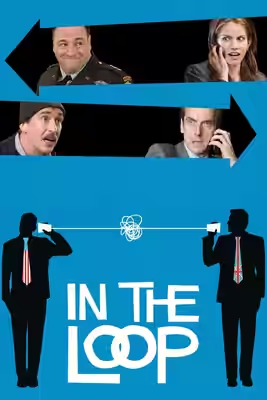
After Brexit: The Uncivil War, try No (2012, Fi1m 91): Another referendum fought through advertising, with more room for the campaign’s moral compromises. Then In the Loop (2009, Fi1m 92): For political operators whose verbal ingenuity considerably exceeds their sense of responsibility; and Borgen (2010, Fi1m 84): A longer view of the negotiations and compromises behind political power.

Cast

If you liked this, try…

  1. No (2012, Fi1m 91)Another referendum fought through advertising, with more room for the campaign’s moral compromises.

  2. The War Room (1993) · not reviewed yetA documentary look at campaign professionals turning strategy into daily, impatient work.

  3. In the Loop (2009, Fi1m 92)For political operators whose verbal ingenuity considerably exceeds their sense of responsibility.

  4. The Candidate (1972) · not reviewed yetA political campaign gradually teaches its candidate how to stop meaning anything.

  5. Borgen (2010, Fi1m 84)A longer view of the negotiations and compromises behind political power.

Free account

Know what to watch tonight

Two lists that know where things are streaming, collections you can share, your own score beside ours, and Discover that remembers what you have seen.

  • Want to see, sorted by what is streaming now
  • Seen, with your score out of ten
  • No adverts, ever