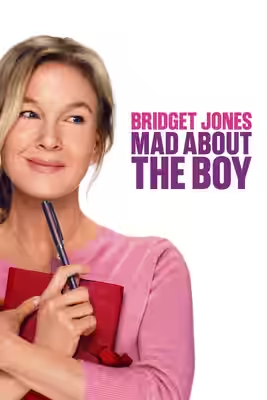
The fourth Bridget Jones film is the saddest and, for a while, the best since the first, with Zellweger and Grant doing careful work about getting older. It is also baggy, cushioned by money, and funnier in memory than while it was on.
Bridget Jones is in her fifties, widowed, and living with two children in a house far tidier than she is. That is the set-up of the fourth film, and it is a braver one than the series has tried before. Michael Morris directs, from a script by Helen Fielding, Abi Morgan and Dan Mazer based on Fielding’s novel, and for its first hour this is the best Bridget Jones film since Sharon Maguire’s original in 2001. Then it sits down and gets comfortable, and at 124 minutes it stays sat for longer than it should.
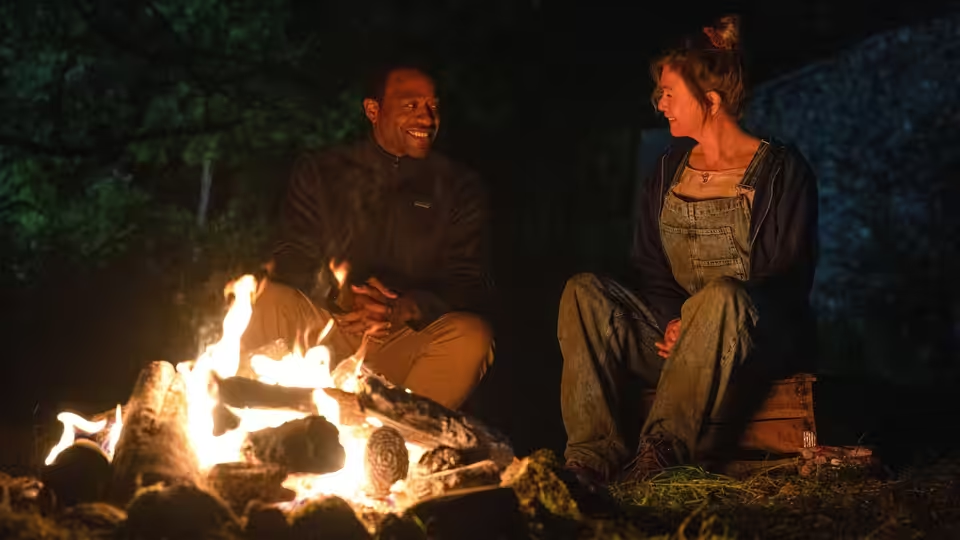
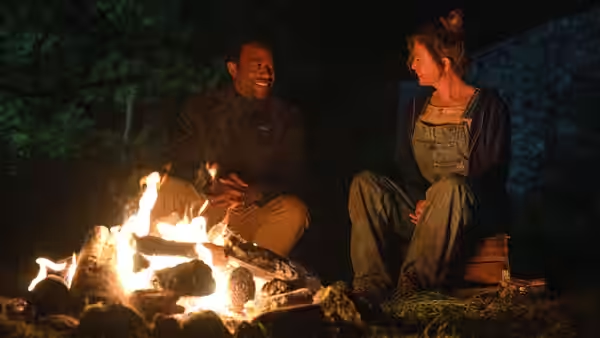
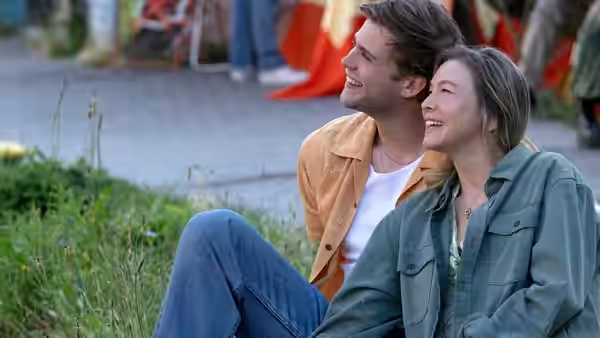
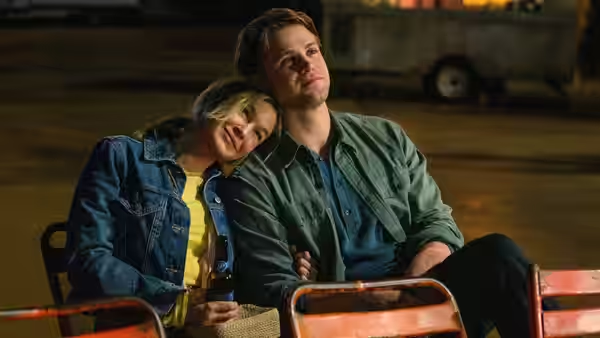
Renée Zellweger plays a Bridget who has stopped going out, and who is prodded back into the world by her friends Miranda (Sarah Solemani) and Talitha (Josette Simon). Two men turn up. Roxster (Leo Woodall) is in his twenties, found on a dating app, and says all the right things; Scott Walliker (Chiwetel Ejiofor) is nearer her own age and says considerably fewer of them. You can see where this is going inside ten minutes.
Zellweger has been playing this woman for a quarter of a century and she still does the pratfalls, the flustered speeches, the face that does four things at once. A few critics found it too much this time, and in the public scenes we agreed; a mother of two falling over at a school gate is a routine, not a character. In the house, at night, she is doing something quieter. There is a bedtime scene with Mabel (Mila Jankovic) in which nobody says the word dead, and Zellweger holds a smile a second longer than the scene needs, and we were not ready for it. It moved us more than we expected a Bridget Jones film to, and it was the length of that smile that did it.
Hugh Grant’s Daniel Cleaver is older, greyer and still incapable of a sincere sentence, and Grant plays the incapacity as something Cleaver has lately begun to notice in himself. He has a handful of scenes and they are the funniest and the saddest in the film. Ejiofor is the other good thing. He gives Walliker a stillness the rest of the picture could use, and his scenes with Zellweger are the only ones in which two adults seem to be listening to each other. Woodall has the thinner part; Roxster is a set of nice manners and a jawline, and the script never decides how seriously we should take him. Jim Broadbent and Bridget Jones return as Bridget’s parents and are given about as much to do as a pair of framed photographs.
Suzie Lavelle shoots London in soft, low winter sun, with a good deal of parkland and bare trees, and the film looks as expensive as Tim Bevan and Eric Fellner’s comedies generally do. Kave Quinn’s production design puts Bridget in a large, bright house with a kitchen we found ourselves pricing, and it is hard to worry about a woman with that kitchen; the clutter that made the first film funny has been put away. Molly Emma Rowe helps by dressing her in the outsized jumpers and wrong-for-the-weather dresses of old. Dustin O’Halloran’s score is piano, mostly, and it arrives a bar before the feeling does, so that we are told to be sad and then shown why. Mark Day’s editing is the weak point: the second hour has no tension in it, subplots start and are left where they fell, and there is always one more scene before the one the film needs.
Most critics have been warmer than we are. Several call it the best of the four, and we would not go that far; set against Maguire’s original it is gentler, sadder and slower, with fewer jokes that land. Set against Bridget Jones’s Baby it is a clear step up. The grief is the part that works, and we did not expect a series built on drunken singing to play it so straight. The jokes are the part that has aged, and the ones about apps sound written by someone who has only been told about them.
Worth your evening if the earlier films were ever yours; if they were not, this will not convert you. Watch it at home, where the slow stretches can be talked over, and allow for the fact that it could lose twenty minutes and nobody would notice which ones.