Lanthimos locks Emma Stone and Jesse Plemons in a cellar for two hours, and the result is tense, cruel and often funny. It also knows exactly what it thinks about the people upstairs and the people down there, and it tells us more than once.
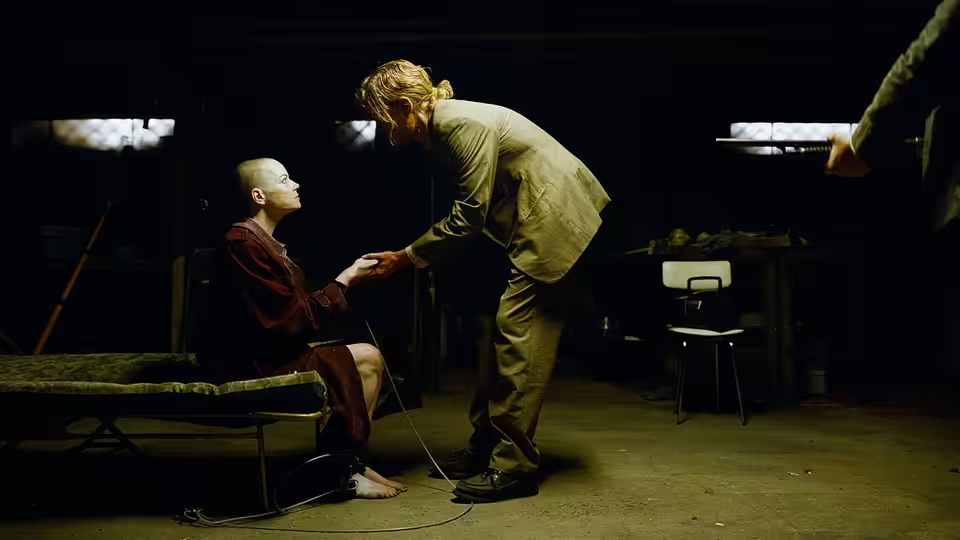
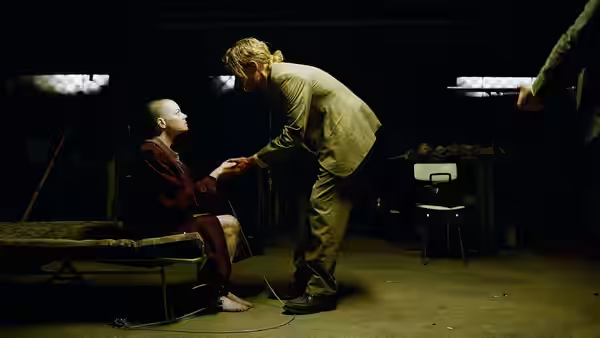
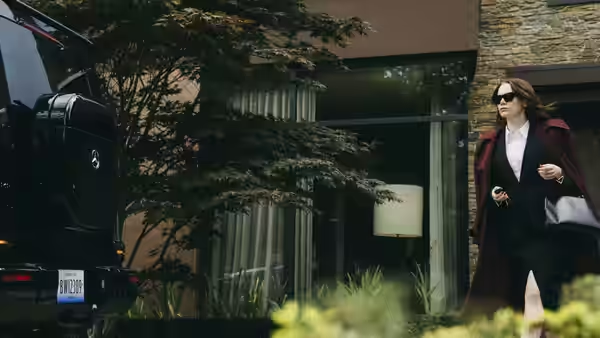
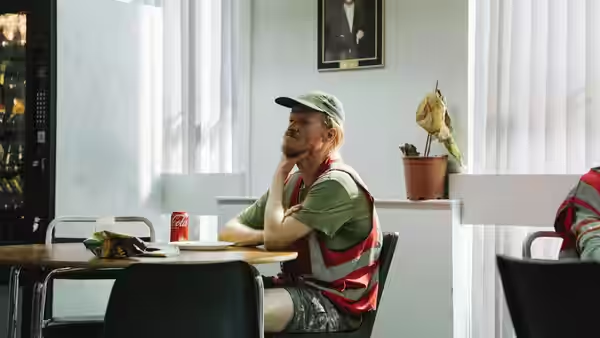
Teddy (Jesse Plemons) and his cousin Don (Aidan Delbis) abduct Michelle (Emma Stone), the chief executive of a pharmaceutical company, and chain her up in Teddy’s cellar. Teddy is certain she is an alien sent to finish off the planet, and means to hold her until a lunar eclipse, when he believes her people can be reached. Michelle is certain he is a man with a grievance and a price. Yorgos Lanthimos directs, from a script by Will Tracy, with Stone in front of his camera once more. For most of its 119 minutes it is an argument in a cellar, and as that it is as tense and as funny as anything Lanthimos has made. When it climbs the stairs to tell us what the argument meant, it is less good.
Plemons is the reason to see it. Teddy has read everything and understood all of it in the same wrong direction, and Plemons plays him as a patient man rather than a raving one, explaining the invasion to his captive the way a teacher explains long division. He is never louder than he needs to be. Stone’s Michelle, once the cellar door shuts, treats the kidnapping as a meeting that has started badly: she asks what he needs and tries to find the number. We winced at how fast she does it, before the shock has had any right to wear off. That speed is the joke of the performance and the horror of it at the same time. Delbis makes Don the only person in the house who notices that someone is in pain.
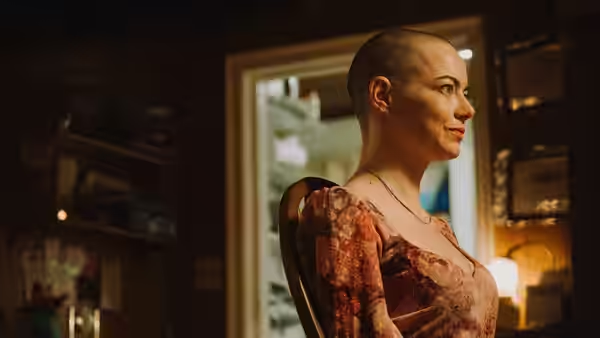
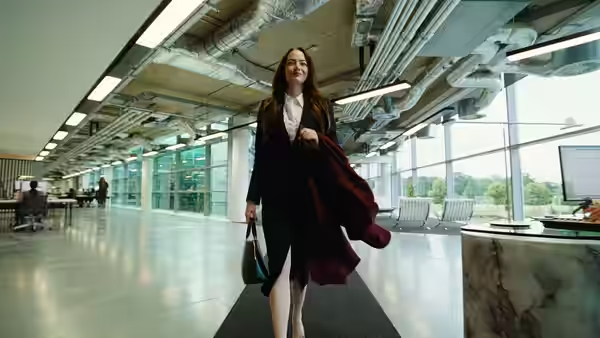
Robbie Ryan, who shot The Favourite and Poor Things, gives the cellar the same wide, deep frames he gives Michelle’s glass offices, so that both look like enclosures. James Price’s production design makes the office pale wood and silence, and the farmhouse peeling paint and things kept in case. Jennifer Johnson puts Michelle in a tailored suit and then in a grey sweatsuit, and much of the comedy comes from her behaving in the second as though she still wore the first. Jerskin Fendrix’s score arrives in bursts of drums and brass. Once or twice that is thrilling; more often it is telling us something the actors have already told us.
That is the film’s habit. Will Tracy, who co-wrote The Menu, gives each side a language. Teddy’s is the internet’s: trials, cover-ups, what they don’t want you to know. Michelle’s is the company’s: boundaries, wellness, hearing people out. Both are funny the first time, and both are repeated until we could guess the next phrase. A visit from a local police officer, Casey (Stavros Halkias), is the loosest and best comic scene in the film, because nobody in it is making a speech. Alicia Silverstone’s Sandy has a few minutes on screen and exists to explain Teddy.
Then the last third takes a turn we will not describe. Many of the reviews so far single it out as the best part of the film, and it is the boldest. Yorgos Mavropsaridis, who has edited Lanthimos’s films since Dogtooth, closes on a long run of images without dialogue that startled us and then moved us. It also felt like the director stepping in front of his actors to deliver the moral himself, and after two hours of Plemons and Stone doing that job so well, we minded.
This is angrier than Poor Things and plainer about what it wants to say than Kinds of Kindness. People who liked the early films, where nobody explained anything, may find it eager to be understood. People who like Stone and Plemons will find two of the better performances either has given.
See it, and take someone who will argue with you about the ending in the car park. The cellar scenes will survive a sofa; the last ten minutes want a screen large enough that you cannot look away.