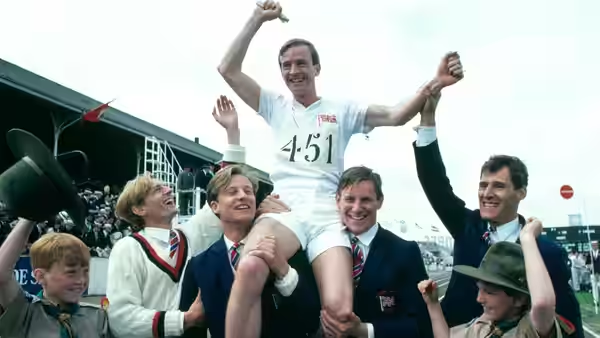
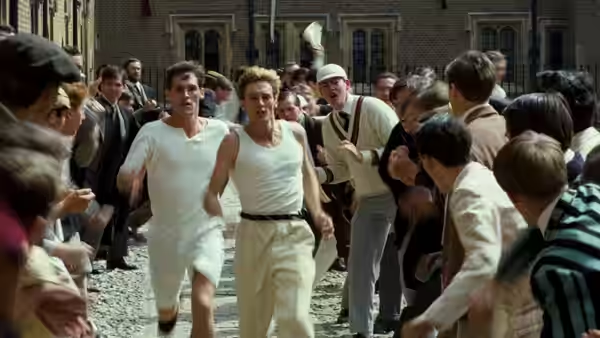
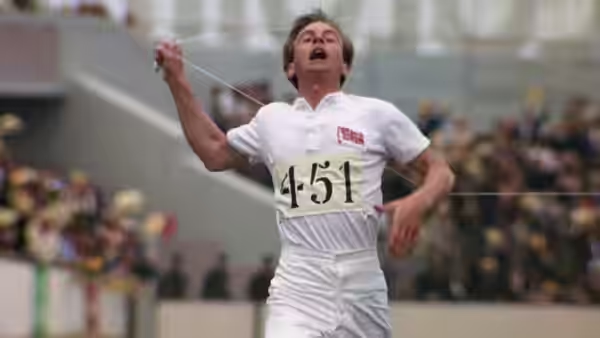
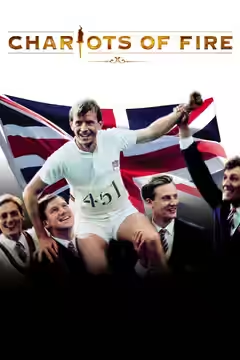
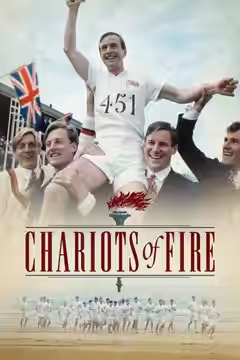
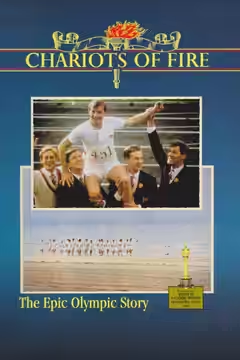
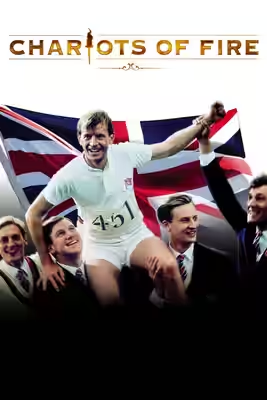
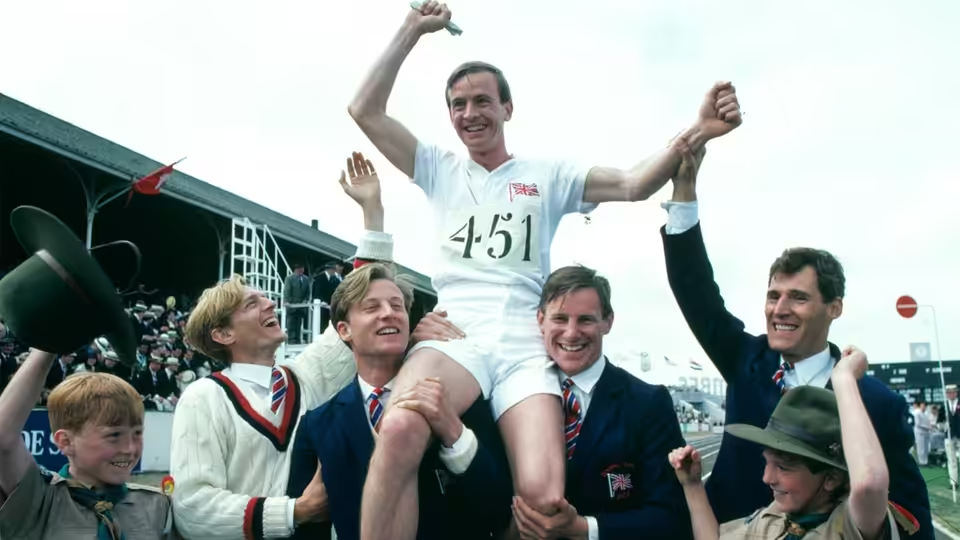
Harold Abrahams (Ben Cross) carried on shoulders by cheering supporters at a stadium
Film review

Chariots of Fire

1981 · Directed by Hugh Hudson · 2h 03m · Eirin G

In a sentenceVangelis makes a run along the beach sound worth getting out of bed for

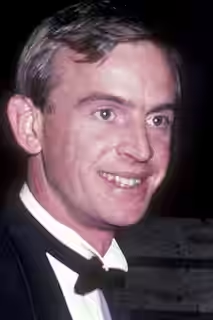
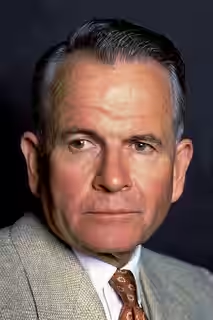
Harold Abrahams (Ben Cross) and Eric Liddell (Ian Charleson) are runners who want to prove something beyond their ability to win a race. Their ambitions bring them up against the English establishment, while their convictions set limits on what they will sacrifice to succeed. The film follows their separate experiences as athletes, asking what each man is prepared to give and what he insists on keeping. Ian Holm plays Sam Mussabini, Alice Krige plays Sybil Gordon and Nigel Havers plays Lord Andrew Lindsay in the supporting cast.

Plays from YouTube when you press play; nothing loads from them until then.

Fi1m review

Hugh Hudson’s Chariots of Fire gives its runners convictions worth caring about and races worth watching. The stately passages can drag, but Ben Cross, Ian Charleson and Vangelis keep this sports drama from becoming merely dutiful.

Chariots of Fire is a good sports drama with an unusually serious interest in why anybody bothers to compete. Hugh Hudson asks us to care about two runners who have decided that winning cannot justify everything, and largely earns that care. There are stretches when the film’s solemnity slows it almost to a standstill. Yet the running has enough excitement, and the men enough stubbornness, to make its attention to their principles feel worthwhile.

Colin Welland’s screenplay follows Harold Abrahams and Eric Liddell as outsiders confronting the English establishment. It gives each a reason to run that cannot be settled simply by measuring his speed, which is where the drama acquires some weight. Ben Cross makes Abrahams’s need to prove himself feel wearing as well as urgent; we can sense the effort required to live with it. Ian Charleson’s Liddell has a steadiness that makes his belief understandable even when it may not be shared.

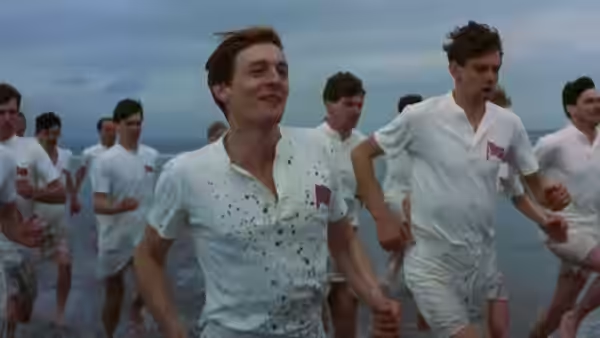
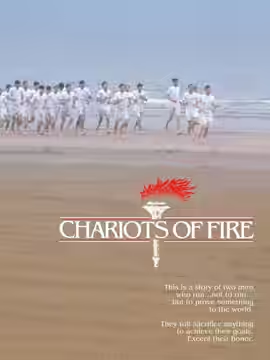
David Watkin’s photography does its most persuasive work on faces under strain. It makes the effort of competing visible, and gives the runners something to lose before we need to know anything about a result. We were moved by the beach running. The sight of people giving themselves so completely to a simple physical act got through our resistance to the film’s solemnity. These images let us enjoy the running without requiring another explanation of what it means.

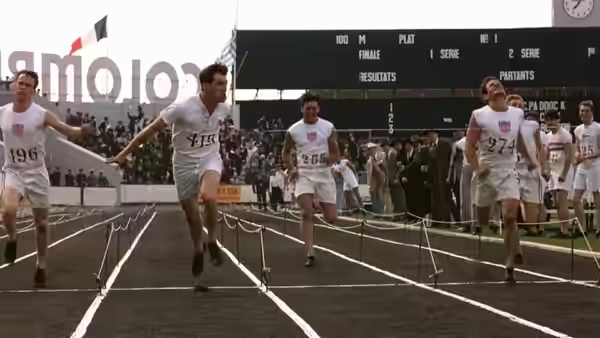
Terry Rawlings’s editing gives the running sequences their urgency, making physical exertion exciting without turning every moment into a demand for applause. Vangelis supplies the more openly emotional encouragement, and the music deserves much of the credit for how readily these passages reach us. The score can sometimes make the emotion feel too easy. It works best when the photography and cutting have already made us attend to the runners’ effort, giving that memorable music something substantial to support.

The difficulty comes when the film moves between the two men’s stories. Welland’s parallel structure keeps asking us to begin caring afresh, and Hudson does not always make the return to one runner feel necessary at that moment. Away from the running, the measured pace can become ponderous, with the same moral seriousness expressed once too often. The performances remain worth attending to, but there are passages when we are waiting for the film to move on.

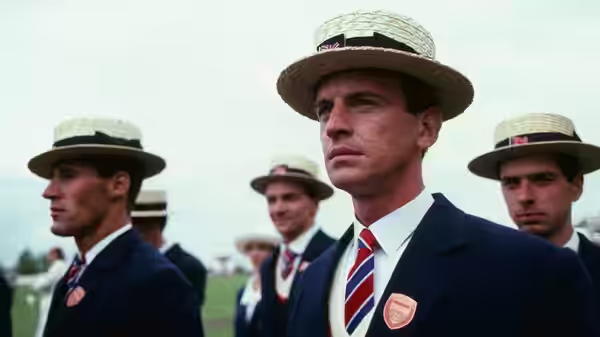
Milena Canonero’s costume design helps make the social distinctions readable without requiring us to stop and inspect them. The care over appearance also contributes to the feeling that everyone is being held slightly too formally in place. Hudson’s restraint suits the men’s dignity, but it can leave the surrounding people feeling less fully considered. Cross and Charleson are particularly good when they make that dignity seem difficult to maintain, something requiring an effort of its own.

As a sports film, this is willing to spend time on motives that a brisker entertainment might reduce to an obstacle before the next race. That patience is valuable, even when Hudson asks for too much of it. At 123 minutes, it needs an appetite for earnest discussion as well as athletic effort. Choose it for an evening when sincerity will be welcome and nobody is in a hurry.

Critical consensus AI synthesised

71
Positive
9
Mixed
1
Negative
4

With only 5 reviews in so far, the response is divided. Admirers praise the film’s old-fashioned sincerity, intelligent treatment of its athletes and careful character detail, while Vangelis’s score draws appreciation even from sceptics. The reservations concern pace and emotional depth: detractors find the storytelling slow or superficial, and performances praised elsewhere strike some as wooden. Time Out finds that the parallel narratives weaken each other, though the faith-based backstories sometimes work. The running sequences provide the clearest common ground, retaining their force even for critics unconvinced by the drama around them.

Radio Times
★★★★★ · John Marriott
100

The critic praises the film's old-fashioned innocence and celebration of the human spirit through careful detail and character study. Hudson's direction and Welland's script are highlighted as thoughtfully drawing out the athletes' experiences and strong performances.

Read the full review →
Empire
1 January 2010 · Ian Freer
90*

The critic finds the film richer and more complex than its heritage-cinema reputation suggests, praising its balance of optimism, intelligence and emotion along with strong performances and elegant direction.

Read the full review →
Los Angeles Times
20 September 1981 · Sheila Benson
90*

The film is majestic, masterful, exultant, triumphant and joyful, with sports as its backbone and passion as its fueling emotion. The critic singles out David Watkin's haunting photography and the running sequences under Terry Rawlings' editing for making them burst from the screen with intoxicating excitement.

Read the full review →
RogerEbert.com
1 January 1981 · Roger Ebert
90*

The critic was deeply moved by the film despite no personal interest in running or the British class system, as it uses those subjects for larger statements about human nature, dignity, and belief. He singles out the photography's attention to faces under stress and Vangelis's evocative score for particular praise.

Read the full review →
The New York Times
25 September 1981 · Critic's Pick · Vincent Canby
90*

The film is an unashamedly rousing, invigorating but clear-eyed evocation of old-fashioned values that knows the difference between sentiment and sentimentality. The critic singles out the track sequences as charged with poetry and the film's simultaneous romantic and commonsensical qualities.

Read the full review →
Variety
8 April 1981 · Jack Pitman
90*

The film is a winner for director Hugh Hudson in his feature debut, with strong script values and top-notch performances that make it look easy. The critic singles out the Colin Welland screenplay for succeeding at emotional honesty without schmaltz and Hudson's assured direction and narrative style.

Read the full review →

Straight answers AI written, from our review

Is Chariots of Fire worth watching?
Chariots of Fire is worth watching for anyone who likes a sports drama that takes its runners' reasons seriously, and we scored it 78. The racing scenes, cut by Terry Rawlings and carried by Vangelis, are exciting, and Ben Cross and Ian Charleson make two stubborn men worth caring about. Away from the track the solemnity can drag, so save it for an evening when nobody is in a hurry.

How long is Chariots of Fire, and what is it rated?
Chariots of Fire runs 2h 03m and is rated G by the Eirin in Japan. It is a drama and history film.
Where can I watch Chariots of Fire in Japan?
Chariots of Fire is streaming on Amazon Prime Video in Japan, and it is also available to rent from Amazon Prime Video from ¥300. Availability is checked daily; the links above go straight to each service.
How does Chariots of Fire compare to The Straight Story?
Chariots of Fire and The Straight Story share a patient interest in stubbornness, dignity and physical endurance, but Hugh Hudson's film is the busier of the two, with races, a score and a parallel structure that sometimes stalls. David Lynch's road film is quieter and, we think, the more evenly sustained, though some of its roadside wisdom sounds prepared. Choose Chariots of Fire for the running, The Straight Story for Richard Farnsworth.
What should I watch after Chariots of Fire?
After Chariots of Fire, try The Straight Story (1999, Fi1m 88): For the same patient attention to stubbornness, dignity and physical endurance. Then Gallipoli (1981, Fi1m 82): Athletic promise and national pride receive a more troubling examination here.

Cast

Awards

Academy Awards, 1982

Nominated
Best Director
Nominated
Best Film Editing
Nominated
Best Supporting Actor
Won
Best Costume Design
Won
Best Original Score
Won
Best Picture
Won
Best Writing, Original Screenplay

National Board of Review Award for Best Film, 1981

Won
National Board of Review Award for Best Film

Toronto International Film Festival People's Choice Award, 1981

Won
Toronto International Film Festival People's Choice Award

If you liked this, try…

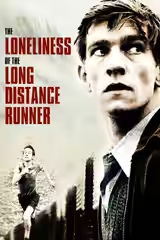
  1. The Loneliness of the Long Distance Runner (1962) · not reviewed yetRunning becomes a sharper, angrier confrontation with class and authority.

  2. The Happiest Day in the Life of Olli Mäki (2016) · not on Fi1m yetAnother athlete finds other people’s expectations making competition harder than it needs to be.

  3. Children of Heaven (1997) · not reviewed yetA child’s determination gives physical effort an immediate, quietly affecting purpose.

  4. The Straight Story (1999, Fi1m 88)For the same patient attention to stubbornness, dignity and physical endurance.

  5. Gallipoli (1981, Fi1m 82)Athletic promise and national pride receive a more troubling examination here.

Free account

Know what to watch tonight

Two lists that know where things are streaming, collections you can share, your own score beside ours, and Discover that remembers what you have seen.

  • Want to see, sorted by what is streaming now
  • Seen, with your score out of ten
  • No adverts, ever