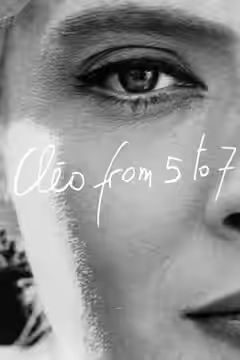
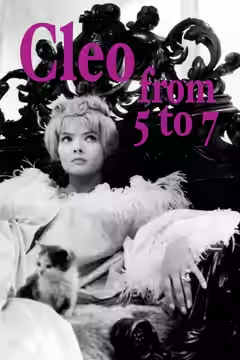
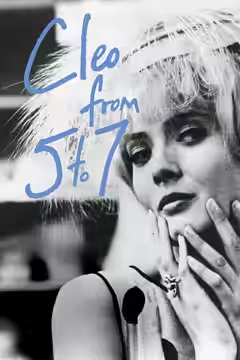
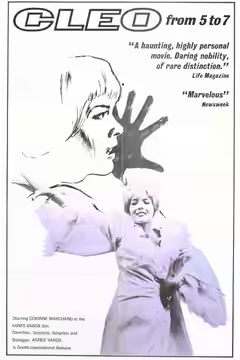
Agnès Varda follows a Paris pop singer through an afternoon spent waiting for a medical result, and turns ninety minutes of dread into one of the liveliest films the French New Wave produced. Cléo is hard company for the first half hour. Stay with her.
Florence Victoire, who sings under the name Cléo, has two hours to fill in Paris on 21 June before a hospital tells her whether she has cancer. Agnès Varda gives her ninety minutes of screen time, in chapters stamped with the clock time and the name of whoever each belongs to. It is one of the liveliest films the French New Wave produced, and it begins by making us dislike its heroine.
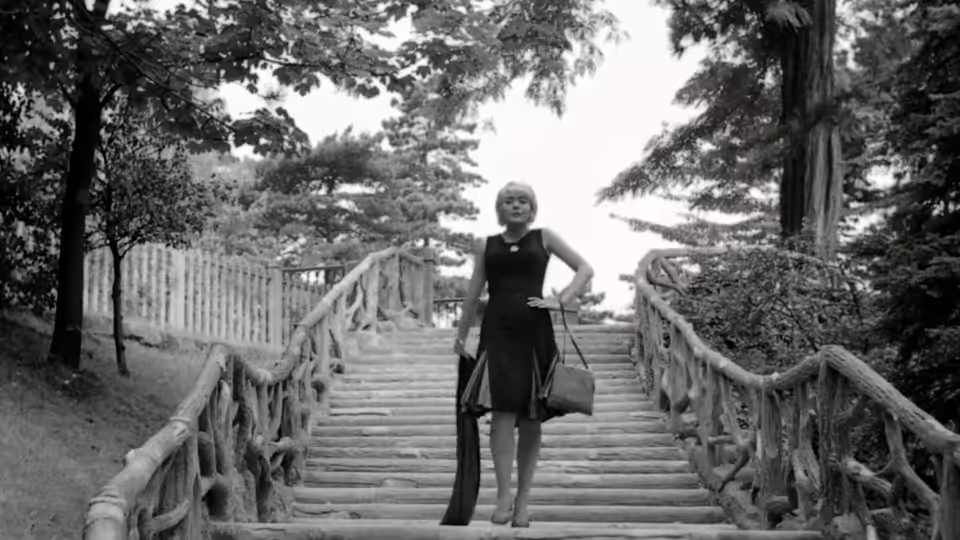
The opening is in colour: a tarot spread, Irma the fortune teller (Loye Payen) turning cards that get worse as she goes. Varda cuts to black-and-white and to Cléo’s face, and stays there. Corinne Marchand plays her at first as a woman who has confused being looked at with being alive. She cries on the stairs, is soothed in a café by her housekeeper Angèle (Dominique Davray), and cheers up trying on hats in a shop lined with mirrors while Renée Duchateau’s assistant fetches more. We were irritated by Cléo for twenty minutes, and we think Varda meant us to be.
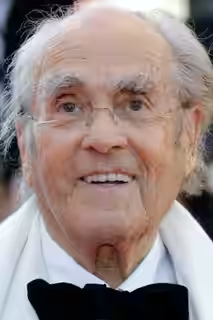
Then the film turns, in one scene. Bob the pianist (Michel Legrand, who also wrote the score) and the lyricist Maurice (Serge Korber) arrive to run through new songs. They tease her, she pouts, and then she sings the last one, “Sans toi”, and the camera moves round her until the screen has gone black and there is nothing but a face and Legrand’s strings. It moved us far more than we were ready for: nothing before it had asked us to take her seriously, and here she is, plainly frightened, singing about being nobody without someone. When it ends she pulls off her wig and walks out.
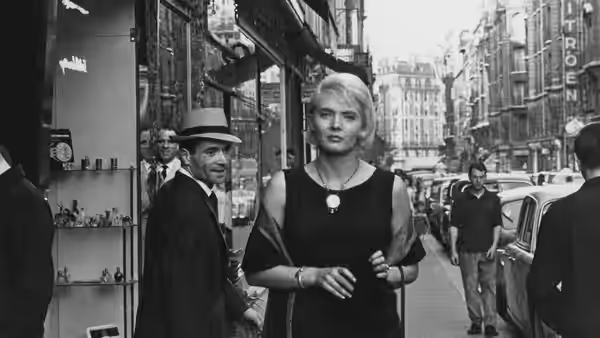
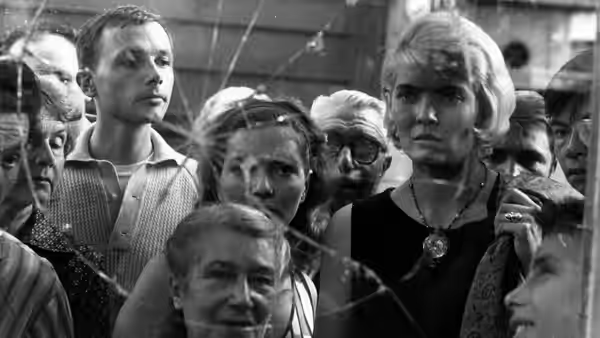
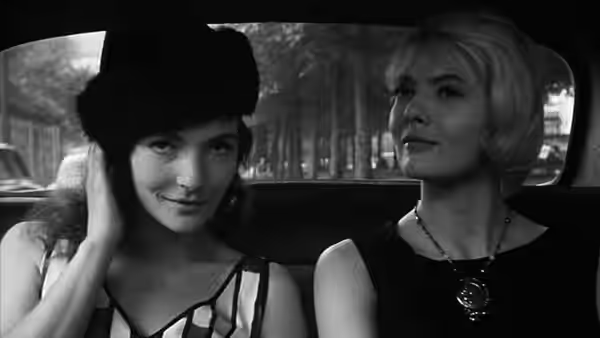
The Paris she walks into is the other lead. Jean Rabier, with Alain Levent and Paul Bonis, shoots the streets in flat June daylight, and the editors Janine Verneau and Pascale Laverrière cut Cléo’s walk into short shots in which strangers look straight into the lens. A man on the pavement swallows live frogs. In a café she puts her own record on and nobody listens; the tables are talking about the war in Algeria, which has come over the taxi radio. Lucienne Marchand’s taxi driver has stories too. Varda is recording what a city sounds like once you have stopped being the centre of it.
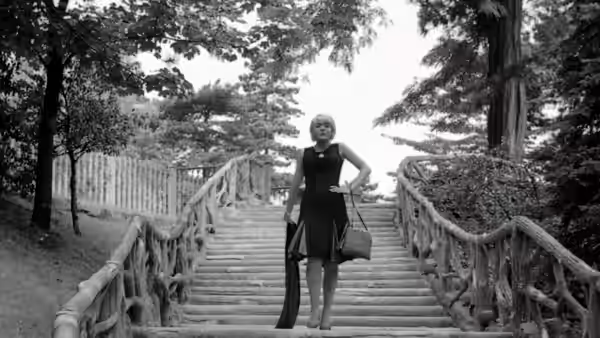
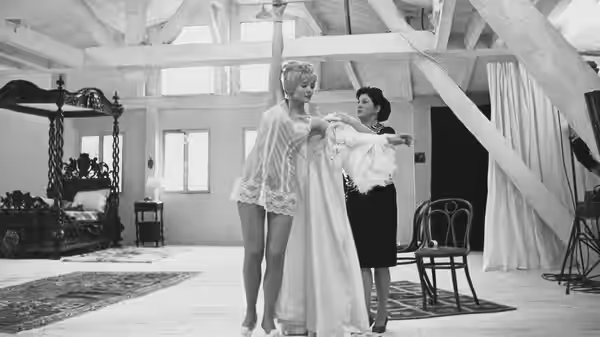
Alyette Samazeuilh dresses Cléo at home in white and sends her out in a plain black dress, and that change says more about her afternoon than her dialogue does. Her friend Dorothée (Dorothée Blanck) poses nude for a sculptor without a flicker of self-consciousness while Cléo watches, astonished that anyone could be looked at and not mind. Later they are shown a silent comedy in which Jean-Luc Godard, credited as the man with black glasses, takes them off and finds the world looks better. It is a joke, and it is the film’s whole idea in two minutes.
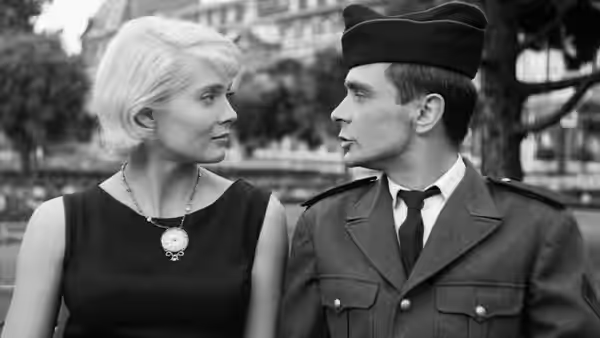
Varda lays some things on thick. There is a mirror in nearly every room, Cléo looks into all of them, and the point has been made by the third. The chapter cards get a laugh at first and then feel like a timetable pinned to a wall. José (José Luis de Vilallonga), the lover, gets a kiss and a look at his watch, and is a cardboard rich boyfriend, though he is meant to be. Antoine (Antoine Bourseiller), the soldier on leave she meets in the Parc Montsouris, talks a great deal, and his philosophising will not suit everyone. The last twenty minutes belong to them, and we will leave them there.
Georges de Beauregard and Carlo Ponti produced her as they produced several of the New Wave’s young men, and her film has the jump cuts and street shooting of the films around it. It also has something most of them do not: a woman at its centre who is allowed to be silly and frightened at the same time, and is judged for neither.
It runs ninety minutes, half an hour short of what the title promises. Watch it at five o’clock on a summer evening if you can, and go on disliking her for as long as she lets you.