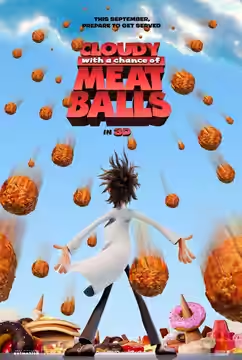
Phil Lord and Christopher Miller’s first feature is quick, rubbery and far funnier than its title promises. The story is thin and the final act is one long chase through a storm of food, but the gags arrive fast enough that you will not mind.
Judi Barrett’s picture book is a few dozen pages about a town where the weather is food and, one day, becomes too much of it. Phil Lord and Christopher Miller, writing and directing their first feature, have kept the weather and invented everything else: a sardine town, a failed inventor, a machine, a mayor. What they have made is a fast, rubbery, properly funny family comedy that treats a daft idea with total seriousness and runs out of plot about two-thirds of the way through. The gags do not run out, which is why we are recommending it.
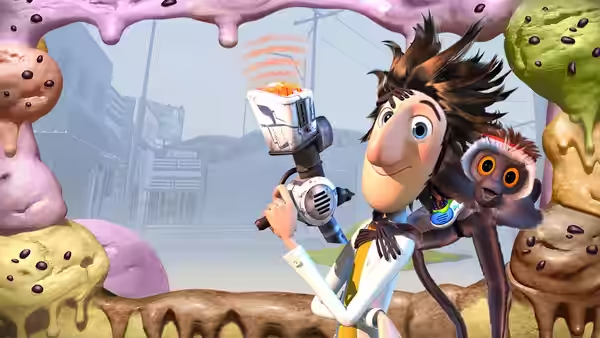
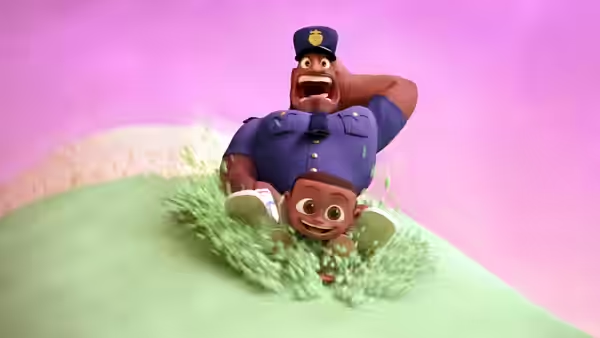
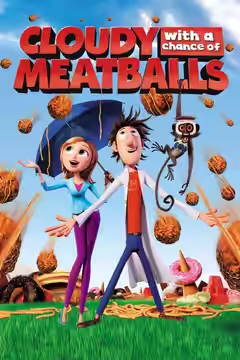
Flint Lockwood, voiced by Bill Hader at a pace that suggests he is being charged by the second, is the sort of inventor whose inventions nearly work. Spray-on shoes that will not come off. Rat-birds. A device that lets his pet monkey Steve speak, which turns out to mean saying “Steve” with enormous feeling. Neil Patrick Harris does Steve, and we laughed out loud at him more than at anything else in the film, because the joke never changes and the timing always does. Around Flint the town is a gallery of people drawn in one stroke each: Bruce Campbell’s Mayor Shelbourne, a salesman whose appetite grows with his power; Mr. T’s Earl Devereaux, a policeman who announces his feelings and leaps over cars to express them; Andy Samberg’s “Baby” Brent, a grown man still trading on the sardine advert he did as an infant.
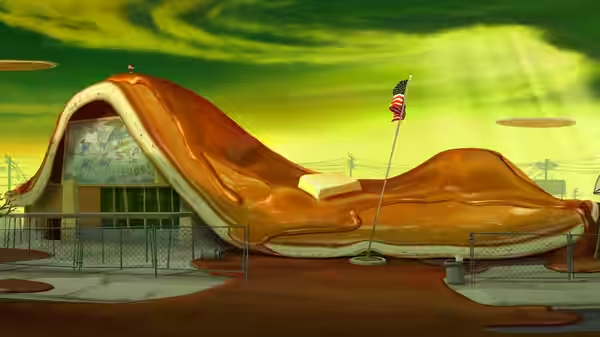
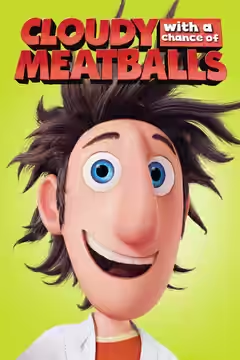
Justin K. Thompson’s designs are the film’s best decision. Nobody here is built like a person. Flint is a stick with a quiff, his father Tim is a wall with a moustache where his mouth should be, and the mayor is all cheek. Swallow Falls starts the colour of a tin of sardines, grey and oily and small, and when the first cheeseburgers fall the whole palette changes to sweet-shop colours: a palace of jelly lit from inside, a snowball fight with ice cream, a tornado made of spaghetti. Robert Fisher Jr. cuts so fast that a gag is barely finished before the next one lands, and the whole thing is 90 minutes long, which is the right length. Mark Mothersbaugh’s score stays small and cheerful until the second half, when it goes for the full disaster-film swell and plays it without a wink.
Then there is the father. James Caan voices Tim Lockwood as a man who cannot say a direct thing to his son and so says it in fishing metaphors that neither of them understands. It is a small, repeated joke, and the film is patient enough with it that by the end we were more moved than we had expected to be by a man with a monobrow failing to finish a sentence. Lord and Miller know this is the one thing in the film that is not a gag, and they do not overplay it.
The story is the trouble. Once the food is falling there is one idea left, which is that more is worse, and the film says it several times in case we missed it. Anna Faris’s Sam Sparks, the weather intern who has hidden her brains since school, gets one good scene about that and then not much else to do. The last half hour is a chase through a storm of food that borrows from every disaster film of the previous decade, and it is skilful, and it goes on too long. We were never bored, but we did check how much of the ninety minutes was left, which we had not done in the first hour.
Against the computer-animated films of its decade this is the scrappy one. It does not want the polish or the tears of the Pixar pictures and it is not pretending to. Lord and Miller went on to do the same trick with more confidence in The Lego Movie (2014); this is the first attempt, and the first attempt is good. Watch it with children, who will want the spaghetti tornado again, or without them, in which case you will want the monkey. It carries a U and it earns the certificate without once being dull about it.