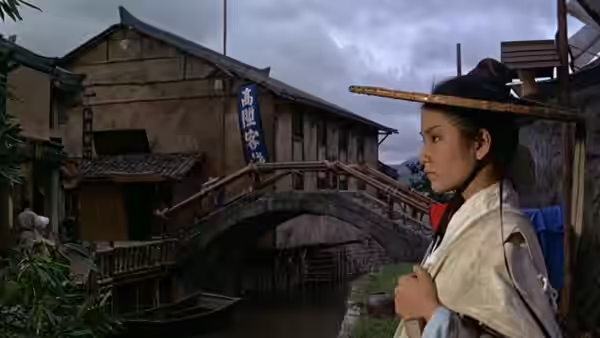
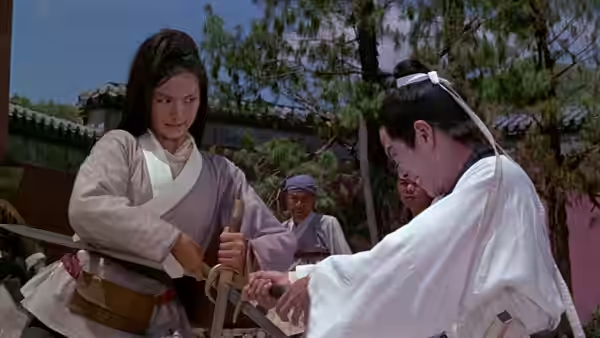
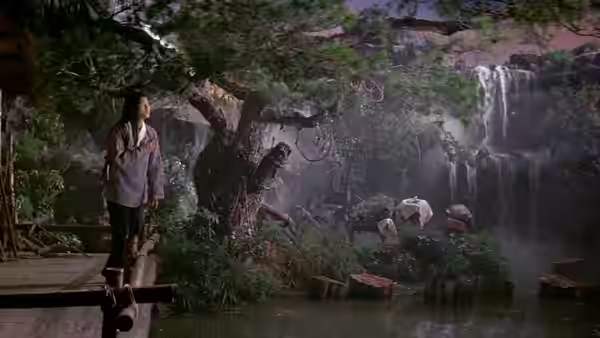
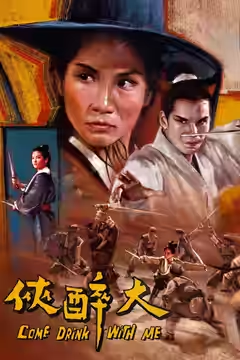
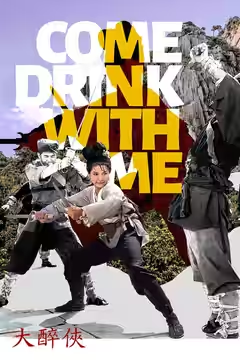
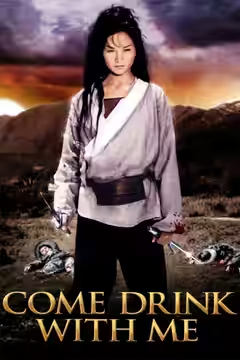
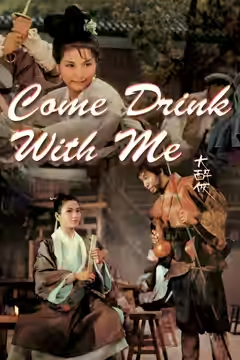
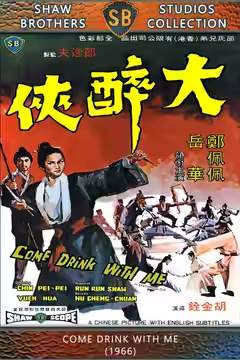
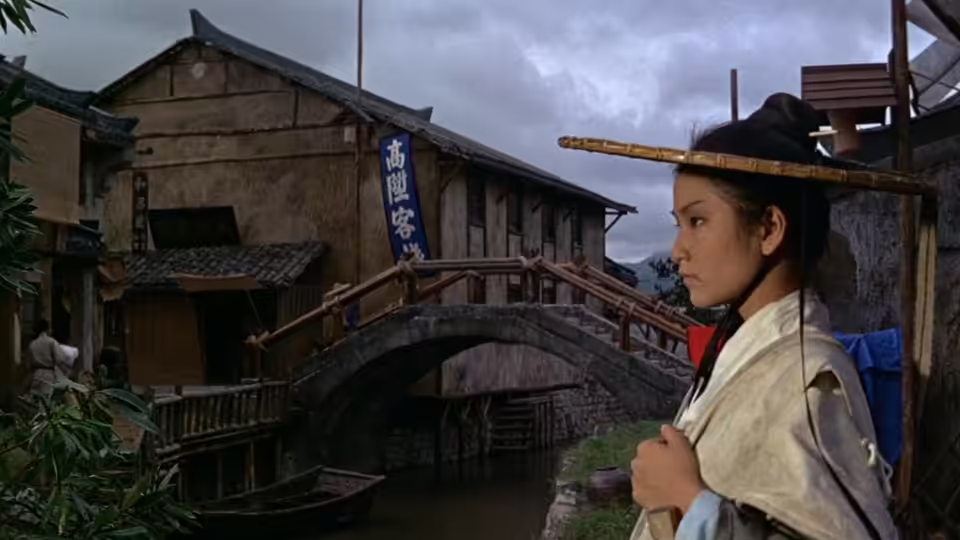
Golden Sparrow (Cheng Pei-pei) stands beside a wooden bridge in a riverside town
Film review

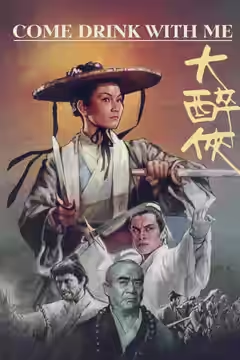
Come Drink with Me

1966 · Directed by King Hu · 1h 31m

In a sentenceA woman walks into an inn full of bandits, orders a drink, and fifty years of swordplay films follow her in

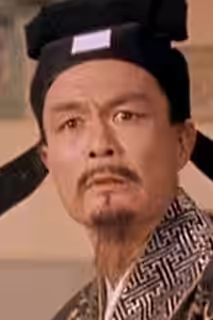
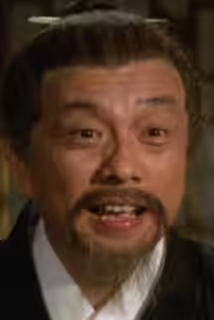
A convoy escorting a governor’s son through the hills is ambushed by bandits, who take the young man hostage and offer to trade him for their imprisoned chief. The governor sends his daughter, Golden Sparrow (Cheng Pei-pei), a swordswoman travelling in men’s clothes, to bring her brother home. She takes a table at a country inn, and the bandits’ lieutenants, Jade Faced Tiger (Chan Hung-lit) and Smiling Tiger Tsu Kan (Lee Wan-Chung), drift in to size her up while most critics pretend not to watch her. Also at the inn is a beggar, Fan Dapei (Yueh Hua), known as Drunken Cat, who leads a troupe of children in rhymes and seems to know more about the bandits, and about her, than a drunk should.

Plays from YouTube when you press play; nothing loads from them until then.

Fi1m review

King Hu stages a rescue as a series of rooms, and Cheng Pei-pei walks through them as if she held the lease. The second half hands the film to the beggar and shows its seams, but this remains the model the genre still works from.

King Hu made Come Drink with Me for Run Run Shaw’s studio in 1966, writing it with Ting Shan-Hsi, and it runs 91 minutes. What he set out to do was simple to say and, at the time, unusual to attempt: to stage a sword fight so that you could follow it, and to hand the sword to a woman. Cheng Pei-pei’s Golden Sparrow walks into a country inn about a quarter of an hour in, and the film’s standing rests on the twenty minutes that follow. It deserves to. We would put it in front of anyone who wanted to know where the genre’s manners come from, with the warning that the last act is not the first.

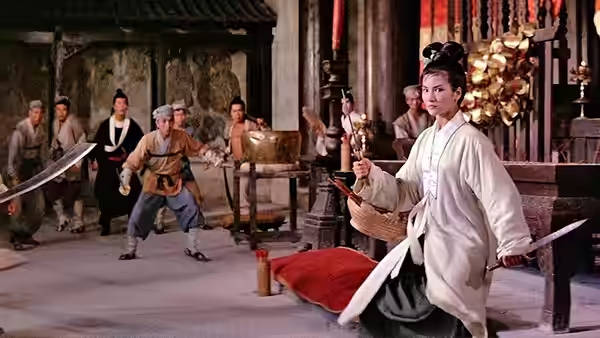
The inn is laid out like a stage. Tables in rows, the bandits at the edges pretending to eat, Sparrow at the centre with her back to the door. Tadashi Nishimoto shoots it wide and level with the tabletops, so that when a man rises three tables away we see him rise, and we see her not turn round. For a long while nothing happens. A coin is flipped at her and she catches it without looking. Chiang Hsing-Lung holds his cuts until the first blade comes out, then doubles the pace, and the space that has been so still becomes a map of who can reach whom. We realised some minutes in that we had stopped breathing properly, and nobody had yet been hurt. The threat was all in where people were sitting.

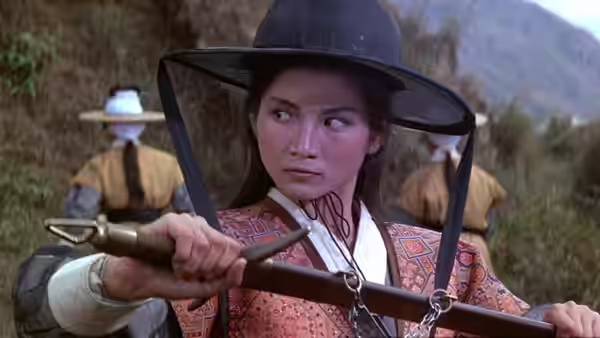
When the fight comes it is short and it is danced. Cheng moves with a straight spine and lets her hands do most of the work, and Hu cuts on the top of each leap so that the landing is what we see. Every wire-work film since has borrowed that cut. The music, credited to Chou Lan-Ping and Eddie H. Wang Chi-Ren, drops to a wood block and a drum through the fighting, marking the blows the way an opera pit would, and it tells you when to flinch a half-second before the steel does. Chan Hung-lit’s Jade Faced Tiger, powdered white with a small cruel mouth, is the right kind of villain because he never raises his voice. Lee Wan-Chung’s Smiling Tiger Tsu Kan grins through everything, including the parts that hurt him.

Yueh Hua’s Drunken Cat is the film’s second idea and also its problem. He turns up singing with a troupe of beggar children, verses that tell Sparrow more than she takes in, and Yueh plays him loose-limbed and pleased with himself, a man who has chosen to be underestimated. The scenes between the two of them, she stiff and suspicious, he amused and a little sad, are the warmest thing here. But past the halfway mark the film decides that he is the hero. Sparrow spends a long stretch out of the action while the men settle old scores, and we minded. The film does not lose its nerve; it loses its heroine.

Other faults are of their period. The temple scenes are studio sets under painted skies, and Nishimoto’s light, so good in the inn, goes flat beneath them. Yang Chi-Ching’s Abbot Liao Kung is sketched rather than written. The final duel uses effects we will not describe and would not defend. None of this lasts long, because nothing here does; Hu gets in and out of a scene faster than most directors of the time got a horse saddled.

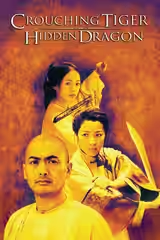
Set against what the Hong Kong studios were turning out around it, this looks like the work of someone who had thought about where the camera goes before the actors arrived. Ang Lee cast Cheng as the villain in Crouching Tiger, Hidden Dragon in 2000, and that film’s inn fight is this one, remembered fondly. The few reviews we have read put it near the top of the genre, and we sit only a little below them: the second half costs it something, and we would rather say so than pretend otherwise.

Watch it subtitled if you have the choice, because the beggar’s songs are doing work, and watch it with someone who has never seen a swordplay film, so you can see them work out that the drunk is the dangerous one. The title promises drinking. It delivers a fair amount, all of it by the man who least appears to need it.

Critical consensus AI synthesised

3 of 6
Positive
3
Mixed
0
Negative
0
Time Out
28 May 2008 · ★★★★★ · Andrew Johnston
100

The five-star rating and available description indicate an exceptionally entertaining film. The critic singles out its place in the entertaining martial-arts genre, while stopping short of calling it the most enjoyable movie ever made.

Read the full review →
The AV Club
11 June 2008 · A · Scott Tobias
95

Tobias praises the film as a sophisticated, influential wuxia classic with feeling beyond its fight scenes. He especially singles out Cheng Pei-Pei’s graceful, dance-like performance and the quiet rapport between Golden Swallow and Drunken Cat.

Read the full review →
Slant Magazine
22 March 2022 · ★★★★ · Jake Cole
80

The critic calls the film a wuxia masterpiece and praises Arrow Video’s excellent release. He singles out the luminous colors and clear, detailed presentation of the image and sound.

Read the full review →

Straight answers AI written, from our review

Is Come Drink with Me worth watching?
Come Drink with Me is worth watching for anyone curious where swordplay films learned their manners, and we scored it 87. The twenty minutes in the inn, with Cheng Pei-pei's Golden Sparrow sitting still while bandits circle, are the reason. The second half hands the film to Yueh Hua's beggar and sidelines her, which costs it something.
How long is Come Drink with Me, and what is it rated?
Come Drink with Me runs 1h 31m. It is an action and adventure film.
Where can I watch Come Drink with Me in Malaysia?
Come Drink with Me is not on any streaming or rental service in Malaysia at the moment. It is available in 3 other countries; change your country at the top of the page to see where. Availability is checked daily.
How does Come Drink with Me compare to Yojimbo?
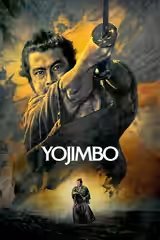
Come Drink with Me and Yojimbo both send a stranger into a room full of crooks, but Hu's film is the swifter and stranger of the two, and Kurosawa's the more consistent. Yojimbo is darkly funny and carried end to end by Mifune, though its scheming repeats itself. Come Drink with Me has the higher peak in its inn sequence and the weaker last act.
What should I watch after Come Drink with Me?
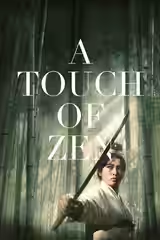
After Come Drink with Me, try A Touch of Zen (1971, Fi1m 86): King Hu again, longer and stranger, with a bamboo forest fight nobody has bettered. Then Yojimbo (1961, Fi1m 88): Kurosawa’s scruffy swordsman walks into a town of crooks and orders a meal; and Crouching Tiger, Hidden Dragon (2000, Fi1m 90): Cheng Pei-pei returns as the villain in the film that owes hers everything.

Cast

Awards

International Submission to the Academy Awards, 1967

Nominated
International Submission to the Academy Awards

If you liked this, try…

  1. A Touch of Zen (1971, Fi1m 86)King Hu again, longer and stranger, with a bamboo forest fight nobody has bettered.

  2. Yojimbo (1961, Fi1m 88)Kurosawa’s scruffy swordsman walks into a town of crooks and orders a meal.

  3. Crouching Tiger, Hidden Dragon (2000, Fi1m 90)Cheng Pei-pei returns as the villain in the film that owes hers everything.

  4. Lady Snowblood (1973) · not on Fi1m yetA Japanese swordswoman’s revenge, shot in snow and blood, brisk and pitiless.

  5. The Assassin (2015, Fi1m 82)Hou Hsiao-hsien slows the wuxia to a crawl and finds something new in it.