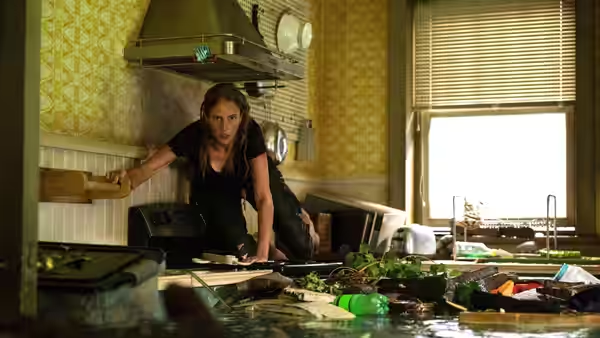
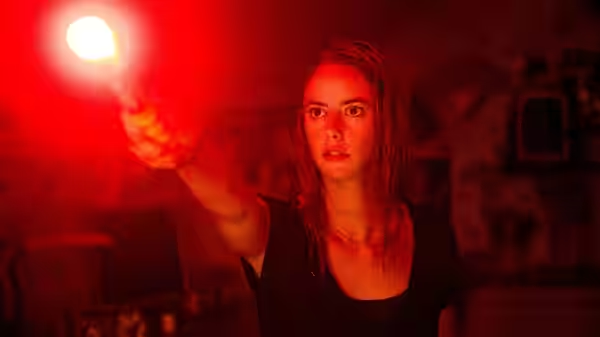
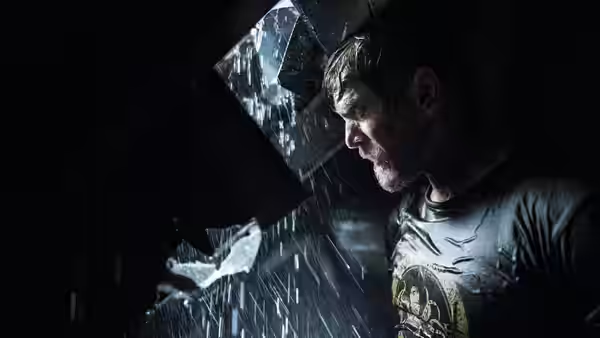
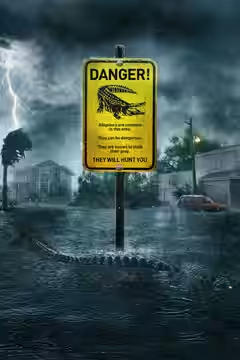
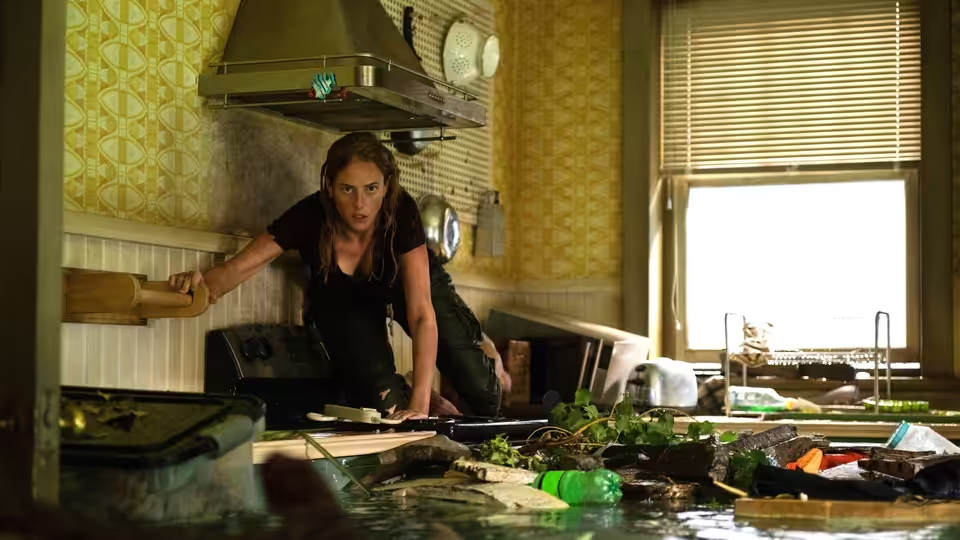
Haley (Kaya Scodelario) braces herself in a flooded kitchen amid floating debris
Film review

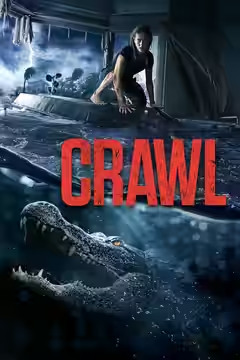
Crawl

2019 · Directed by Alexandre Aja · 1h 27m

In a sentenceAlligators make a strong case for postponing the family discussion

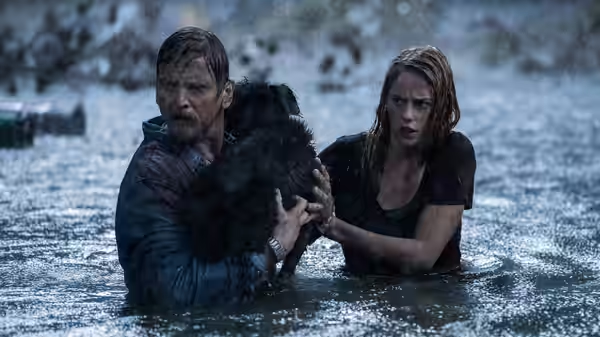
As a hurricane brings rising floodwater, Haley (Kaya Scodelario) and her father, Dave (Barry Pepper), face alligators in a confined crawlspace. Haley needs to get them both out, but the water hides what is approaching and leaves less room to move. The pair must work out what they can reach, what they can use and where an animal might be waiting. Their attempts to survive also bring their father-daughter relationship into focus, with danger allowing little space for a family discussion. Morfydd Clark plays Beth in a story centred on Haley and Dave’s struggle to escape.

Plays from YouTube when you press play; nothing loads from them until then.

Fi1m review

Alexandre Aja makes a brisk, agreeably nasty survival thriller out of floodwater, alligators and a father and daughter with nowhere comfortable to stand. Kaya Scodelario makes the danger credible, though the sentimental dialogue interrupts some otherwise effective suspense.

Crawl is a good, compact creature feature that gives a simple predicament the attention it deserves. Alexandre Aja puts Haley (Kaya Scodelario) and her father, Dave (Barry Pepper), between hurricane floodwater and alligators, then makes the available space feel miserably small. There is little here that needs explaining, which makes the stretches of family explanation all the more irritating. Most of its 87 minutes are spent making the danger immediate and the next move difficult.

The crawlspace is the film’s most useful asset, because hiding from an animal is harder when there is scarcely room to turn round. Alan Gilmore’s production design gives the confined setting enough grime and obstruction to make every attempted movement look uncomfortable. We were properly tense watching Haley confront water too murky to reveal what was in it. Having to enter that water is frightening before anything attacks, and the staging allows enough time for us to consider what might be waiting.

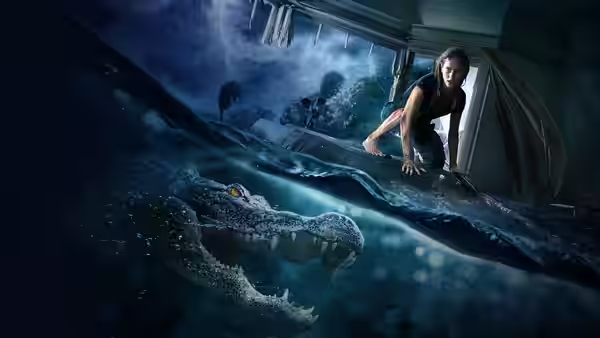
Maxime Alexandre’s underwater photography is especially effective because it makes looking a practical problem. The water conceals distances and bodies without reducing every image to an unreadable smear, although the action becomes less easy to follow when several things demand attention at once. Elliot Greenberg keeps the cutting brisk, so a pause feels like time spent checking the surroundings rather than waiting for the film to get going. The small physical decisions are usually clearer, and more absorbing, than the larger bursts of action.

Kaya Scodelario does much of the work that the writing cannot manage. Her physical commitment makes Haley’s attempts to survive convincing even when the action asks us to accept more than we should. Barry Pepper is a useful partner, giving Dave enough conviction to keep the father-daughter scenes from feeling entirely like pauses between attacks. Their effort looks punishing, and the performances keep fear visible without making either character seem incapable of deciding what to do next.

Michael Rasmussen and Shawn Rasmussen are less persuasive when they ask the pair to talk through their relationship. The sentimental dialogue explains feelings that the actors have already made plain, and it can make a predicament requiring immediate action sound like an appointment for family counselling. The more exaggerated action also makes it harder to believe in the physical limits the cramped setting has established. These are weaknesses that interrupt our involvement, though neither takes up enough time to spoil the suspense for long.

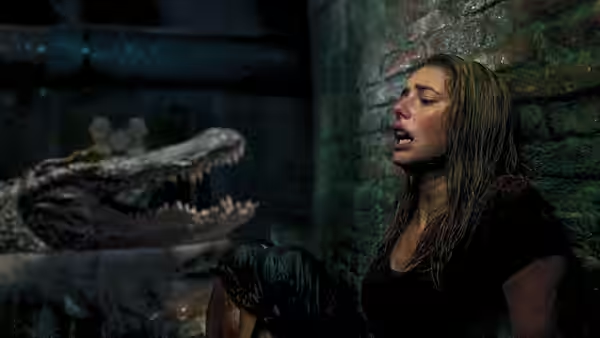
Steffen Thum and Max Aruj’s score is less helpful than the sound of the surroundings. We do not need much musical encouragement to worry about something moving beyond sight, and the extra insistence can make an already forceful scene feel overworked. The convincing alligator effects serve the film better, allowing the animals to remain frightening when we can see them clearly. A creature feature needs to survive that moment when the source of a worrying noise becomes visible, and these reptiles withstand inspection.

Some creature features try to apologise for their own premise by making a joke of it. Crawl plays its danger straight, and the actors’ conviction lets us do the same, even when the action becomes unlikely. That seriousness is useful until the family speeches arrive. If alligators in floodwater sound like a good evening, the conversation is a tolerable price.

Critical consensus AI synthesised

64
Positive
10
Mixed
6
Negative
4

The reviews lean towards a qualified endorsement of Crawl as a brisk, suspenseful creature feature. Praise clusters around Alexandre Aja’s staging of confined spaces, rising water and alligator attacks, with several critics finding that the simple survival premise supplies enough tension to outweigh implausible action. Kaya Scodelario’s physically committed performance is a frequent strength, even among detractors, while the creature effects and underwater sequences also attract approval.

The spread is wide, however, and the father-daughter drama is a recurring point of disagreement. Several critics find it sentimental or distracting, whereas Vulture finds emotional resonance and Film Stories credits the central pairing with giving the film an emotional core. The larger divide concerns how much its efficient scares deliver: enthusiasts welcome the directness, but Variety finds the familiar shocks monotonous, and other less favourable reviews fault weak storytelling, confusing action or a shortage of invention.

Vulture
12 July 2019 · Angelica Jade Bastién
90*

The critic finds Crawl a thrilling, emotionally resonant horror film, with a few shortcomings in its visuals and score. She especially praises Kaya Scodelario’s intense, memorable performance as its resourceful heroine.

Read the full review →
Little White Lies
21 August 2019 · 3/4/3 · Anton Bitel
80

Bitel finds the film thrillingly high-concept but ultimately forgettable. He praises its claustrophobic tension and escalating creature-feature stakes.

Read the full review →
The Guardian
12 July 2019 · Benjamin Lee
75*

Lee finds Crawl a solid, crowd-pleasing horror film, though its family drama and emotional performances are weak. He praises Aja’s precise, suspenseful staging and effective sound design in the confined crawlspace.

Read the full review →
The Hollywood Reporter
11 July 2019 · John DeFore
70*

DeFore gives the film a measured endorsement as brisk, entertaining schlock, despite implausible action and risible dialogue. He singles out Kaya Scodelario’s convincing grit and terror, especially in the underwater scenes.

Read the full review →
The New York Times
12 July 2019 · Jeannette Catsoulis
64*

The review text was inaccessible, so its verdict cannot be stated reliably. No specific praise or complaint can be confirmed from the available page.

Read the full review →
IndieWire
12 July 2019 · C+ · Eric Kohn
63

Kohn finds the film an entertaining but by-the-book guilty pleasure with a simple environmental message. He praises its visual moments, especially a striking shot framing Haley between a gator’s jaws.

Read the full review →

Straight answers AI written, from our review

Is Crawl worth watching?
Crawl is worth watching if compact, tense creature features appeal, and we score it 76 out of 100. The murky floodwater, cramped setting and Kaya Scodelario’s physical commitment make the danger convincing, though sentimental family dialogue interrupts the suspense and some action stretches belief.
How long is Crawl, and what is it rated?
Crawl runs 1h 27m. It is a horror and thriller film.
Where can I watch Crawl in Belgium?
Crawl is available to rent from Amazon Prime Video and Apple TV from €3.99. Availability is checked daily; the links above go straight to each service.
How violent or frightening is Crawl, and is it suitable for children?
Crawl has a UK 15 certificate and is not suitable for children under 15, with frightening alligator attacks and sustained survival tension. We find the cramped space and water concealing approaching animals unsettling even before an attack; it suits older teenagers and adults comfortable with creature horror, rather than viewers seeking mild scares.
How does Crawl compare to The Descent?
Crawl is a good confined-space survival thriller, but we give The Descent the firmer recommendation for its control of light and tension. Both make physical escape an ordeal; Crawl offers a brisk alligator threat interrupted by family speeches, while The Descent suits those prepared for cave claustrophobia and brutality.
What should I watch after Crawl?
After Crawl, try The Shallows (2016, Fi1m 82): Another resourceful survivor makes a small patch of water feel dangerously crowded. Then The Descent (2005, Fi1m 85): Cramped spaces and physical effort turn each attempted escape into another ordeal; and The Birds (1963, Fi1m 86): Familiar animals become frightening through patient staging and the collapse of ordinary safety.

Cast

If you liked this, try…

  1. The Shallows (2016, Fi1m 82)Another resourceful survivor makes a small patch of water feel dangerously crowded.

  2. Black Water (2007) · not reviewed yetAustralian crocodile suspense that makes waiting in a tree feel intolerable.

  3. The Host (2006) · not reviewed yetA river creature interrupts family life, with more humour and stranger consequences.

  4. The Descent (2005, Fi1m 85)Cramped spaces and physical effort turn each attempted escape into another ordeal.

  5. The Birds (1963, Fi1m 86)Familiar animals become frightening through patient staging and the collapse of ordinary safety.