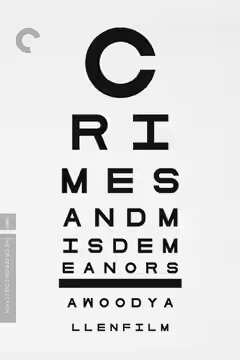
Woody Allen sets a murder story beside a comedy about a failing documentary maker and lets each one shame the other. It is the coldest film he has made and among his best, with Martin Landau doing the heavy lifting and Alan Alda stealing every scene he enters.
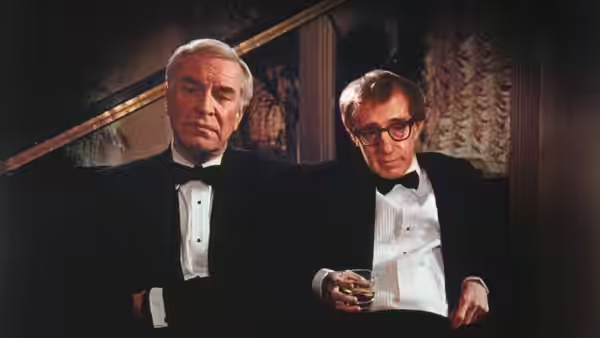
Woody Allen has made two films here and stapled them together, and the join is the point. Upstairs, a rich eye doctor’s mistress is threatening to bring his whole life down. Downstairs, a documentary maker who has never earned a living is asked to flatter a man he despises. The two stories share a rabbi, a city and a question about whether anyone is keeping score, and Allen holds them side by side for 104 minutes without telling us which one to believe. It is as bleak as anything he has made and close to as funny as his best, and the second half takes a turn we will not describe.
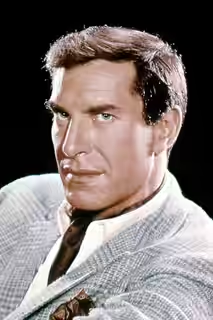
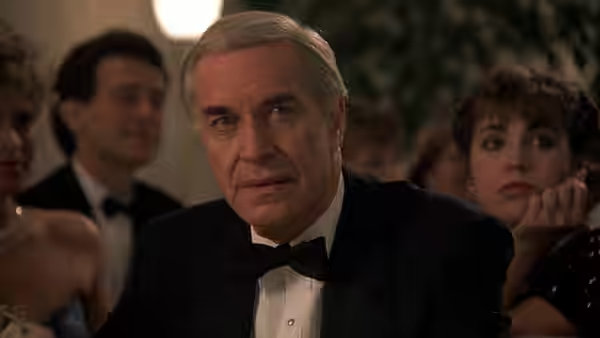
Martin Landau carries the serious half. Judah is a man who has spent his life being admired and has just found out what that costs. Landau plays him from the outside in: the good coat, the steady hands, the after-dinner voice, and then in a parked car with Dolores the voice drops half a note and the panic shows. Anjelica Huston plays Dolores not as a harpy but as a woman who was promised things and kept the receipts, sitting in a flat he paid for and telling him she is not going anywhere. Some critics have found her underwritten. We thought she was the only person in the film who says exactly what she means, and the film is frightened of her for it.
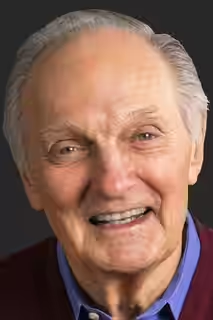
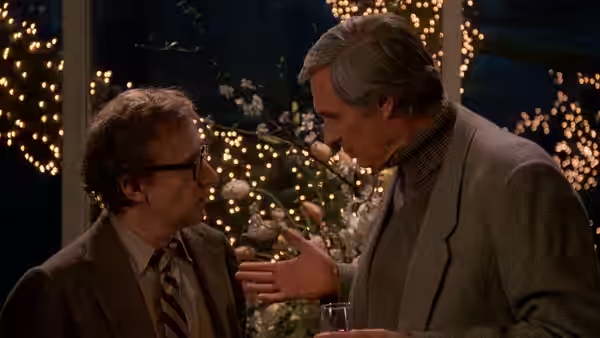
Downstairs, Alan Alda. Lester has a theory of comedy for every occasion and delivers each one to a room he assumes is taking notes. Alda plays him with total conviction and no self-doubt at all, a man who has been told he is brilliant so often he has stopped checking. The joke is that he is not wrong about everything, and Allen knows it. Sam Waterston’s Ben, going blind, is the one man on screen who believes the world has a moral shape, and the film treats him gently and leaves us to decide whether it agrees with him. Joanna Gleason gets the two hardest scenes as Cliff’s wife and plays them without asking for our sympathy.
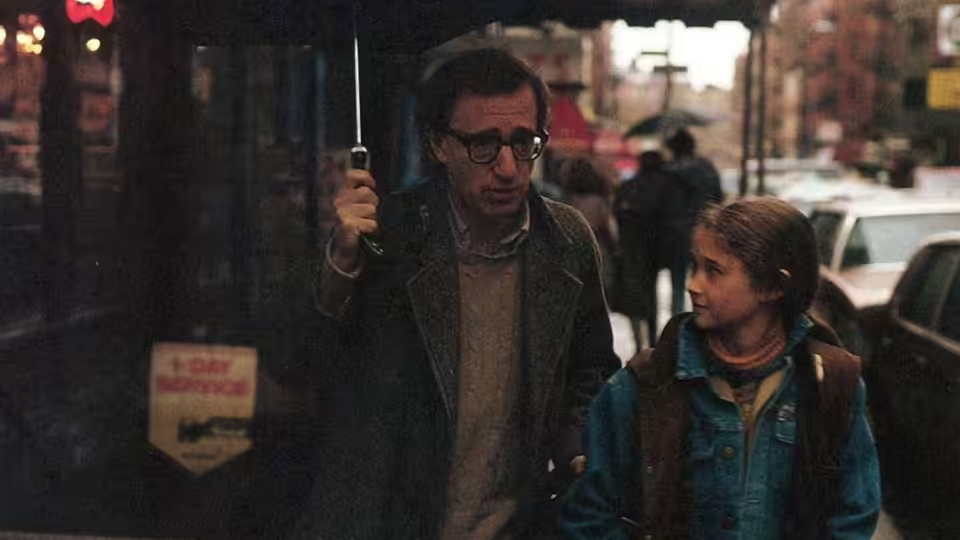
Sven Nykvist shoots Judah’s world in low amber lamplight and long shadows, the rooms of a man who can afford to keep the lights down, and Cliff’s in flat daylight through unwashed windows. Santo Loquasto gives Judah a house of dark wood and framed photographs and Cliff a flat where the books have beaten the furniture. Jeffrey Kurland puts Landau in overcoats that would pay Cliff a year’s rent. Susan E. Morse cuts between the two stories without a wink, so a scene of Judah alone in his study lands next to a scene of Cliff in a cinema with his niece, and the same question hangs over both. There is no composer; Allen uses records, a string quartet under the man thinking about a crime and old jazz under the man thinking about an affair.
The scene that got at us is a quiet one. Judah takes a phone call from his brother in his study, hangs up and sits with the lamp on, saying nothing. Landau lets his face do the work of a confession nobody is there to hear, and we found we had stopped breathing. Then Allen cuts to Cliff making a joke about his marriage, and we laughed, and were not sure we should have.
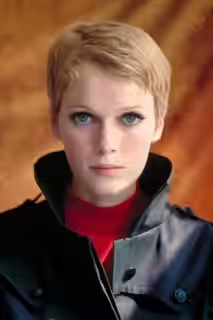
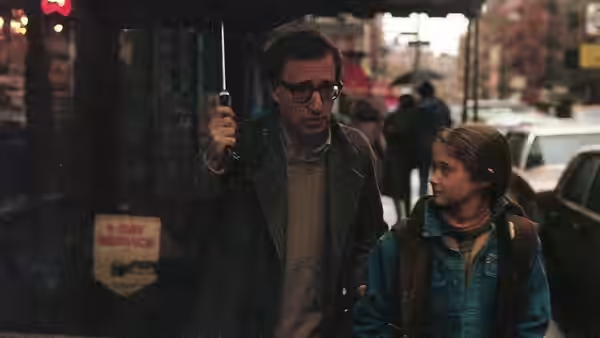
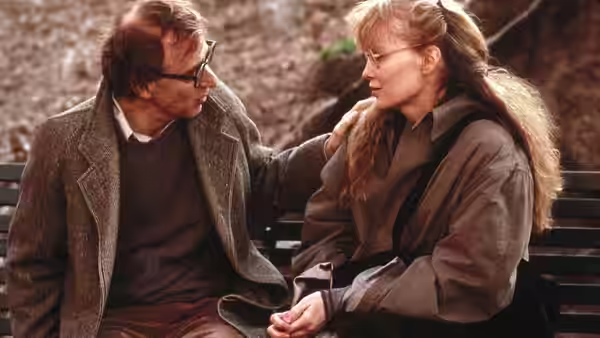
Cliff is the weakest thing in the film. Allen the writer gives Allen the actor the man he has been playing since Annie Hall (1977), the schlub with the good record collection, and his pursuit of Halley is written as charming when it plays as needy. Mia Farrow is given sense and taste and not much else to do. The philosopher’s clips, an old professor talking to camera about love and the universe, are meant as the film’s conscience and are a shade too neat, a lecture in a film that otherwise trusts us. And the two stories meet in a way that feels arranged rather than found.
Hannah and Her Sisters (1986) had this New York and a warmer heart. Another Woman (1988) had this seriousness and no jokes. Putting the two together makes something harder than either, and Allen has not gone this far into the dark before or since. See it with someone who thinks of him as a comedian, and ask them afterwards. It runs 104 minutes and carries a 15.