Paul Hogan’s relaxed comic timing carries an agreeable comedy whose romance never earns quite the same affection. The story is thin and the pace wanders, but the company makes it worth an evening.
Crocodile Dundee is an amiable comedy with a thin story and a leading man who makes that matter less than it should. Peter Faiman gives Paul Hogan room to be funny without appearing to work at it, and the film sensibly spends much of its time in his company. We recommend it for that performance, with reservations about the romance and the uneven pace. Its 97 minutes do not all pass equally quickly.
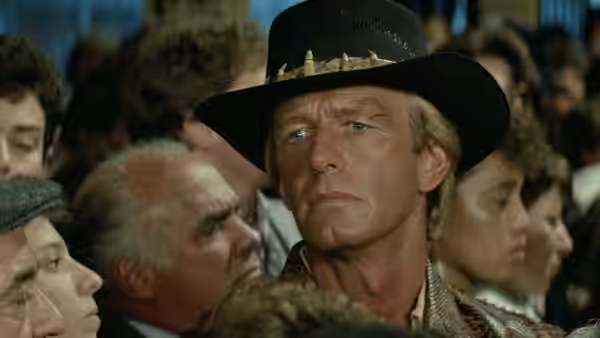
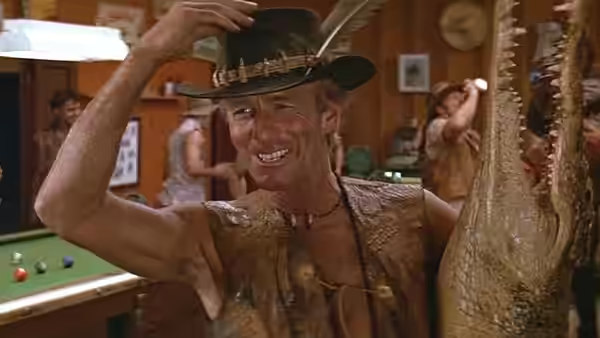
As Mick ‘Crocodile Dundee’, Paul Hogan makes self-possession funny without turning it into smugness. The outback competence carries over into New York, where he takes unfamiliar surroundings more calmly than the premise might suggest. We laughed at the understatement: he gives a joke time to register without insisting that we acknowledge it. That ease is the film’s chief pleasure, and it keeps a familiar fish-out-of-water comedy from becoming exhausting in its efforts to please.
Linda Kozlowski gives Sue Charlton enough warmth to make the attraction credible, even when the writing does little to develop it. The screenplay by Paul Hogan, Ken Shadie and John Cornell relies too readily on our goodwill towards the couple, and the romantic stretches feel longer than their dramatic importance warrants. John Meillon, as Walter Reilly, brings a slyness that supplies a useful variation on the leading man’s easy manner. We could have used more of that comic bite.
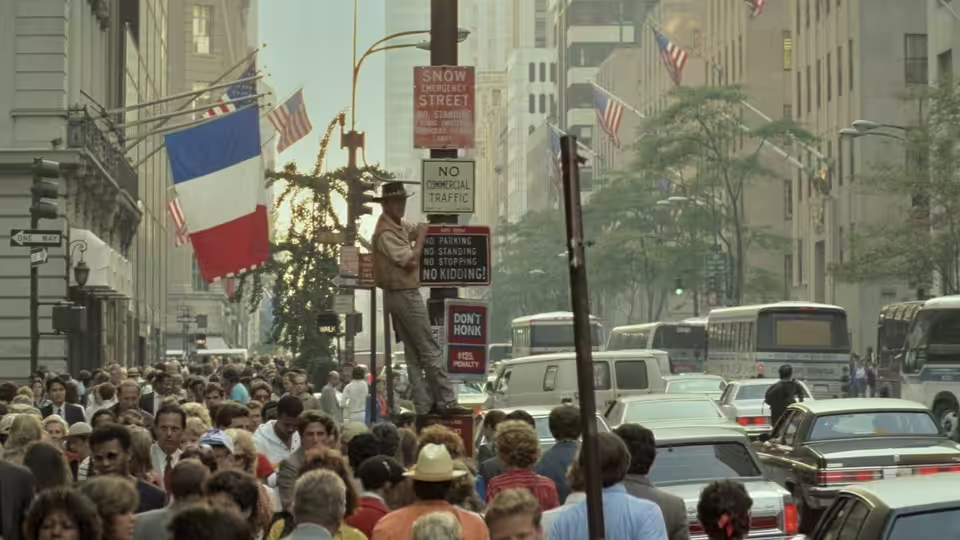
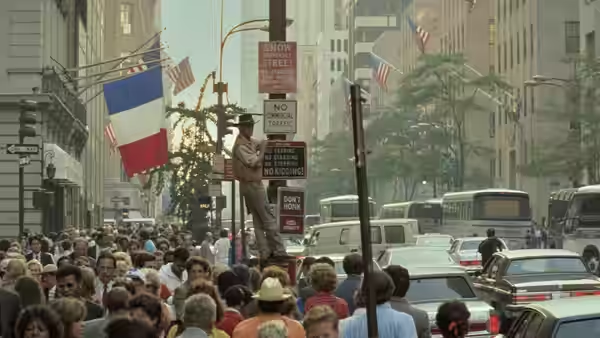
Russell Boyd’s cinematography gives the settings enough attention to make looking around part of the pleasure. The relaxed presentation suits Paul Hogan’s pace and allows the surroundings to compete with him for our interest. Graham “Grace” Walker’s production design helps make those settings inviting, although the New York of the film feels simplified for Mick’s convenience. The city rarely seems complicated enough to test the calm that is supposed to make him interesting.
Peter Best’s music fits the genial mood, but it does not make the romance feel more substantial. David Stiven’s editing has a harder problem: the film’s relaxed manner sometimes slips into a lack of momentum. Leaving space around the comedy gives Paul Hogan time to work, and that is usually a sound decision. Elsewhere, particularly when the courtship needs to gather feeling, the film seems content to wait for our affection to do the work.
For a fish-out-of-water comedy, there is surprisingly little resistance from the unfamiliar place. This New York is too willing to accommodate its visitor, which limits the situations in which his confidence might become funny in a different way. Peter Faiman’s indulgence is understandable when Paul Hogan is so agreeable, but it narrows the possibilities for surprise. The writing seldom asks us to reconsider our first impression of Mick.
There is still a place for a comedy that does not demand constant laughter or turn every pause into embarrassment. We appreciate the confidence required to leave a comic performance this unhurried, especially when a more forceful approach could so easily become tiresome. Viewers who need each scene to move the story forward will find their patience tested. Choose it for a quiet evening when a leisurely comedy sounds like a pleasure.