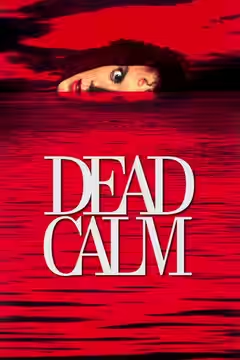
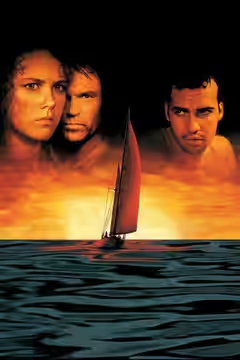
Phillip Noyce’s thriller has three people, two boats and 96 minutes, and it wastes little of any of them. Nicole Kidman carries it; Billy Zane keeps it uneasy. Some of the shocks are cheap, and the final minute should not be there.
Dead Calm is a thriller with three people, two boats and a great deal of water, and Phillip Noyce has the discipline to leave it at that. It runs 96 minutes, nearly all of them in hard daylight on an empty sea, which removes the two things a thriller leans on: the dark, and the chance that someone might come. Terry Hayes adapts Charles Williams’s novel into two plain questions. Can the woman on the yacht get the better of the man who has taken it? Can her husband keep a sinking schooner afloat long enough to catch up?
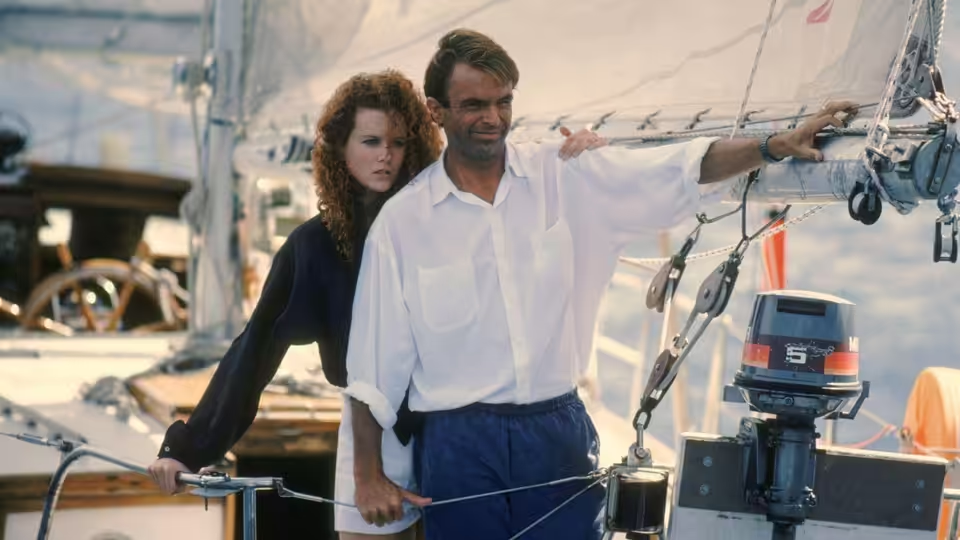
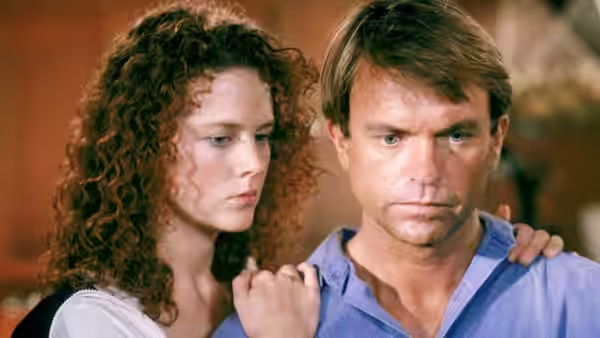
Noyce gets the grief over quickly. John Ingram (Sam Neill) comes home to a hospital, a wife in a bed and a small son, Danny (Joshua Tilden), who has not survived. Soon after, Rae (Nicole Kidman) and John are on their yacht with their dog and nothing on any horizon, at sea because they cannot stand to be at home. Then a schooner called the Orpheus appears, listing, and Hughie Warriner (Billy Zane) rows across in a panic and says everyone else aboard is dead.
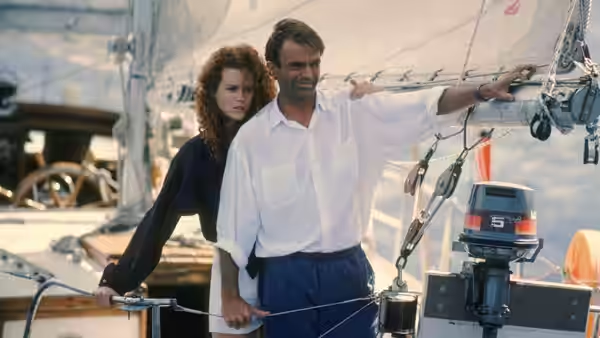
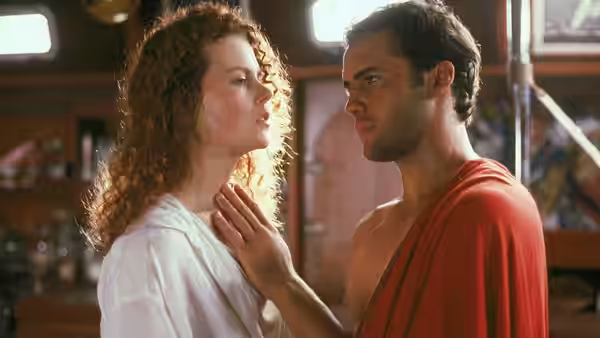
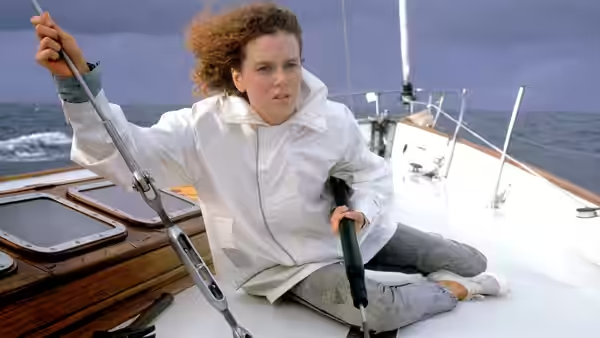
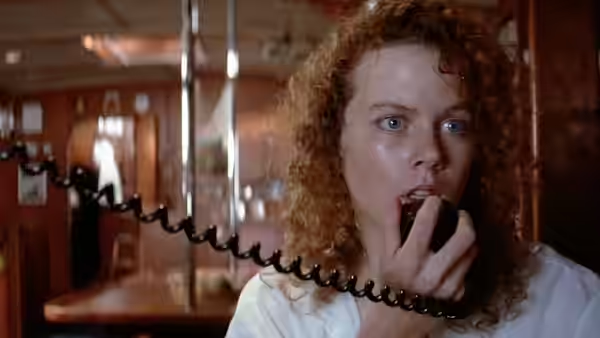
Kidman holds the film by thinking on camera. Once Hughie has the yacht and Rae is alone with him, the script gives her no gun and no help, only a radio he can hear, a sail she can trim and a man whose mood changes by the minute. She plays Rae as frightened and calculating at once, choosing when to be pleasant and when to hit. Zane’s Hughie is handsome, polite, quick to laugh and plainly unwell, and the frightening thing is that he behaves like a guest who has decided he lives there.
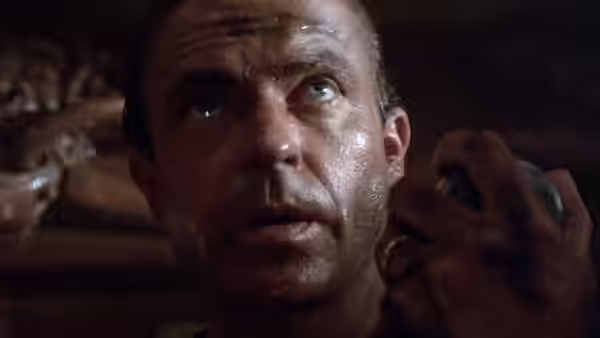
Neill has the duller job and does it honestly. John spends most of the film below decks on the Orpheus with a bilge pump, rising water and the bodies Hughie did not mention. Some critics have found him stiff; we would say a man alone on a sinking boat has nothing to be loose about. Richard Francis-Bruce cuts back to him whenever Rae seems to be coping, so that each time one boat goes quiet the other floods. Graham “Grace” Walker dresses the Orpheus as a wreck, dark timber and water over the floorboards, so that the white yacht a few miles off looks like safety.
Dean Semler shoots the sea as a flat, bright plate and keeps the yacht small in it. Aboard, he puts the camera low so the cabin ceiling presses down and Zane has to stoop, and lets the sun do the lighting. Graeme Revell’s score is a low synthesiser hum with something like breathing in it, sparing for most of the film and turned up too far for the jumps. Norma Moriceau puts Rae in cut-off vests and swimwear that look lived in rather than chosen.
The moment that got us is the simplest one. John is below on the Orpheus, hears an engine, comes up and sees his own yacht turning away with his wife on it, the gap too wide to swim. Neill does nothing but stand there, and Noyce holds the shot. We felt the floor go, and it stayed gone for half an hour, because the film had turned the distance between two boats into something we could feel in our stomach.
What does not work is mostly borrowed. Two or three shocks of the body-lurches-upright kind are stock horror, and they cheapen the quiet around them. The final minute adds a jolt the film does not need. We will not describe it, except to say the film has earned a quiet ending by then and chooses a loud one, and we were still cross about it in the car park.
Noyce went on to larger films, including Patriot Games (1992) and The Quiet American (2002), and none is as spare as this. The nearest relative is Polanski’s Knife in the Water (1962), another couple, boat and stranger who should not have been let aboard. See this one at night with the sound up. If you can bring yourself to switch off ninety seconds early, it is a better film. We have never managed it.