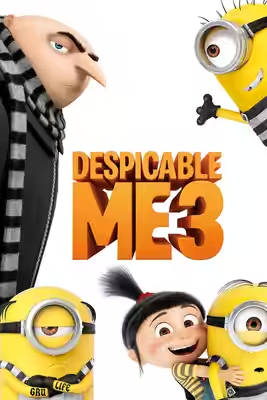
The jokes keep interrupting one another in Despicable Me 3, a crowded sequel with a thin story. Steve Carell and Trey Parker supply some welcome silliness, but the competing plots wear us down.
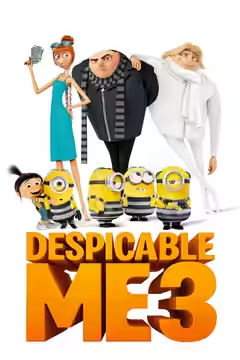
Despicable Me 3 is busy, intermittently funny and too easily distracted to be satisfying. Directors Kyle Balda and Pierre Coffin have a twin brother, a retro villain, an expanding family and the Minions to accommodate, and give us little reason to care which story takes precedence. There is a reasonable family comedy here about Gru being pulled towards his old wicked habits. It struggles to get much attention while everyone else is waiting for a turn.
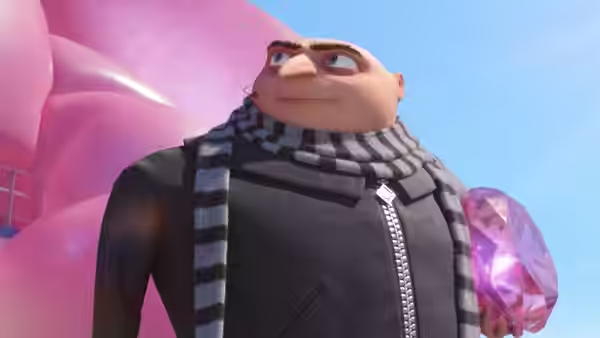
Steve Carell gives Gru and Dru enough vocal distinction to make their exchanges enjoyable without relying on the novelty of hearing him twice. He finds energy in their differences, even when the sibling rivalry supplies little for either of them to do. Writers Ken Daurio and Cinco Paul introduce a relationship that ought to change how we see Gru, then settle too readily for another source of comic business. The brother is a useful addition to the cast, but an underdeveloped reason for another film.
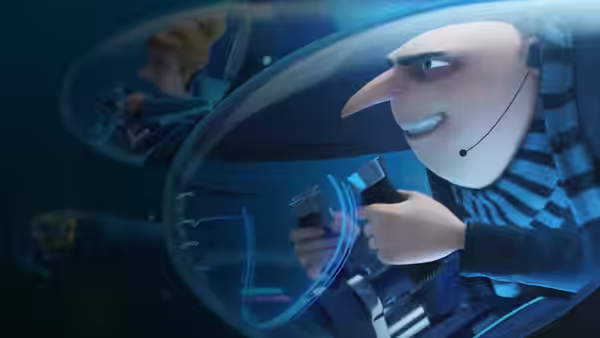
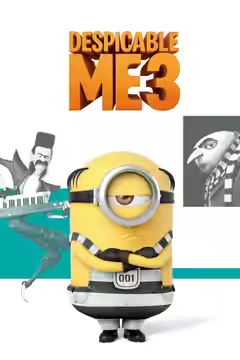
Trey Parker’s Balthazar Bratt fares better because his 1980s fixation gives the action a particular comic shape. We laughed at the dance-fights between Bratt and Gru: the ridiculous choreography gives the confrontation something to do besides growing louder. The directors seem more interested when a physical gag can determine how the action moves. The dated references become less amusing when the film expects recognition alone to earn the laugh, and Bratt’s catchphrases are thinner material than his fighting.
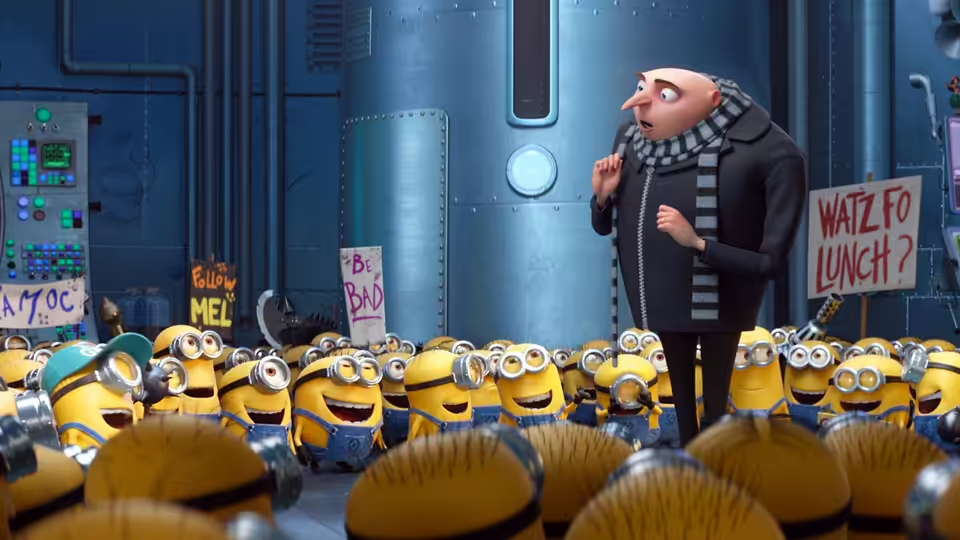
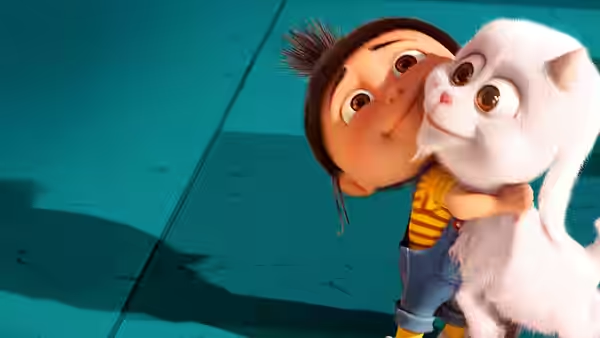
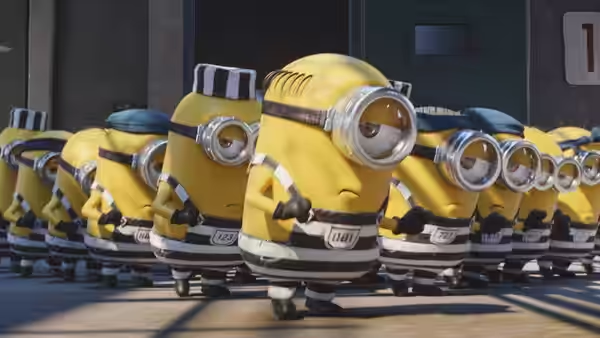
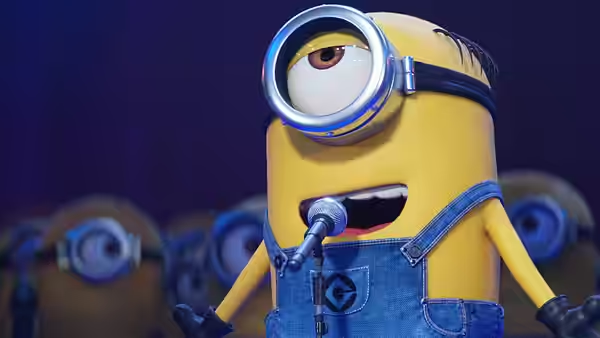
Kristen Wiig brings welcome warmth to Lucy, but the family material has to compete with too many interruptions. The Minions, voiced by Pierre Coffin, remain useful performers of nonsense, particularly when the film gives them musical business. Those passages have their own comic rhythm and can be amusing in isolation. Dropping them into an already crowded film makes it harder to settle into Gru’s family troubles, especially when we know another change of focus cannot be far away.
Editor Claire Dodgson keeps the individual sequences moving briskly, though speed cannot make the separate stories belong together. We began to find the constant switching tiring; each return to another subplot meant waiting again for it to become interesting. Heitor Pereira’s score helps sustain the bustle, but the musical punchlines make more of an impression than the accompaniment. There is plenty to listen to and look at, with too little time to enjoy the consequences of a joke.
A family animation need not have much to say beyond making its characters enjoyable company. It does, however, need to know when a joke has done its work and when a relationship deserves more than a quick visit. The writers have enough promising material to choose from; their reluctance to choose is what weakens it. The sibling comedy, the villain’s routines and the family story each demand attention, and none develops enough to justify the distractions.
At 90 minutes, this is a short film that feels crowded rather than economical. Steve Carell’s vocal play and Bratt’s dance-fights provide reasons to stay interested, but we cannot recommend it on those pleasures alone. If the Minions are already the household favourites, allow for a fair amount of waiting between their appearances.