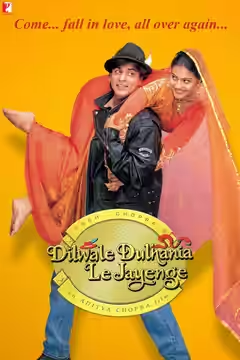
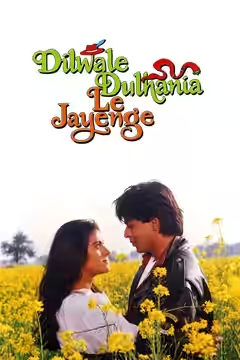
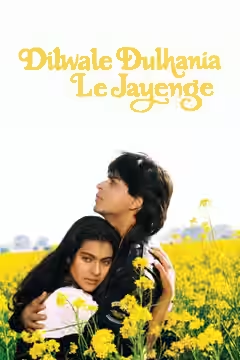
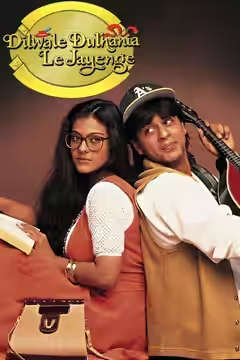
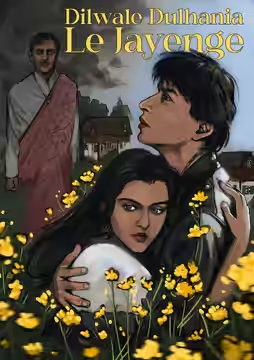
Dilwale Dulhania Le Jayenge is funny and affecting when Kajol and Shah Rukh Khan have room to play. The broad comedy and prolonged negotiations over family duty make this a more demanding evening than it needs to be.
Dilwale Dulhania Le Jayenge is a good romantic musical that would be better if it trusted its central couple more. As writer and director, Aditya Chopra wants the pleasure of youthful independence without dismissing the parents who fear it. That gives the courtship a useful complication, since falling in love does not settle what anybody owes their family. It also gives almost everybody a chance to delay matters.
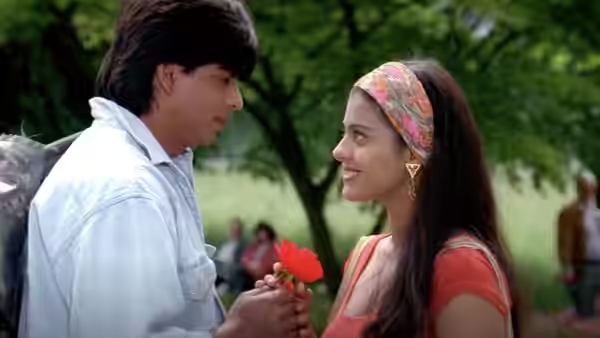
Raj Malhotra treats shared travel as permission to make a nuisance of himself, while Simran Singh has to decide how much of him she can tolerate. Shah Rukh Khan pushes the cheek until it threatens to become entitlement. Some of the comedy asks us to find persistence charming simply because he is the one being persistent. Kajol is essential here: her impatience gives the behaviour a consequence, however briefly, and stops the flirtation feeling entirely rigged in his favour.
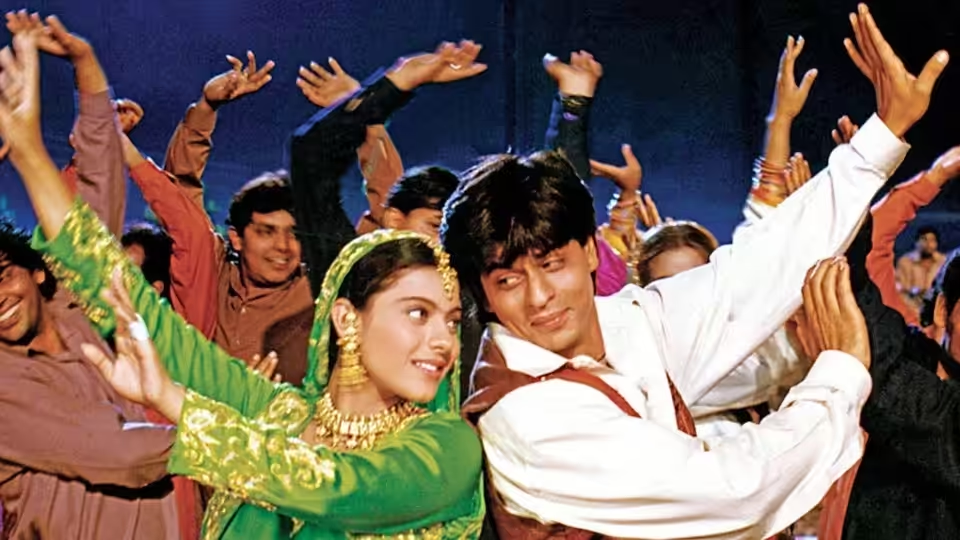
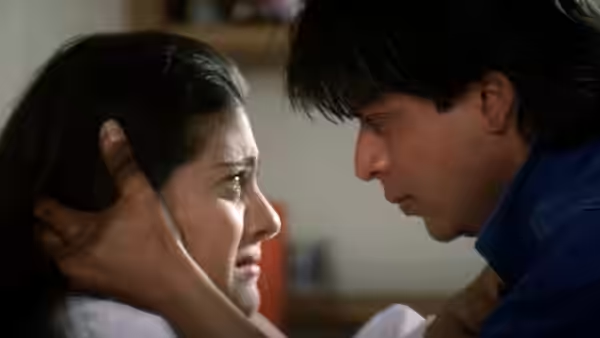
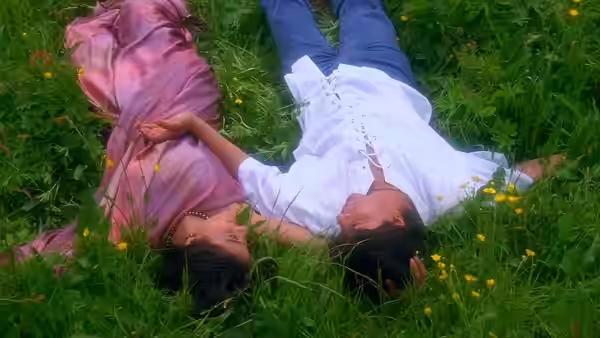
We were moved by Kajol’s gradual softening towards him, because she makes it feel like something Simran Singh discovers rather than an obligation of the plot. Her attraction does not immediately erase her irritation. Shah Rukh Khan is better when he quietens down and lets a response register before supplying the next performance of charm. Together they make the pauses in the teasing worth watching, and those pauses do more for the romance than another round of comic provocation.
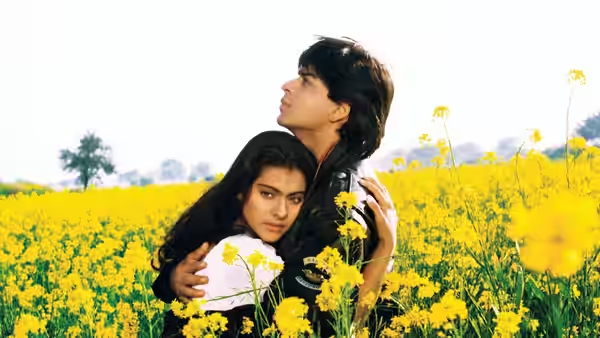
Manmohan Singh photographs the European settings with a brightness that suits the holiday mood, though the prettiness can become rather uniform. The faces remain the more interesting sight. Jatin Pandit and Lalit Pandit supply melodies that make room for longing without requiring the leads to explain themselves yet again. The music allows a feeling to develop without immediately chasing a laugh, and makes the attraction easier to believe.
Keshav Naidu’s editing allows the performers time to react, which helps the courtship and does fewer favours for the broader humour. Too many jokes continue after their point is clear. Across 190 minutes, that repetition matters: it becomes harder to enjoy a digression when we have already had several making much the same contribution. The songs earn their space more consistently than the comic business, and the film could lose some fuss without losing its warmth.
Amrish Puri makes Chaudhry Baldev Singh’s disapproval difficult to shrug off, and the film is right to take him seriously. The trouble is how much deference the screenplay expects in return. Simran Singh’s freedom requires a degree of justification that her father’s authority rarely does, and the tenderness towards family can make that inequality seem reasonable. There is enough feeling in the performance to complicate our impatience, but not enough to remove the objection.
Romantic musicals can take their time if the time deepens our attachment to the people singing. This one succeeds often enough to justify an evening, provided songs and family quarrels are part of what we have come for. We would still have preferred fewer jokes at which only Raj Malhotra seems amused. Choose it for Kajol and Shah Rukh Khan, and leave enough of the evening free to forgive the delays.