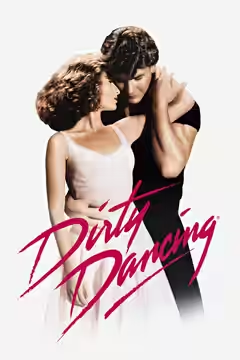
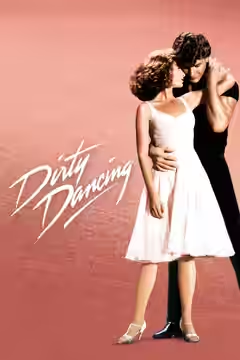
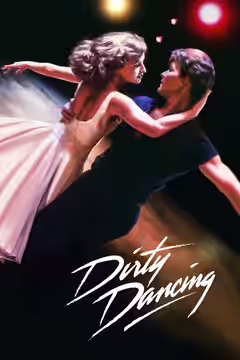
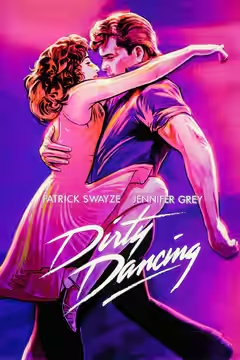
Jennifer Grey and Patrick Swayze make Dirty Dancing a romance worth believing in, even when the dialogue invites resistance. The dancing earns the affection that the familiar plotting sometimes takes for granted.
Dirty Dancing is a good romantic film with a story that rarely surprises us and dancing that repeatedly does. Emile Ardolino understands that attraction becomes convincing when we can see two people respond to one another, without a speech explaining how much they feel. He gives Jennifer Grey and Patrick Swayze the space to make that happen. At 100 minutes, the film also has the sense not to make a modest story into a lengthy examination of itself.
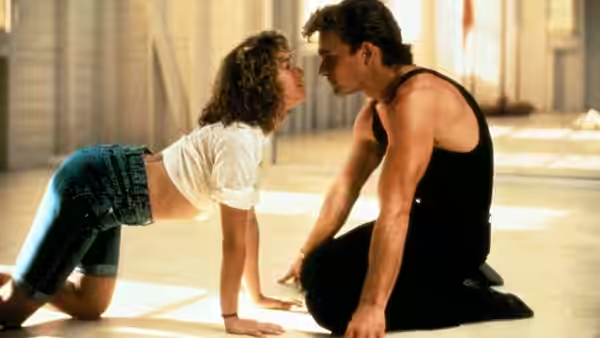
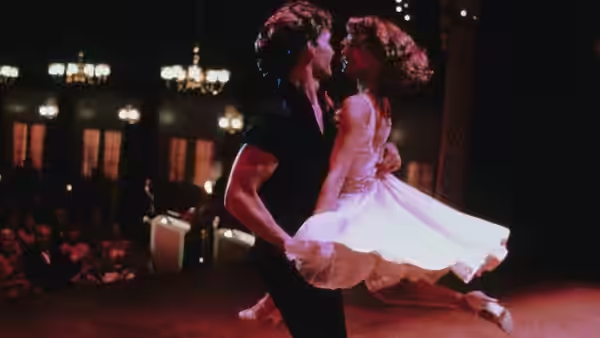
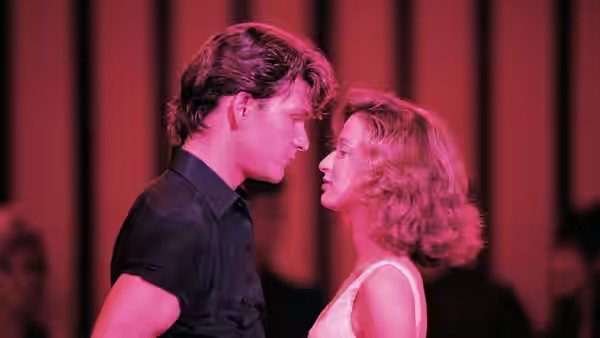
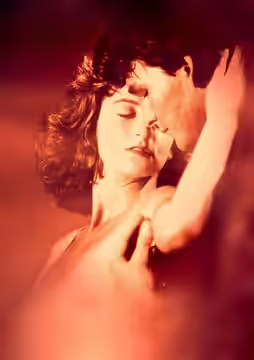
Jennifer Grey makes Baby Houseman easy to care about because she never seems entirely certain of the impression she is making. There is eagerness in the performance, but also the awkwardness of trying to look as though everything comes naturally. We were moved by her concentration when she dances with Patrick Swayze; wanting to get it right becomes something more personal than mastering a routine. Her effort gives the romance a vulnerability that the dialogue cannot always supply.
Patrick Swayze’s Johnny Castle is more persuasive in motion than in conversation, and the film is sensible enough to exploit that. His assurance could make the pairing feel unequal; instead, he seems alert to what his partner is doing, so the attraction has something to build on. Eleanor Bergstein’s writing is less reliable when it has to give him comparable interest away from the dancing. He can feel like a romantic ideal whose character has been filled in only as far as the story requires.
That writing is also where the film’s earnestness occasionally becomes a problem. Too much dialogue sounds ready to be remembered, and the familiar course of the romance can make us aware of the next step before the characters take it. Yet Eleanor Bergstein gives the people enough warmth to stop them becoming mere obstacles or rewards. Even when we recognise the formula, the couple’s reactions keep the scenes from feeling entirely predetermined.
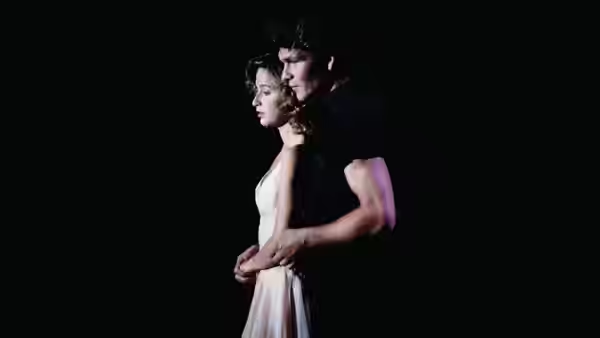
Jeffrey Jur’s cinematography is most useful when it lets us watch both dancers responding to each other. Peter C. Frank’s editing keeps pace with the music without making the movement difficult to follow. Those are straightforward virtues, but they matter when the physical work is doing so much of the storytelling. Away from the dancing, the photography is less distinctive, and David Chapman’s production design does little to change that. The surroundings give the performers somewhere to stand without often becoming interesting in themselves.
John Morris’s music is less memorable than the rock-and-soul songs, which supply much of the film’s warmth and physical energy. Music can make a romantic scene seem more persuasive than the acting deserves, but here the central performances hold up their end. The dancing is erotic because each partner appears to be paying attention to the other’s body. The pleasure comes from watching that attention become mutual, and the songs give it time to develop.
For a dance romance, the reservation is how often the spoken scenes leave us waiting for the music to start again. Emile Ardolino can rely on his leads to keep us interested through most of those passages, though the script occasionally makes their work unnecessarily difficult. We recommend it with some tolerance for lines that announce their importance before they have earned it. Give the dancing a chance before deciding that the sentiment is too much.