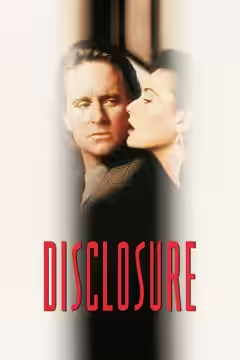
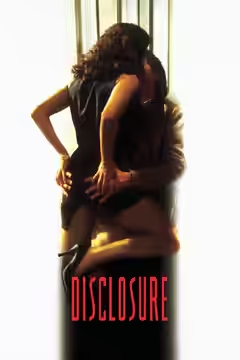
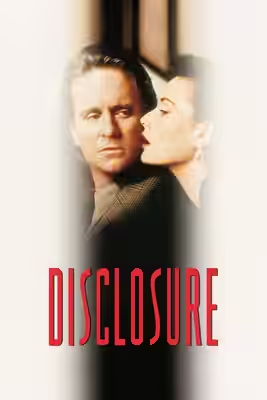
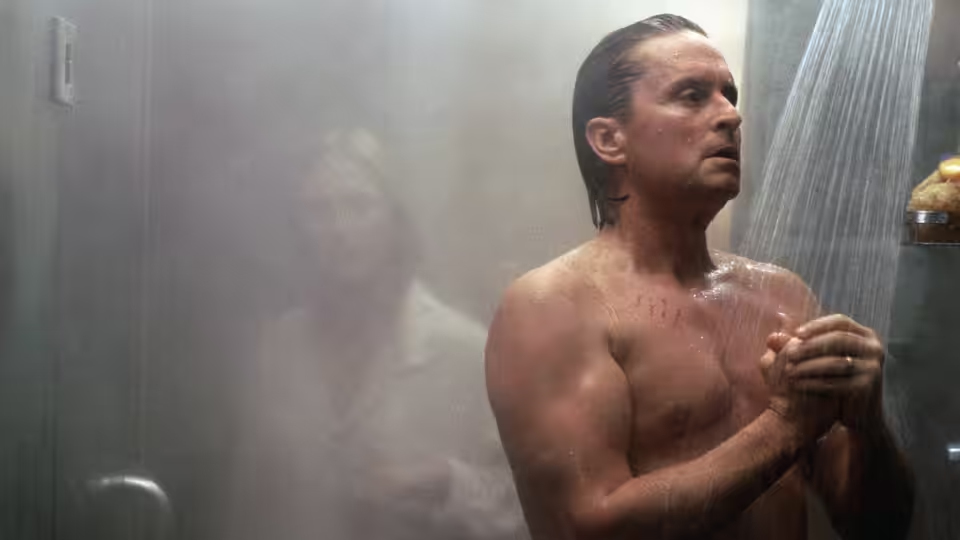
Tom Sanders (Michael Douglas) stands under a shower, clutching his hands to his chest
Film review

Disclosure

1994 · Directed by Barry Levinson · 2h 08m

In a sentenceA man is sexually harassed by his new boss and the film still finds time to put him in a virtual reality filing cabinet

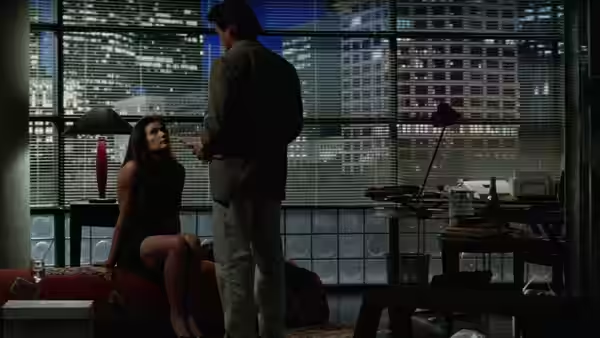
The rainy weeks before a company deal. Tom Sanders (Michael Douglas) runs the production side of the company and expects to be made head of the division when the deal goes through. Instead the company’s founder, Bob Garvin (Donald Sutherland), hands the job to Meredith Johnson (Demi Moore), who has arrived from the sales side and who is an old flame of Tom’s. On her first evening in the glass-walled corner office she invites him up for a bottle of wine and a talk about the future. He goes home late to his wife Susan (Caroline Goodall). The next morning the company lawyer, Philip Blackburn (Dylan Baker), is waiting for him with an accusation, and Tom finds a lawyer of his own in Catherine Alvarez (Roma Maffia).

Plays from YouTube when you press play; nothing loads from them until then.

Fi1m review

Barry Levinson turns Michael Crichton’s sex-swapped harassment novel into a handsome corporate thriller that keeps flinching from its own premise. Douglas and Moore hold the screen, the offices are the best character, and the thinking stops where the plot starts.

Michael Crichton’s idea, carried over intact by Paul Attanasio’s screenplay, is to take a sexual harassment case and reverse the sexes. Tom Sanders (Michael Douglas) is passed over for promotion in favour of Meredith Johnson (Demi Moore), the woman he used to sleep with. She asks him to her office after hours. What happens there, and the two accounts of it that each of them gives the next day, is meant to be the film. For about twenty minutes it is. Then Disclosure decides it would rather be a thriller about who is lying, and once it has decided that, it has also decided who, and the argument is over before the lawyers sit down.

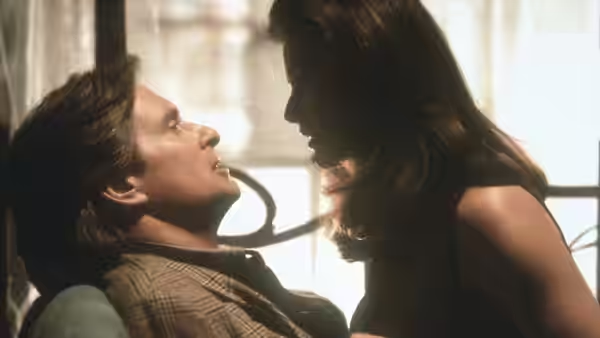
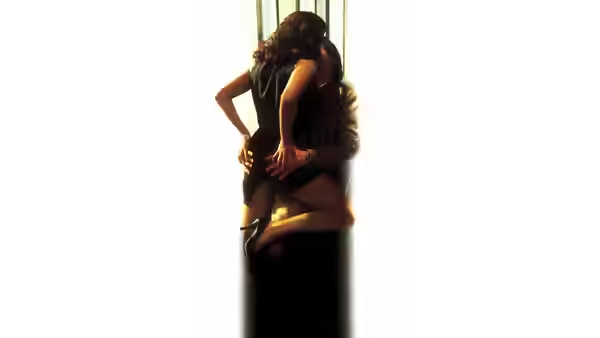
The office scene is the one everybody remembers and it is a strange piece of work. Douglas plays a man who wants to, knows he must not, and is cross about both at once, and his face does three or four things in a single take that the film does not seem to have planned for. We were uncomfortable watching it, and not in the way Levinson intended: we laughed, and then wondered whether we were supposed to, and the film never told us. Moore has the harder part and is given less to do with it. Attanasio writes Meredith as a threat with a haircut, every line a dare, so there is never a second account for us to half believe.

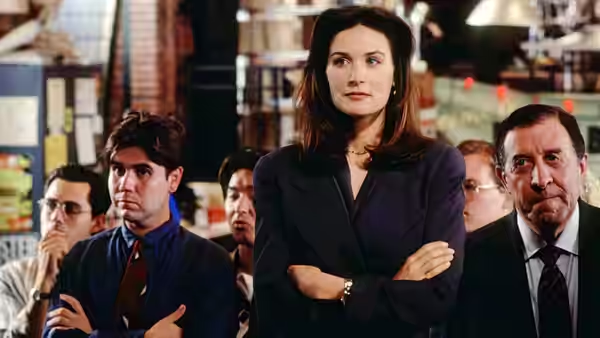
What follows is a competent legal thriller, and competence is not nothing. Roma Maffia’s Catherine Alvarez is the best thing in the film: brisk, unimpressed, a lawyer who treats her client’s outrage as a scheduling problem. Dylan Baker’s Philip Blackburn, the company counsel, watches every room he walks into as if pricing it. Donald Sutherland gives Bob Garvin the air of a man who stopped reading his own memos years ago. Stu Linder cuts the mediation scenes cleanly, letting the two versions of the evening play against each other without tricks, and for a while the film has the pleasure of a good procedural.

It also has Neil Spisak’s offices, which deserve the praise they have had. The company’s headquarters is a converted brick warehouse with glass partitions and an open atrium, so that everyone can see everyone else and nobody can hear anything, which is the right building for a film about who saw what. Tony Pierce-Roberts shoots it with rain running down the windows and the light coming in flat and grey from the water. Gloria Gresham puts Moore in dark suits with a skirt cut to the thigh and Douglas in the same beige jacket for a week, and the costumes tell you the power balance before anyone speaks.

Ennio Morricone wrote the score, and we checked the credit twice. It is soft synthesiser and a piano line that could have come from any studio thriller of the period, and it is the one place where a credit promises more than the film delivers.

Then there is the virtual reality sequence, in which Tom puts on a headset and walks through the company’s files rendered as a cathedral of glowing drawers while a colleague’s avatar deletes them around him. We laughed out loud, which the film did not want, and then found we rather enjoyed it, because it is the only stretch of the 128 minutes in which anyone is taking a risk. The rest is a machine, and a well-maintained one.

Levinson made Diner and Rain Man, films that run on people talking, and he is a good director of rooms. Here he is running a Crichton plot, and Crichton’s plots run themselves. Set against the other films in which Douglas is undone by a woman in a suit, this is the tamest, and the one that most wants to be taken seriously.

Most critics landed close to where we have, mildly entertained and faintly annoyed, and we can only agree with them. See it if a glossy 1990s office thriller in the rain is your idea of an evening; the 18 certificate is for one scene, and the scene is the point. Everything after it is very well made and does not need to be about anything.

Critical consensus AI synthesised

54
Positive
1
Mixed
4
Negative
2

Most critics land in the middle on Disclosure, treating it as a glossy, competently made thriller that takes a provocative subject and handles it shallowly. The reviews agree it is watchable: Empire calls it tightly directed entertainment, and Roger Ebert, though mixed, finds the sexual harassment premise compelling even when the storytelling is not. Where praise clusters is odd for a thriller: the Los Angeles Times picks out the office design and the virtual-reality sequences as surprising highlights, and Empire the chemistry between Michael Douglas and Demi Moore.

The spread is wide. Reservations gather around the plotting, which the Los Angeles Times calls muddled and short of creative passion, and around the film’s seriousness about corporate power and sexual politics, which Radio Times finds self-important and unintentionally funny. The New Yorker goes furthest, calling it tasteful and bland, with Douglas’s painfully ambivalent turn in the central sex scene its one camp pleasure. Two of the seven reviews cannot be read in full.

Empire
1 January 2000 · Ian Nathan
70*

Nathan finds the film glossy, tightly directed entertainment, despite its shallow handling of sexual harassment and corporate intrigue. He singles out the chemistry between Michael Douglas and Demi Moore as a strength.

Read the full review →
The New York Times
9 December 1994
64*

The page content is blocked, so the critic’s verdict cannot be determined. No specific praise or complaint can be verified from the available text.

Read the full review →
Time Out
· TCh
64*

The available page identifies this as a review but does not reveal the critic’s verdict. Its visible description introduces the workplace conflict over a promotion and an old flame.

Read the full review →
RogerEbert.com
9 December 1994 · ★★½/4 · Roger Ebert
62

Ebert gives the film a mixed verdict. He singles out its treatment of sexual harassment as a compelling subject, though the story’s execution is less persuasive.

Read the full review →
Los Angeles Times
9 December 1994 · Kenneth Turan
50*

Turan finds the film adequately entertaining but undercut by muddled plot points and a lack of creative passion. He singles out the office design and virtual-reality visuals as surprising highlights.

Read the full review →
Radio Times
★★ · Adrian Turner
40

Turner finds the thriller self-important and unintentionally funny. He criticizes its attempt to address corporate power and sexual equality.

Read the full review →

Straight answers AI written, from our review

Is Disclosure worth watching?
Disclosure is a glossy, well-made 1990s office thriller that flinches from its own premise, and we scored it 56. Douglas and Moore hold the screen and Roma Maffia is the best thing in it, but once the film decides who is lying the argument is over. See it if a corporate thriller in the rain is your idea of an evening.
How long is Disclosure, and what is it rated?
Disclosure runs 2h 08m. It is a thriller and drama film.
Where can I watch Disclosure in Italy?
Disclosure is available to rent from Amazon Prime Video from €3.99. Availability is checked daily; the links above go straight to each service.
How violent or frightening is Disclosure, and is it suitable for children?
Disclosure carries an 18 certificate in the UK, and that rating is for one scene: the after-hours encounter in Meredith Johnson's office, which is explicit and uncomfortable rather than violent. There is little in the way of physical violence or fright; this is a legal and corporate thriller about who is lying. It is not for children, and teenagers should be steered elsewhere.
How does Disclosure compare to The Firm?
Disclosure is the tamer and shorter of the two, a sex-swapped harassment case that turns into a procedural about who is lying, while The Firm is the longer, more menacing corporate machine. We think The Firm is the better film, chiefly for Gene Hackman. Choose Disclosure if you want gloss and a quick evening; choose The Firm if you can sit through 154 minutes for a stronger sense of threat.
Is Disclosure based on a true story or a book?
Disclosure is based on Michael Crichton's novel of the same name, adapted by Paul Attanasio, and it is not a true story. The film carries over Crichton's central idea intact, a sexual harassment case with the sexes reversed, before settling into a thriller about who is telling the truth. You do not need to have read the book to follow it.
What should I watch after Disclosure?
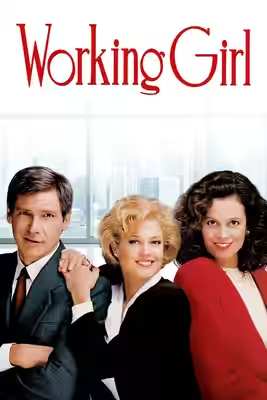
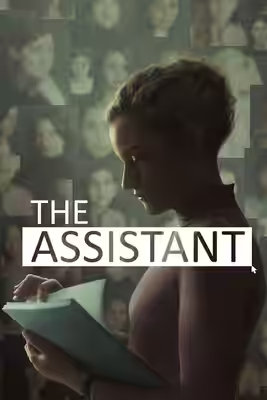
After Disclosure, try The Firm (1993, Fi1m 71): Another slick corporate machine from the same decade, with a better sense of menace. Then Working Girl (1988, Fi1m 80): Office politics played as comedy, and sharper about power than this film manages; and The Assistant (2019, Fi1m 81): A single day in a production office; the harassment film this one declines to be.

Cast

If you liked this, try…

  1. The Firm (1993, Fi1m 71)Another slick corporate machine from the same decade, with a better sense of menace.

  2. Working Girl (1988, Fi1m 80)Office politics played as comedy, and sharper about power than this film manages.

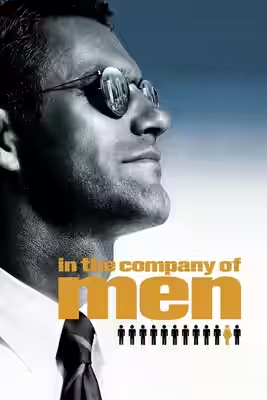
  3. In the Company of Men (1997) · not reviewed yetTwo salesmen set out to ruin a colleague; cheap, cold and far braver.

  4. The Assistant (2019, Fi1m 81)A single day in a production office; the harassment film this one declines to be.

  5. Fatal Attraction (1987, Fi1m 70)Douglas in trouble again, in a film that at least commits to its nastiness.

Free account

Know what to watch tonight

Two lists that know where things are streaming, collections you can share, your own score beside ours, and Discover that remembers what you have seen.

  • Want to see, sorted by what is streaming now
  • Seen, with your score out of ten
  • No adverts, ever