George Arliss had played Disraeli for years before the microphones arrived, and it shows: every pause is placed. The film around him is a photographed play, stiff in the legs and thin in its subplots, and worth an evening only if the performance is what you have come for.
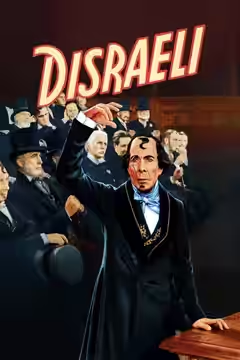
Disraeli is a Warner Bros. talkie from 1929, made by people who knew the technology was the attraction and the star was the insurance. George Arliss had played Benjamin Disraeli on stage and in silent film before this version, and Julien Josephson’s script, adapted from the stage play, hands him the part again with the furniture barely moved. The story is the purchase of the Suez Canal: Disraeli wants it, Russia wants Egypt, the Bank of England says no, and a pair of Russian agents drift through London society taking notes. Alfred Edward Green directs, and his main job is to keep Arliss in frame and audible.
Our view is that it is a decent film with one reason to watch it. That reason is very good. The rest is a museum, and we mean that as a description, not an insult; you can learn a great deal here about what British history looked like to Hollywood the year sound arrived, and about how a stage actor learned to talk to a microphone.
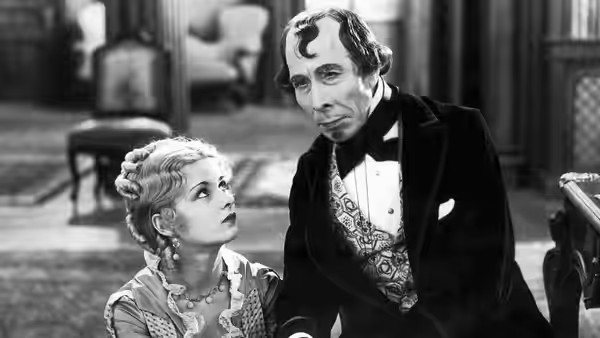
Arliss is the whole show. He plays Disraeli as a man who has decided that being amused is a form of power: the head tilts, the eyes half close, a hand comes up and waits, and the line arrives a beat after everyone around him expects it. The epigrams are stagey and he knows they are, so he underplays them, letting the other actors do the reacting. In the scenes where he talks a reluctant man round, at the Bank, or across his own desk, we found ourselves leaning in, which is not something we expected from a 90-minute film in which almost nobody stands up.
Almost nobody stands up because the camera cannot follow them. Lee Garmes shoots the interiors handsomely, with lamplight on faces and the dark corners of Downing Street left dark, but the frame is fixed for most of the film and people arrange themselves in front of it as they would on a stage. Owen Marks cuts only when somebody enters or leaves, so scenes run to their natural length and then a little past it. David Mendoza and Louis Silvers supply music at the front and back and largely stay out of the dialogue, which was the habit of the year and suits a film that lives on talk. Earl Luick’s costumes do their work quietly: frock coats, silk, and for Disraeli the famous curl on the forehead and the ring on the finger, which Arliss uses as a prop more than once.
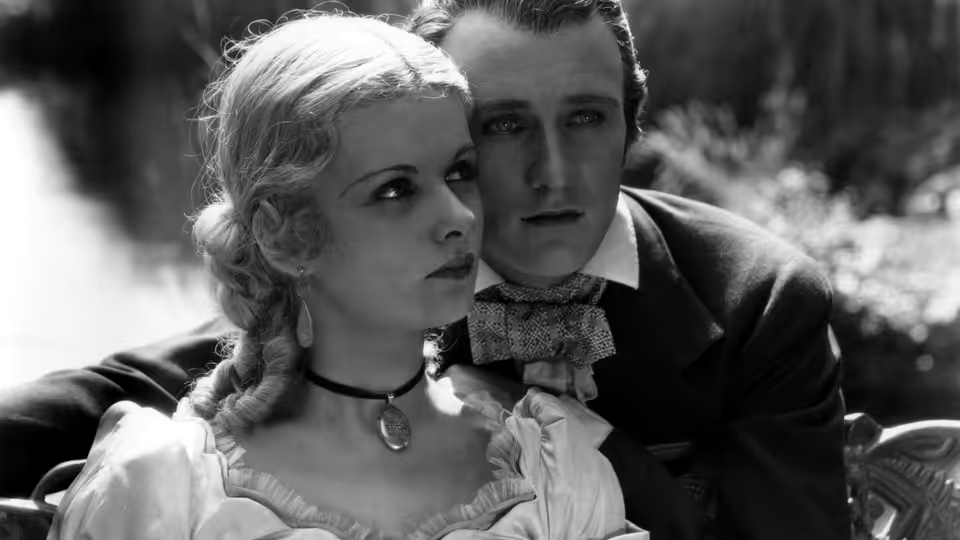
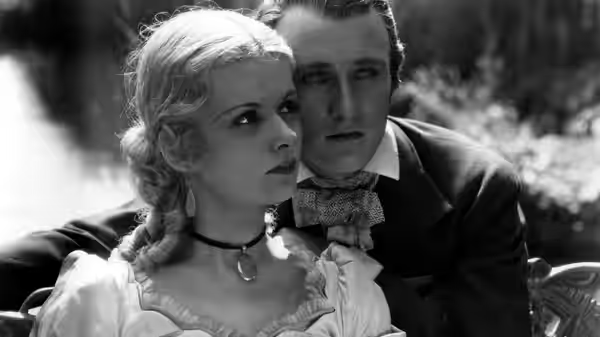
What does not work is everything that is not Disraeli. The young lovers are the problem the play had and the film keeps. Anthony Bushell’s Lord Charles Deeford is a handsome blank who is told to become useful and does so off screen, and Joan Bennett’s Lady Clarissa Pevensey has little to do but wait for him in a good dress. Their scenes together stopped the film dead for us, and we were bored, and then faintly irritated that a 90-minute picture had found room for them. The spy plot is better served. Doris Lloyd gives Mrs. Agatha Travers a soft social manner that makes her eavesdropping believable, and Michael Visaroff’s Count Borsinov is enjoyably certain of himself. Neither of them is a threat for long, which the film does not seem to mind.
The scenes that moved us are the domestic ones. Lady Mary Beaconsfield is played by Florence Arliss, who was married to the star, and the two of them have the ease of people who have shared a breakfast table for decades. A late passage between them, which we will not describe, is played almost without gesture, and it is the one place the film stops performing. Margaret Mann is billed as Queen Victoria, and we will leave her appearance where the film puts it.
Against the standard of 1929, when many talkies were static and most were worse acted than this, Disraeli is a respectable piece of work. Against the standard of what a film about a clever politician can be, it is a recital. Watch it at home, in one sitting, and treat it as what it is: a record of a great stage performance caught just as the medium learned to record voices. If you want the Suez Canal, read a book. If you want Arliss, this is where he is.