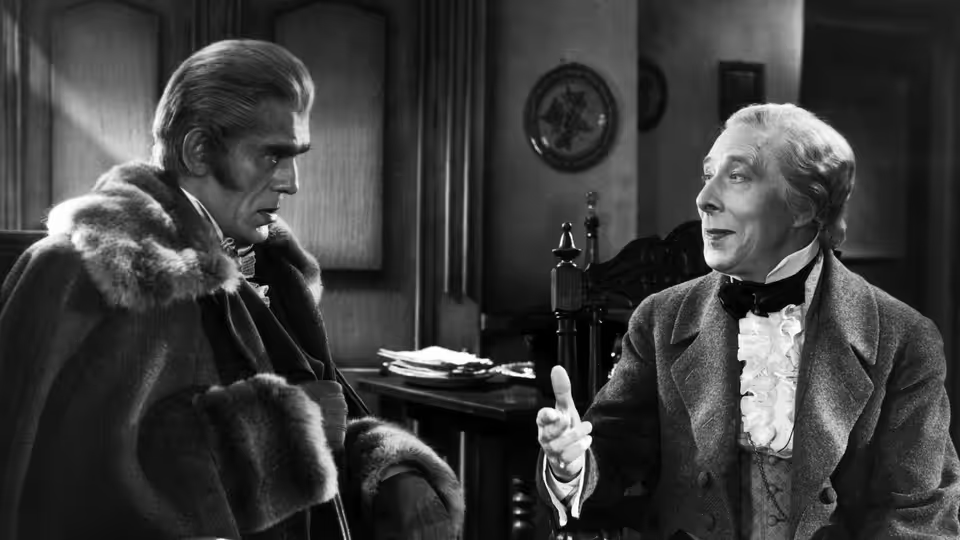
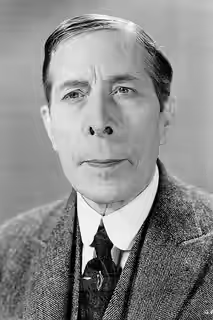
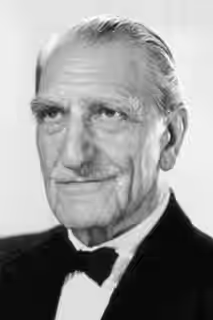
George Arliss plays father and son in a handsome, stagey plea for the Rothschilds, made when Europe needed one. He is worth the ticket; the romance is not, and the film’s insistence that its bankers were saints wears thin by the end.
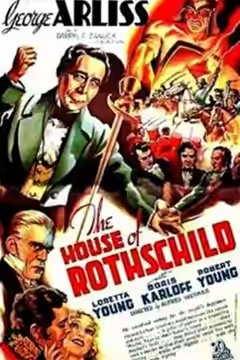
Alfred L. Werker’s film was made in 1934, when Jews were being pushed out of German public life again, and it does not pretend otherwise. It opens in the Frankfurt ghetto in 1780, where the gates are locked at dusk and the tax man calls whenever he likes, and it ends in a London where a Rothschild can be received at court. Nunnally Johnson’s screenplay is a brief for the defence: the family got rich, it says, because everyone else kept trying to stop them, and they used the money to end a war. Darryl F. Zanuck and William Goetz produced it handsomely. It is a decent evening, a little stiff at the knees, and worth it chiefly for the man at the centre.
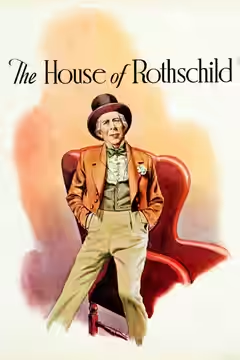
George Arliss plays both Mayer, the old moneylender, and Nathan, the son who sets up in London. As Mayer he is quick, sly and frightened, hiding coins under the floor while Helen Westley’s Gudula hurries the children into their places. As Nathan he is the same man with the fear taken out and a better tailor. The scene in which the dying Mayer sends his five sons to five capitals and tells them to act as one moved us more than we were ready for, because Arliss does not play a death. He plays a man giving instructions, and lets the sons do the grief.
J. Peverell Marley lights the ghetto low and close, candles and small windows, so the family seem to be sitting on top of one another. When the film crosses to London he opens the frame out to high windows and long tables, and the point is made without a word. Allen McNeil and Barbara McLean handle the leap of decades with a montage of couriers and letters that is brisker than anything Werker manages with a static camera. Alfred Newman’s music is used sparingly, mostly for those crossings and for the end, which is about the right amount.
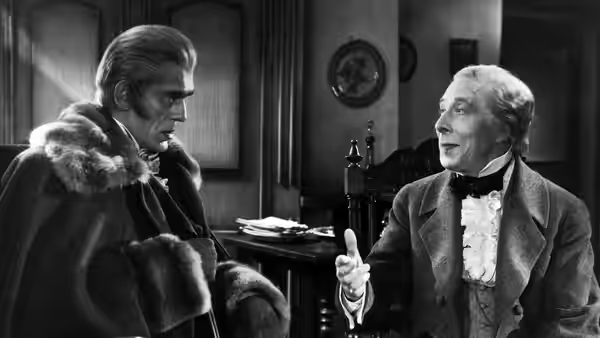
The English are good value. C. Aubrey Smith’s Wellington barks for money and gets it, and looks as if he has never doubted anything in his life. Reginald Owen and Arthur Byron, as Herries and Baring, are the men who need Rothschild credit and resent needing it. Boris Karloff has the harder job. Count Ledrantz is the film’s Prussian bigot, and Karloff plays him with a fixed sneer and a cold voice, and that is nearly all he is given to play. We laughed, once, at the way the camera finds his face whenever someone says a kind word about a Jew, and then felt we should not have, because the film means it.
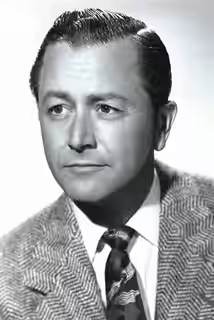
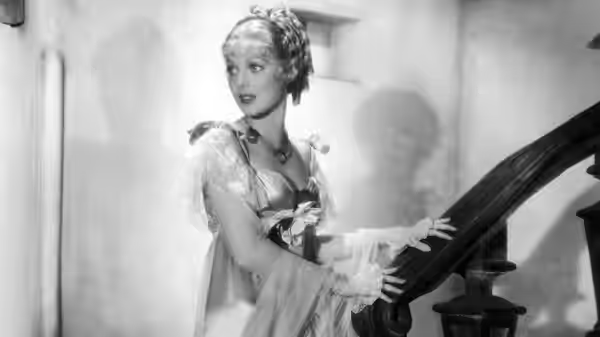
What does not work is the romance. Loretta Young’s Julie, Nathan’s daughter, and Robert Young’s Captain Fitzroy are a pretty pair kept apart by her father’s rules, and the writing gives them nothing to do but look pained in doorways. There is a stranger problem underneath. Apart from Westley, who keeps the ghetto in her voice, the Rothschilds are played as English gentry from the moment they leave Frankfurt. The film argues that they are like everyone else while casting them so that nobody could mistake them for anyone else’s idea of a Jew. It wants credit for saying the word and takes care not to show too much.
The second half is about a gamble on the Stock Exchange with Napoleon’s fate at stake, and we will not say how it comes out, except that the last scene switches to colour and looks like a different film. Werker directs most of the rest from the stalls: people enter, stand, deliver, exit. At 88 minutes that is bearable, and Arliss makes it more than that.
If you want Arliss, this is a good place to find him, and there are not many left. If you want history, read around it afterwards, because the film has decided the bankers were the good guys and never once entertains the alternative.