Dieterle’s account of Zola and the Dreyfus affair is solidly built, well cast down to the smallest part and stirring in the courtroom. It is also a film about an outbreak of anti-Semitism that never once says the word, and we could not stop noticing.
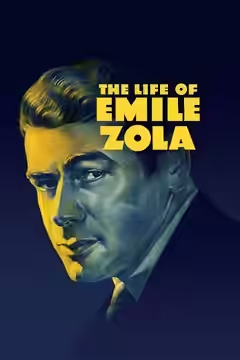
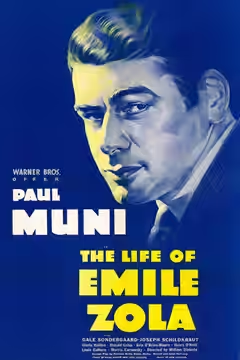
Warner Bros made a small run of these in the 1930s: solemn biographies of great men, William Dieterle directing, Paul Muni under the beard. The Life of Emile Zola is the one about the novelist, and it is two films at a join. The first third is a rise from the garret. The rest is a courtroom drama about the Dreyfus affair, the army scandal that split France in the 1890s. It is well built, well cast, and it has one large silence at its centre. We will come to the silence.
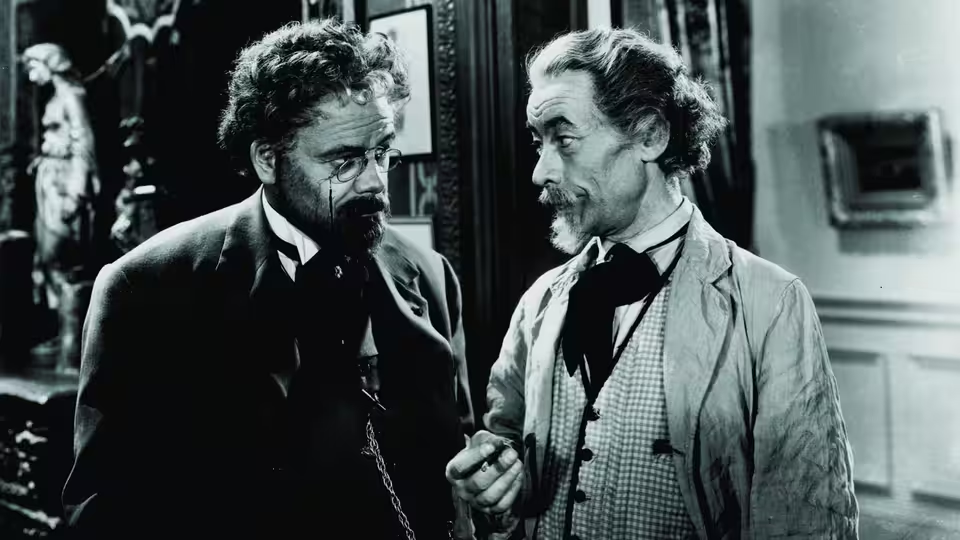
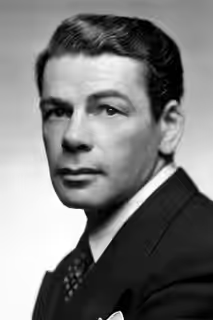
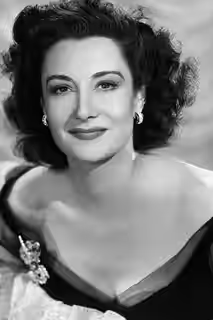
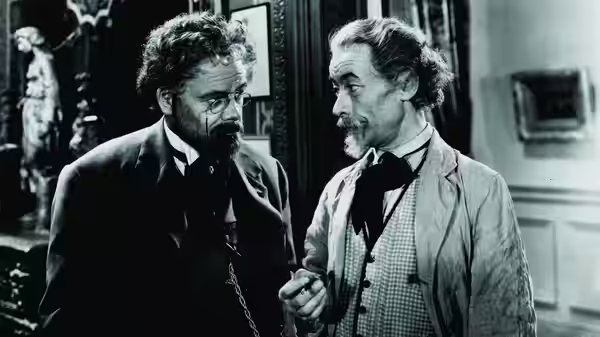
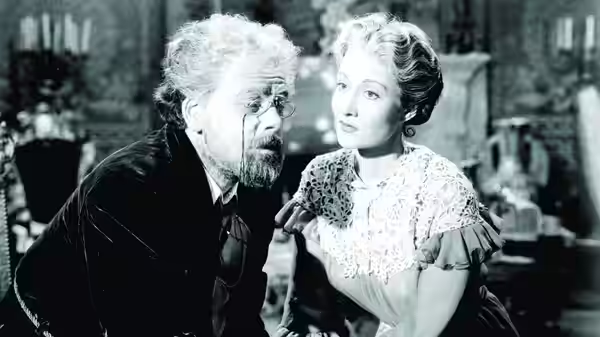
Muni plays Zola from a thin young clerk to a stout, bearded man of letters, and the film is honest about the second version: he is rich, he is comfortable, and he does not want to be disturbed. Milo Anderson and Ali Hubert dress the change in waistcoats that get progressively better cut, and Muni does the rest with padding, a pince-nez and a great deal of business with his hands. It is a technician’s performance, every gesture chosen and placed. We admired the workmanship and we did not often forget it was workmanship. Gloria Holden, as Alexandrine, watches him from the doorway and gets less from the script than she deserves.
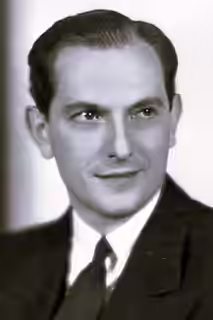
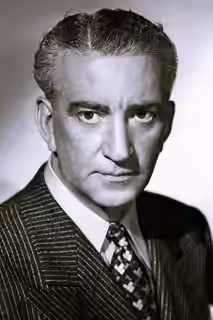
The film improves the moment the army arrives. A secret is leaking to the Germans, the general staff needs a culprit, and an officer runs a finger down a list of names and stops at Captain Alfred Dreyfus. The camera shows us why. There is a single word on his file, and nobody in the film speaks it, then or afterwards. Louis Calhern’s Major Dort and Robert Barrat’s Major Walsin-Esterhazy are exactly right as men protecting a mistake, and Joseph Schildkraut, as Dreyfus, is the best thing in the picture. His court martial and the ceremony that follows it, a sword broken and a crowd jeering, moved us more than any of Zola’s speeches. It is the face that does it: a man who keeps waiting for someone to explain, and is never told, because the film will not tell him either.
That is the silence. The Dreyfus affair was an outbreak of anti-Semitism dressed as a security matter, and this film has decided to treat it as a security matter with some vanity attached. Whatever the reason, and 1937 supplies several, the decision leaves a gap in the middle of the picture. Mobs burn Zola’s books in the street and we are never told what the mob believes. Morris Carnovsky’s Anatole France and the other writers rally round, and the thing they are rallying against is left as a shape. Zola wrote an open letter, J’Accuse, to name it. The film about him shows the headline and looks away.
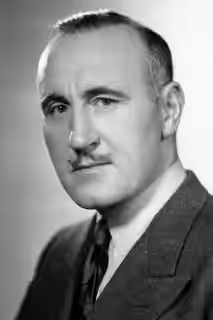
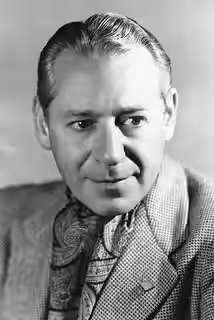
Then the libel trial, and here Dieterle is on firm ground. Tony Gaudio lights the courtroom from high windows so the witness stand is bright and the judges sit in shadow, and he keeps the camera low among the spectators so the officers on the stand loom over us. Donald Crisp’s Maitre Labori, for the defence, and Henry O’Neill’s Colonel Picquart, the one soldier with a conscience, play the procedure straight and the film is better for it. Warren Low cuts the evidence briskly, witness after witness, then stops cutting altogether for Zola’s address to the jury. Muni is left alone for a long stretch with the camera slowly closing and Max Steiner’s strings creeping in under the last third. It works. We felt the jury go with him, and we also felt the length of it, and the strings arrive a minute before they are earned.
Most critics rate this far higher than we do; the reviews so far are all favourable and the ones written in 1937 are ecstatic. We understand it. They were watching a studio picture in which a fat novelist takes on the army of a European power and is proved right, and that was rare and worth applauding. Watching it now, we see a film that is careful in exactly the places where Zola was reckless, and we do not think that is a small thing to hold against a biography of Zola.
See it for Schildkraut, for the trial, and for the sight of a studio once believing that a writer’s libel case was an evening’s entertainment. At 116 minutes it moves, the speech aside. Keep the title of Zola’s letter in mind as you watch, because the film never quite manages the first person.