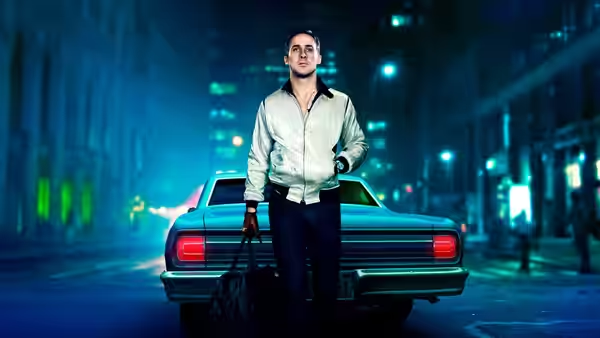
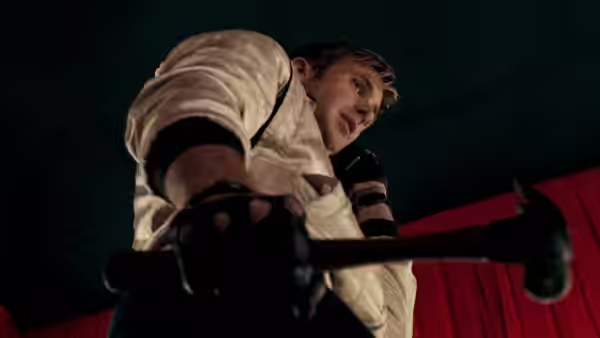
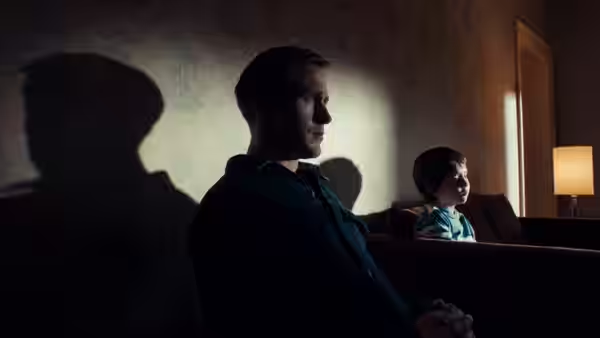
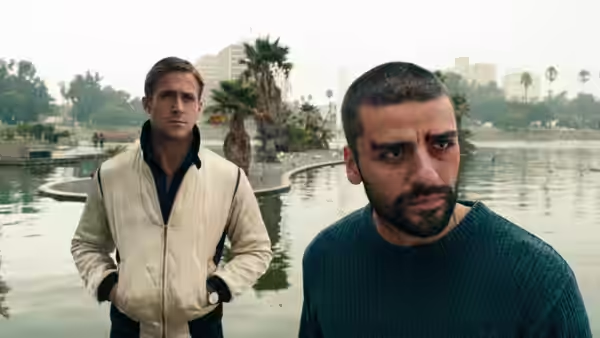
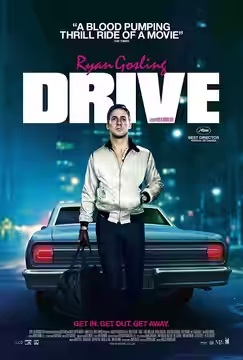
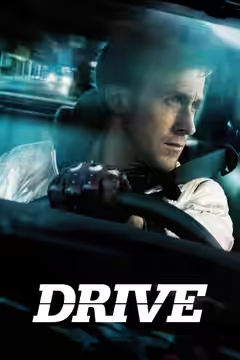
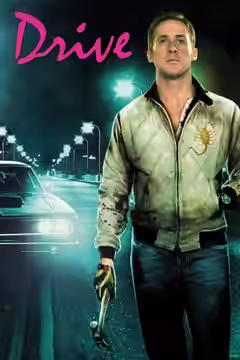
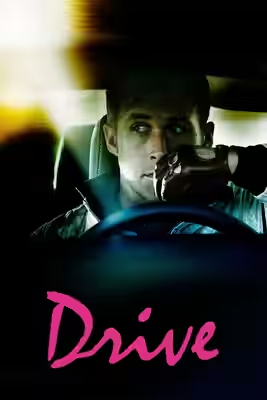
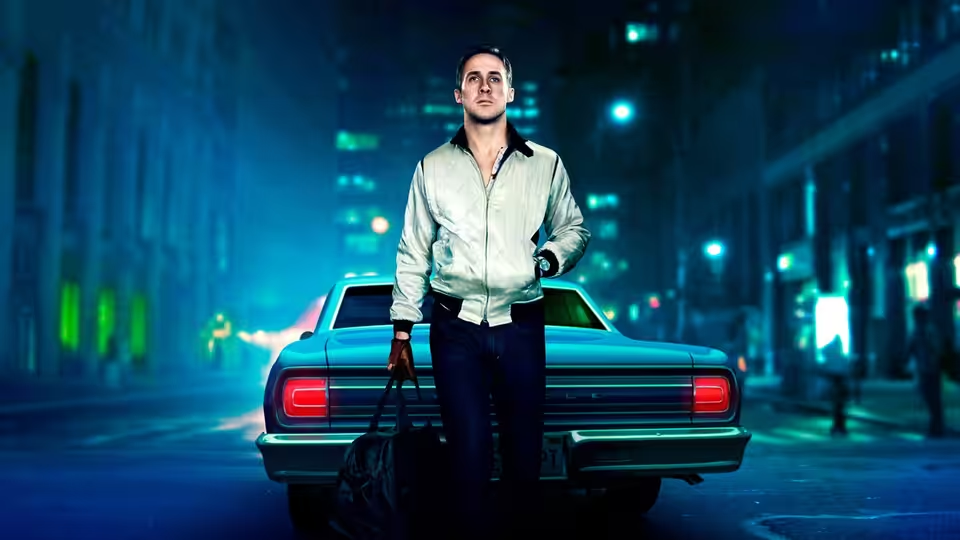
Driver (Ryan Gosling) stands behind a blue car on a neon city street at night holding a bag
Film review

Drive

2011 · Directed by Nicolas Winding Refn · 1h 40m

In a sentenceRyan Gosling makes conversation look harder than a getaway

Ryan Gosling plays a Los Angeles getaway driver who says little and earns his living among dangerous men. A romance with his neighbour Irene (Carey Mulligan) brings a quieter possibility into a life shaped by cars and crime. Around them in the city are Shannon (Bryan Cranston) and the criminal Bernie Rose (Albert Brooks). The driver’s controlled manner sits uneasily beside the violence of the people he deals with. Nicolas Winding Refn directs, with a screenplay by Hossein Amini adapted from James Sallis’s novel.

Plays from YouTube when you press play; nothing loads from them until then.

Fi1m review

Drive is a tense, carefully made crime thriller, with Ryan Gosling making silence count and Nicolas Winding Refn making violence hurt. The romance needs more from its writing, but the driving and the unease earn our recommendation.

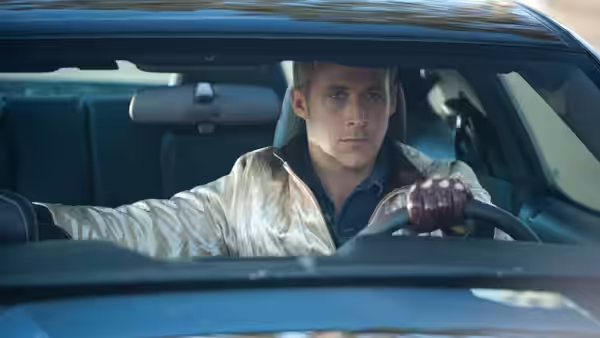
Drive is a crime thriller we recommend, though its romance needs more than the screenplay gives it. Nicolas Winding Refn builds the film around a getaway driver whose skill at the wheel is never in doubt. Ryan Gosling barely speaks, and the film lets his stillness hold our attention without supplying much explanation. Refn is interested in how reassuring that control can look. He also wants us to notice the danger in trusting it.

We held our breath during the opening getaway, because Matthew Newman’s cutting keeps the driving clear without making the escape feel safe. There is pleasure in being able to follow an action sequence this closely. Each change of pace matters, and the editing gives us time to register it. Gosling’s restraint helps: his composure makes us watch harder for trouble. The film establishes its attraction to a man who seems to know exactly what he is doing.

Newton Thomas Sigel photographs Los Angeles in crisp digital images, using neon light to give the city an inviting sheen. It does not make the place feel friendly. Beth Mickle’s production design shares that retro polish, and the surroundings suit characters who have been stripped down to a few strong traits. Occasionally the look is so insistent that we start attending to it at the expense of the people. Mostly, though, these images make the quiet passages worth looking at.

Cliff Martinez’s synthesiser score gives those pauses a warmth that Gosling often withholds. Its electronic sound belongs with the retro imagery, but it also gives the quieter scenes some tenderness. This matters in a film whose central performance keeps so much to itself. Refn allows little comfort when the violence arrives. The abruptness hurts, and the graphic detail makes the handsome presentation difficult to enjoy without reservation.

Carey Mulligan’s Irene is where Hossein Amini’s screenplay most needs another pass. Mulligan gives the neighbour a gentleness that makes the attraction understandable, but she has too little room to become interesting in her own right. We can believe that Driver wants to be near her. It is harder to feel that we know her beyond what she offers him. The quiet between them sometimes feels intimate, and sometimes feels like dialogue nobody has written.

Albert Brooks, as the criminal Bernie Rose, makes the simplified characterisation work in his favour. He is menacing without needing to advertise it constantly, and his presence gives the film a threat beyond its leading man’s capacity for violence. In this kind of crime story, familiar types can be enough when the casting gives them weight. Brooks does that, while Gosling makes the driver’s reserve intriguing even when the script leaves it unexplored.

At 100 minutes, Drive has enough discipline not to wear out its welcome. It understands the appeal of watching someone do a difficult job well, and it delivers the tension that such a thriller owes us. The thin romance remains a real limitation. Watch it for the driving, the music and Gosling’s concentration, with fair warning that the violence is graphic.

Critical consensus AI synthesised

84
Positive
14
Mixed
2
Negative
0

Most critics greet Drive with strong enthusiasm, with praise centred on Gosling’s restrained performance and Refn’s control of pace, silence and sudden violence. The reviews repeatedly single out the neon-lit images, synth-led soundtrack and carefully staged getaways. Gosling’s ability to hold attention with little dialogue is a particular point of agreement, while several critics also praise the supporting cast. For its admirers, the familiar crime story feels fresh because of how precisely it is told.

Reservations concern thin characterisation, borrowed genre conventions and violence that some find damaging to the mood. The spread runs from wholehearted praise to a few mixed assessments, rather than broad disagreement about the film’s craft. The Hollywood Reporter finds the script threadbare and the action insufficiently thrilling; The Wrap admires the chases and Albert Brooks but finds the styling excessive. The main divide is over whether that style sustains the story.

Empire
23 September 2011 · ★★★★★ · Adam Smith
100

The critic celebrates Refn's gripping, stylish neo-noir with its mid-80s aesthetic, masterful editing in the opening getaway, gorgeous cinematography, and Gosling's cool, starmaking performance channeling Steve McQueen, calling it shamelessly disreputable ultra-violent fun.

Read the full review →
The Guardian
25 September 2011 · ★★★★★ · Peter Bradshaw
100

The critic praises Refn's stylish, lyrical Hollywood noir as one of the year's most impressive American pictures, highlighting its intense yet poetic violence and strong performances. Gosling is singled out for his charismatic, understated lead turn as the taciturn driver.

Read the full review →
The AV Club
15 September 2011 · A · Scott Tobias
95

Celebrates the film's lean, efficient minimalist thriller style as a powerful reminder of genre potential when every element serves a purpose; highlights its mythic, stylized take on fast cars and dangerous men.

Read the full review →
Total Film
13 September 2011 · Jamie Graham
90*

The review highlights the film's fresh take on archetypes through clashing moods, Gosling's mesmerising laconic turn evoking classic cool icons, and Refn's dynamic direction blending lush visuals with sudden violence, calling it both archetypal and fresh.

Read the full review →
Evening Standard
10 April 2012
85*

The review lauds the film's concentrated, relentless forward momentum and myth-making quality as a modern fairy tale, highlighting Gosling's riveting star-making turn with its dynamic between stillness and explosive violence, and Refn's stylish direction.

Read the full review →
Little White Lies
22 September 2011 · 5/4/3 · Matt Bochenski
80

Refn reimagines pulp noir as a violent fairy tale with stunning synth score, crisp digital images of LA, and a transformative performance from Gosling as the taciturn Driver. The film escalates from quiet romance to ecstatic violence but loses some empathy in its later psychotic turn.

Read the full review →

Straight answers AI written, from our review

Is Drive worth watching?
Drive is worth watching for anyone who wants a tense, carefully made crime thriller, and we scored it 83. Ryan Gosling makes his silence hold the film, Matthew Newman's editing keeps the getaways clear, and Cliff Martinez's score gives the quiet scenes warmth. The romance with Carey Mulligan is thin, and the violence is graphic.
How long is Drive, and what is it rated?
Drive runs 1h 40m. It is a drama and thriller film.
Where can I watch Drive in Estonia?
Drive is not on any streaming or rental service in Estonia at the moment. It is available in 21 other countries; change your country at the top of the page to see where. Availability is checked daily.
How violent or frightening is Drive, and is it suitable for children?
Drive is an 18 certificate in the UK and R-rated in the US, and it is not suitable for children. The violence arrives abruptly and in graphic detail, and the film makes it hurt rather than thrill. Squeamish adults should know the handsome look does not soften what happens on screen.
Is Drive based on a true story or a book?
Drive is based on a novel by James Sallis, not on a true story, with Hossein Amini adapting the screenplay. Our review does not measure how closely the film follows the book, and knowing the source is not needed to follow it. The getaway driver, his neighbour Irene and the criminals around them stand on their own.

Cast

Awards

Academy Awards, 2012

Nominated
Best Sound Editing

Amanda Award for Best Foreign Feature Film, 2012

Won
Amanda Award for Best Foreign Feature Film

César Award for Best Foreign Film, 2012

Nominated
César Award for Best Foreign Film

If you liked this, try…

  1. The Driver (1978) · not reviewed yetA terser account of getaway work, with the driving doing the talking.

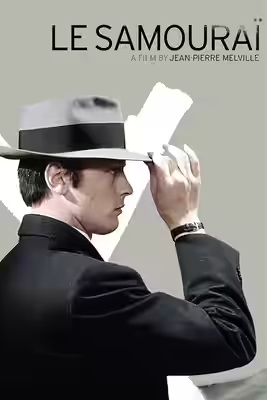
  2. Le Samouraï (1967, Fi1m 88)A solitary criminal and exact, patient filmmaking, with even less comfort on offer.

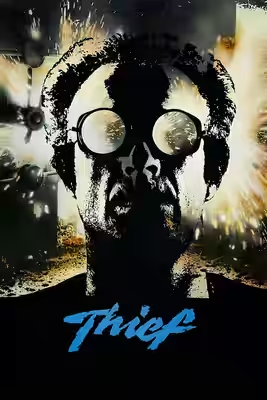
  3. Thief (1981) · not reviewed yetNight-time crime, electronic music and a professional whose private hopes complicate the job.

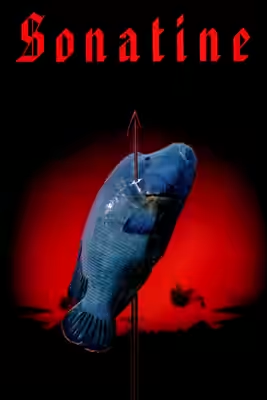
  4. Sonatine (1993) · not reviewed yetQuiet stretches among dangerous men make the sudden violence harder to shake off.

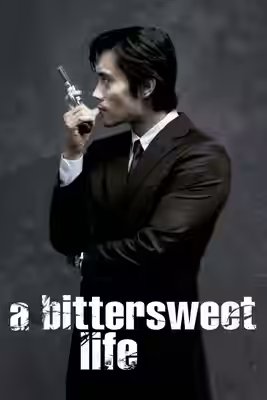
  5. A Bittersweet Life (2005) · not reviewed yetFor more immaculate criminal manners, uneasy tenderness and violence that refuses to stay tidy.

Free account

Know what to watch tonight

Two lists that know where things are streaming, collections you can share, your own score beside ours, and Discover that remembers what you have seen.

  • Want to see, sorted by what is streaming now
  • Seen, with your score out of ten
  • No adverts, ever