Denis Villeneuve’s second half of Herbert’s novel is the most assured large-scale science fiction we have seen in years, and Greig Fraser’s desert deserves the biggest screen you can find. The love story at its centre does not hold.
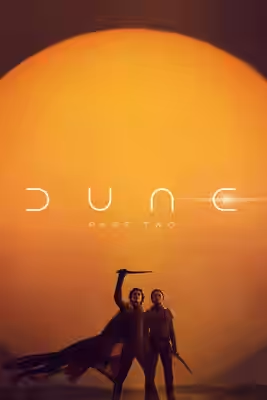
Denis Villeneuve’s Dune (2021) got Paul Atreides as far as the desert. This one starts him walking. Villeneuve and Jon Spaihts have taken the second half of Frank Herbert’s novel and made a 167-minute war film out of it: a boy whose family has been murdered joins the people who live in the deep sand, learns their ways, and is told by nearly everyone he meets that he is the saviour they were promised. Our verdict is that this is the most assured large-scale science fiction we have seen in years, and that its love story does not hold. See it in a cinema, on the biggest screen within reach, and expect to be impressed more often than moved.
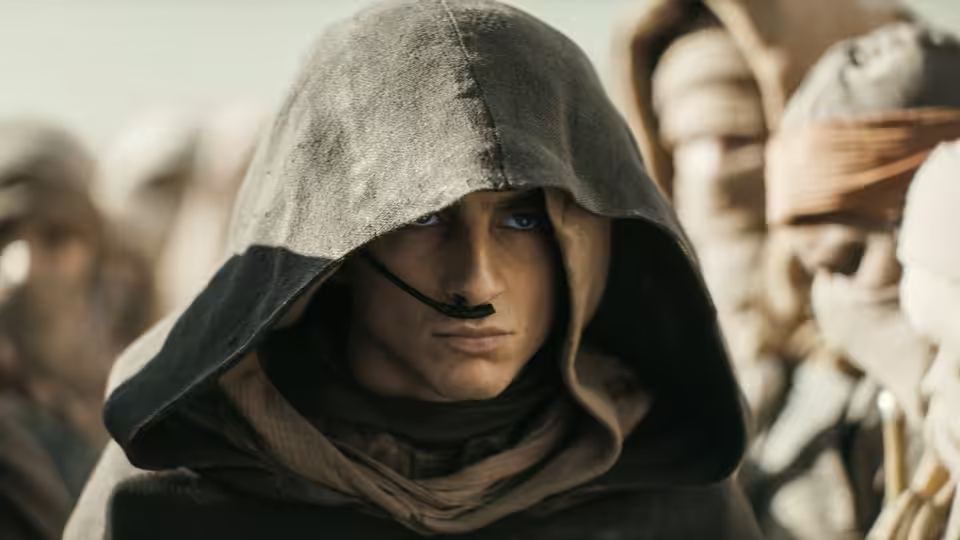
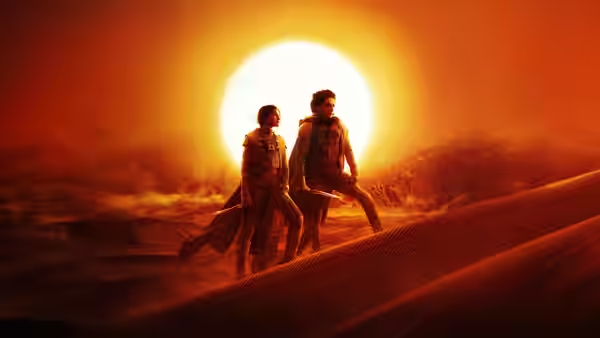
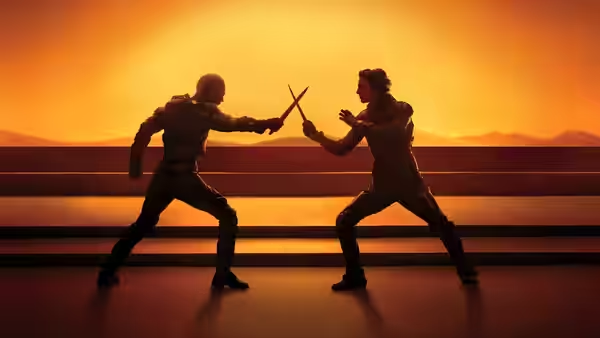
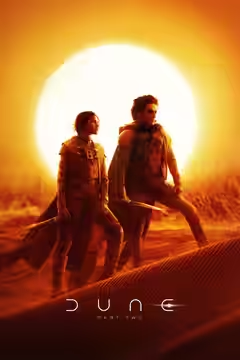
Greig Fraser is the first reason to go. He shoots Arrakis in flat, hard daylight, with the horizon so bleached it is difficult to tell sand from sky, and he puts the camera low enough that a dune becomes a wall. Then he goes to the Harkonnen home world, where the sun is black, and shoots a gladiatorial arena in infrared monochrome so that skin looks like marble and blood like ink. Patrice Vermette’s production design gives him a Fremen stronghold carved from rock with everything in it made for use, and a Harkonnen arena that is a black bowl full of white faces. Jacqueline West’s stillsuits look as though they would chafe, which is the correct look for a suit that recycles your sweat.
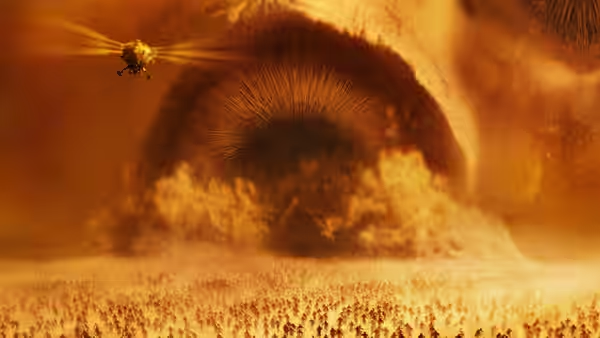
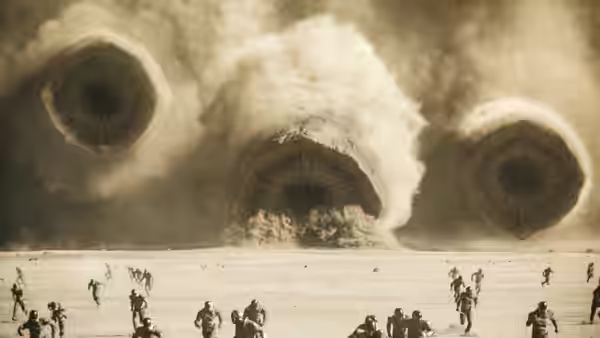
The worm ride is the sequence people will talk about, and they will be right. Paul plants a thumper, waits, and the dune under him starts to move. Joe Walker cuts it slowly, one hook, one foothold, one face full of sand at a time, and Hans Zimmer’s music falls away to wind and breathing before it comes back. We are hard to impress with size these days and we sat forward without deciding to. Nothing on screen is doing more than a boy trying not to fall off, and that is why it works.
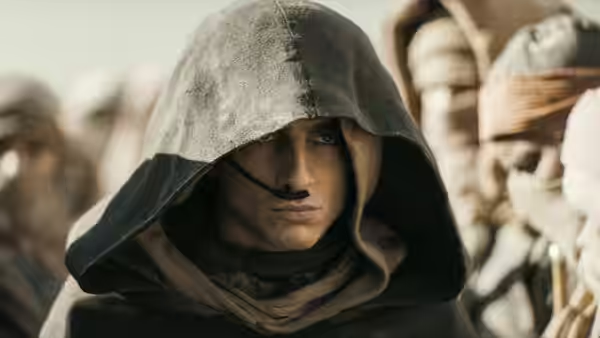
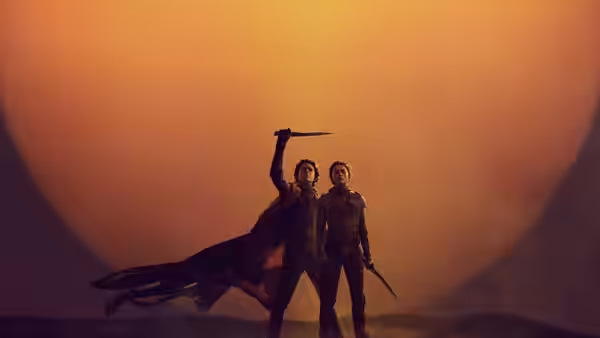
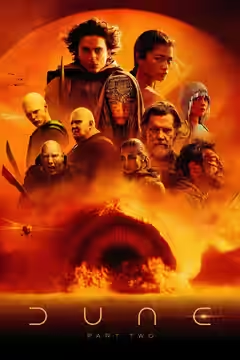
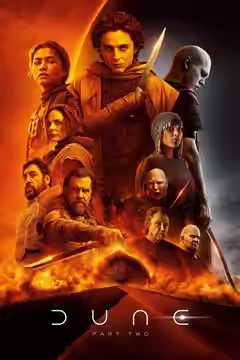
Timothée Chalamet plays Paul as a boy who becomes a preacher, and the change is in his voice: it drops, and he stops asking questions. Zendaya’s Chani is the only person in the film who does not believe in him, and she is the best thing in it; the frown she gives him when the crowd starts chanting is the film’s argument in one look. Javier Bardem’s Stilgar finds proof of the prophecy in everything Paul does, including denying it, and Bardem plays it for laughs without ever making him a fool. Austin Butler’s Feyd-Rautha, bald, whispering and lit like a corpse, borrows Stellan Skarsgård’s voice and is the film’s one shot of pure appetite. Christopher Walken plays the Emperor as a tired man who has wandered in from a quieter film. It is odd, and we did not mind.
What does not work is the romance, and it matters, because the film has built its ending on it. Chalamet and Zendaya are told they are in love, by the script and by the music, more often than they show it; their scenes together are watchful where they should be warm. The Fremen are given faith and knives and not much else, and the division between the believers in the south and the doubters in the north is announced rather than lived. Zimmer’s score, which was thrilling for an hour, never once stops shouting; by the second hour we wanted a minute of quiet and the film would not give us one. The last half hour, after two hours of patience, moves at a gallop, and the second half takes a turn we will not describe.
Set against Villeneuve’s Arrival (2016) and Blade Runner 2049 (2017), this has the same gift for scale and the same trouble with warmth. Herbert’s novel is a warning about messiahs. The film says so, mostly through Chani, but the camera loves Paul too much for the warning to land as hard as it should. Most critics have gone higher than we have, and we understand why; the things that impressed them impressed us.
The 12A certificate is fair: a great many people are stabbed and almost none of them bleed. Watch it in a cinema if you can. At home it shrinks to a handsome, serious programme about a family argument, and the worm becomes a special effect again.