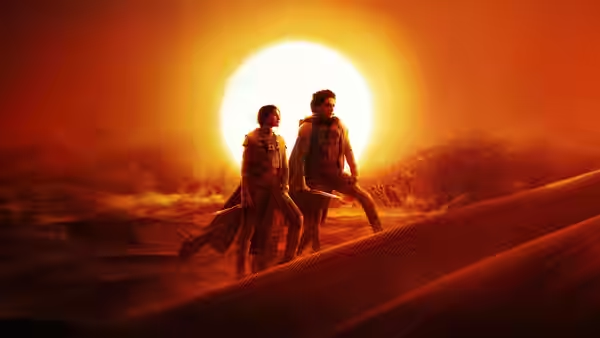
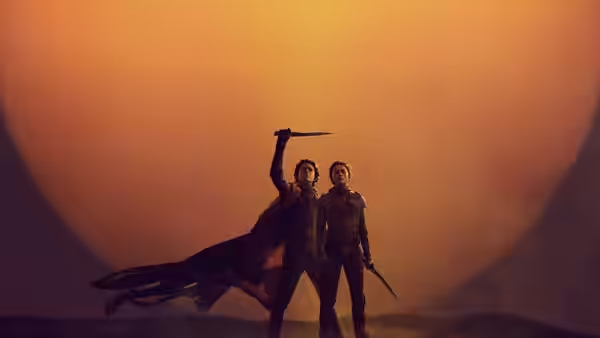
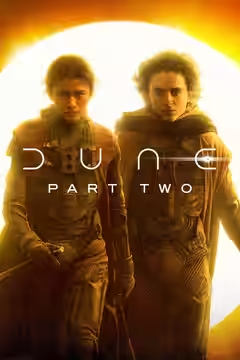
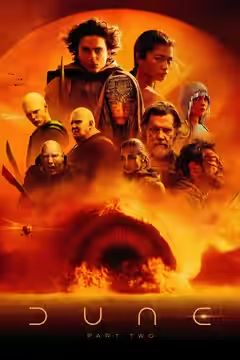
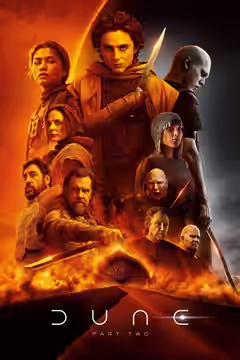
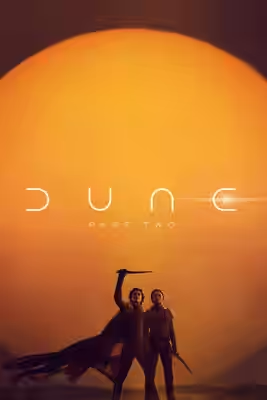
Paul Atreides (Timothée Chalamet) standing among hooded Fremen in the desert
Film review

Dune: Part Two

2024 · Directed by Denis Villeneuve · 2h 47m

In a sentenceNearly three hours of sand, prophecy and one boy who should have listened to his girlfriend

Paul Atreides, the last of a noble house wiped out on the desert planet Arrakis, is living among the Fremen with his mother Jessica, who is carrying his unborn sister. The Fremen leader Stilgar believes Paul is the messiah their religion has promised. Chani, the young fighter Paul is falling for, believes no such thing. While Paul learns to walk the sand, fight in the Fremen way and ride the great worms, the Harkonnens who killed his father tighten their hold on the planet, and the Emperor watches from a distance with his daughter Irulan. Denis Villeneuve directs the second half of Frank Herbert’s novel, with Timothée Chalamet, Zendaya, Rebecca Ferguson, Javier Bardem, Austin Butler and Florence Pugh.

Plays from YouTube when you press play; nothing loads from them until then.

Fi1m review

Denis Villeneuve’s second half of Herbert’s novel is the most assured large-scale science fiction we have seen in years, and Greig Fraser’s desert deserves the biggest screen you can find. The love story at its centre does not hold.

Denis Villeneuve’s Dune (2021) got Paul Atreides as far as the desert. This one starts him walking. Villeneuve and Jon Spaihts have taken the second half of Frank Herbert’s novel and made a 167-minute war film out of it: a boy whose family has been murdered joins the people who live in the deep sand, learns their ways, and is told by nearly everyone he meets that he is the saviour they were promised. Our verdict is that this is the most assured large-scale science fiction we have seen in years, and that its love story does not hold. See it in a cinema, on the biggest screen within reach, and expect to be impressed more often than moved.

Greig Fraser is the first reason to go. He shoots Arrakis in flat, hard daylight, with the horizon so bleached it is difficult to tell sand from sky, and he puts the camera low enough that a dune becomes a wall. Then he goes to the Harkonnen home world, where the sun is black, and shoots a gladiatorial arena in infrared monochrome so that skin looks like marble and blood like ink. Patrice Vermette’s production design gives him a Fremen stronghold carved from rock with everything in it made for use, and a Harkonnen arena that is a black bowl full of white faces. Jacqueline West’s stillsuits look as though they would chafe, which is the correct look for a suit that recycles your sweat.

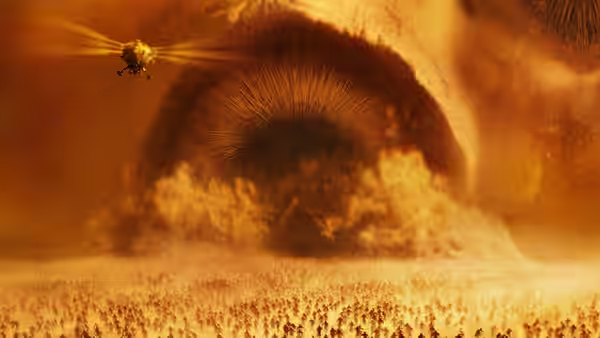
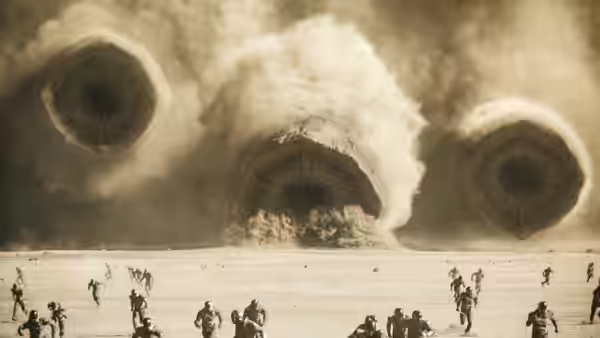
The worm ride is the sequence people will talk about, and they will be right. Paul plants a thumper, waits, and the dune under him starts to move. Joe Walker cuts it slowly, one hook, one foothold, one face full of sand at a time, and Hans Zimmer’s music falls away to wind and breathing before it comes back. We are hard to impress with size these days and we sat forward without deciding to. Nothing on screen is doing more than a boy trying not to fall off, and that is why it works.

Timothée Chalamet plays Paul as a boy who becomes a preacher, and the change is in his voice: it drops, and he stops asking questions. Zendaya’s Chani is the only person in the film who does not believe in him, and she is the best thing in it; the frown she gives him when the crowd starts chanting is the film’s argument in one look. Javier Bardem’s Stilgar finds proof of the prophecy in everything Paul does, including denying it, and Bardem plays it for laughs without ever making him a fool. Austin Butler’s Feyd-Rautha, bald, whispering and lit like a corpse, borrows Stellan Skarsgård’s voice and is the film’s one shot of pure appetite. Christopher Walken plays the Emperor as a tired man who has wandered in from a quieter film. It is odd, and we did not mind.

What does not work is the romance, and it matters, because the film has built its ending on it. Chalamet and Zendaya are told they are in love, by the script and by the music, more often than they show it; their scenes together are watchful where they should be warm. The Fremen are given faith and knives and not much else, and the division between the believers in the south and the doubters in the north is announced rather than lived. Zimmer’s score, which was thrilling for an hour, never once stops shouting; by the second hour we wanted a minute of quiet and the film would not give us one. The last half hour, after two hours of patience, moves at a gallop, and the second half takes a turn we will not describe.

Set against Villeneuve’s Arrival (2016) and Blade Runner 2049 (2017), this has the same gift for scale and the same trouble with warmth. Herbert’s novel is a warning about messiahs. The film says so, mostly through Chani, but the camera loves Paul too much for the warning to land as hard as it should. Most critics have gone higher than we have, and we understand why; the things that impressed them impressed us.

The 12A certificate is fair: a great many people are stabbed and almost none of them bleed. Watch it in a cinema if you can. At home it shrinks to a handsome, serious programme about a family argument, and the worm becomes a special effect again.


Critical consensus AI synthesised

90
Positive
7
Mixed
0
Negative
0

The reviews are almost uniformly warm, and the praise clusters where you would expect: the scale of the action, the sandworms, Hans Zimmer’s score, and Villeneuve’s handling of material long thought unfilmable. Among the cast, Austin Butler’s Feyd-Rautha is the name most often singled out, with several critics also crediting Zendaya’s sceptical Chani for giving the film an emotional footing.

The reservations are quieter but consistent. Sight and Sound finds the romantic leads underheated and the story shaped like a middle instalment; Deadline says the plotting drifts whenever Paul leaves the frame; /Film calls much of the running time repetitive before a strong third act; The Hollywood Reporter objects to a thin portrayal of the Fremen as an indigenous people. Most critics also note, without much complaint, that the film ends as a set-up for a third. The spread is narrow: nobody dislikes it, and the argument is only over how much it leaves unresolved.

Empire
21 February 2024 · ★★★★★ · Ben Travis
100

The critic hails Villeneuve’s sequel as a muscular war epic with staggering action sequences and strong performances, particularly Austin Butler’s Feyd-Rautha. It notes the film’s Middle-earthian ambition and Nolan-esque intensity but cautions it may overwhelm with non-stop grandeur.

Read the full review →
Total Film
21 February 2024 · ★★★★★ · Kevin Harley
100

The review positions the film as a sequel ranking alongside The Dark Knight and The Empire Strikes Back, praising Villeneuve for wrangling coherence from the source material into a completion of the story. It highlights the epic scope and cinematic achievement.

Read the full review →
The Guardian
3 March 2024 · Wendy Ide
90*

The critic hails the film as a jaw-on-the-floor spectacular that succeeds in adapting the unfilmable with retina-searing visuals and grandstanding performances. Austin Butler's gleefully over-the-top turn as Feyd-Rautha is singled out for particular praise alongside Hans Zimmer's thunderous score.

Read the full review →
Radio Times
22 February 2024 · ★★★★ · Jeremy Aspinall
80

A spectacular return to Arrakis that is well worth waiting for, with spectacular sequences, strong performances (especially Chalamet), and masterful direction and visuals from Villeneuve. Unexpected humour and a thumping score enhance the epic scope.

Read the full review →
Sight and Sound
2 March 2024 · Kim Newman

The critic finds it an impressive war movie-cum-swashbuckling adventure loaded with giant worms and vivid villains that occasionally upstage its key characters. The romantic leads are underheated and the story feels like an instalment of a longer saga without a true beginning or end.

Read the full review →
The Hollywood Reporter
21 February 2024 · Lovia Gyarkye

The critic finds the film visually stunning and engrossing as a cinematic event but limited by a nagging shallowness in its portrayal of the Fremen as an indigenous people.

Read the full review →

Straight answers AI written, from our review

Is Dune: Part Two worth watching?
Dune: Part Two is worth watching, and we scored it 84, for anyone who wants large-scale science fiction made with real assurance and can sit through 167 minutes of it. Greig Fraser's desert and the worm ride are the reasons to go. The love story between Paul and Chani does not hold, so expect to be impressed more often than moved.
How long is Dune: Part Two, and what is it rated?
Dune: Part Two runs 2h 47m. It is a science fiction and adventure film.
Where can I watch Dune: Part Two in Panama?
Dune: Part Two is streaming on HBO Max in Panama, and it is also available to rent from Apple TV from PAB 3.99. Availability is checked daily; the links above go straight to each service.
How violent or frightening is Dune: Part Two, and is it suitable for children?
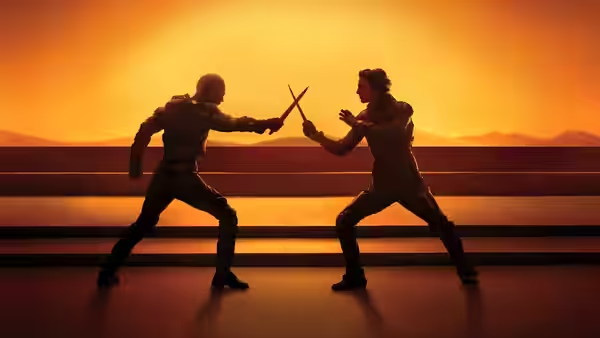
Dune: Part Two carries a 12A certificate in the UK, and we think that is fair: a great many people are stabbed and almost none of them bleed. There are knife fights, a gladiatorial arena and a sustained sense of war, but nothing gory. It suits older children and teenagers; younger or more sensitive viewers may find the length harder than the violence.
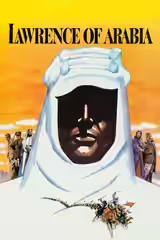
How does Dune: Part Two compare to Lawrence of Arabia?
Dune: Part Two and Lawrence of Arabia are both desert films about a foreigner who starts believing what the locals say about him, and both earn their length through scale. Lean's film has the better central performance and the more unsettling portrait of a man swallowed by his own legend. Villeneuve's is the more spectacular, and the easier evening for viewers who want action and spectacle over character.
Is Dune: Part Two based on a true story or a book?
Dune: Part Two is based on the second half of Frank Herbert's novel Dune, not on a true story. Villeneuve and Jon Spaihts keep Herbert's warning about messiahs, voiced mostly through Chani, though the camera loves Paul more than the book does. You do not need to have read it, but you should have seen the first film.
What should I watch after Dune: Part Two?
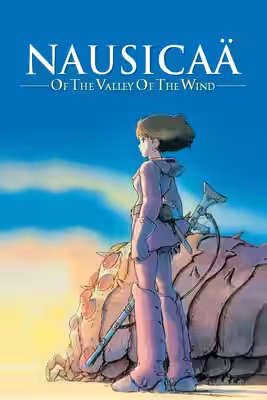
After Dune: Part Two, try Lawrence of Arabia (1962, Fi1m 90): The original desert film about a foreigner who starts believing what the locals say about him. Then Arrival (2016, Fi1m 86): Villeneuve at the same scale with a fraction of the noise, and more feeling; and Nausicaä of the Valley of the Wind (1984, Fi1m 85): A girl, a poisoned wasteland and giant creatures nobody should be trying to kill.

Cast

Awards

Hugo Awards, 2025

Won
Best Dramatic Presentation, Long Form

If you liked this, try…

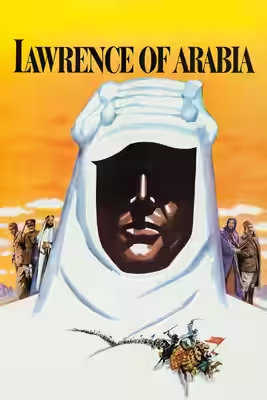
  1. Lawrence of Arabia (1962, Fi1m 90)The original desert film about a foreigner who starts believing what the locals say about him.

  2. Arrival (2016, Fi1m 86)Villeneuve at the same scale with a fraction of the noise, and more feeling.

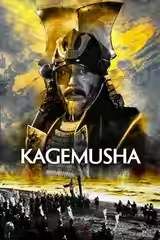
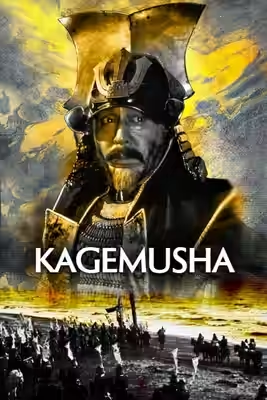
  3. Kagemusha (1980) · not reviewed yetKurosawa on armies, banners and a man asked to be a god he is not.

  4. Nausicaä of the Valley of the Wind (1984, Fi1m 85)A girl, a poisoned wasteland and giant creatures nobody should be trying to kill.

  5. The Battle of Algiers (1966, Fi1m 93)What the insurgency against an occupier looks like without a chosen one to lead it.

Free account

Know what to watch tonight

Two lists that know where things are streaming, collections you can share, your own score beside ours, and Discover that remembers what you have seen.

  • Want to see, sorted by what is streaming now
  • Seen, with your score out of ten
  • No adverts, ever