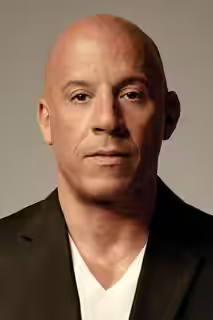
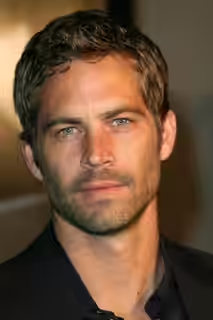
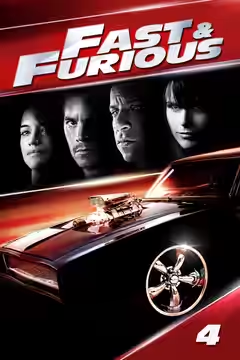
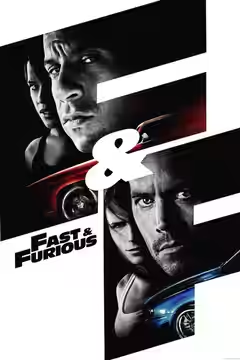
Diesel and Walker back in the same frame give this fourth film a pulse, and the opening tanker heist is properly staged. Then Justin Lin drives everybody into a tunnel under the border and switches off the lights.
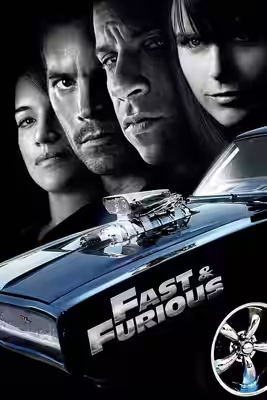
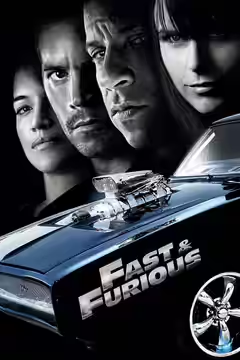
Fast & Furious is the fourth film in the series, and its tagline, “New model. Original parts.”, is a fair description of the sale. Dominic Toretto (Vin Diesel), Brian O’Conner (Paul Walker), Letty Ortiz (Michelle Rodriguez) and Mia Toretto (Jordana Brewster) are in the same film for the first time since 2001. Chris Morgan’s script brings Dom home to Los Angeles with a grievance, puts Brian there as an FBI agent with a case, and makes sure they are after the same man. That is the plot.
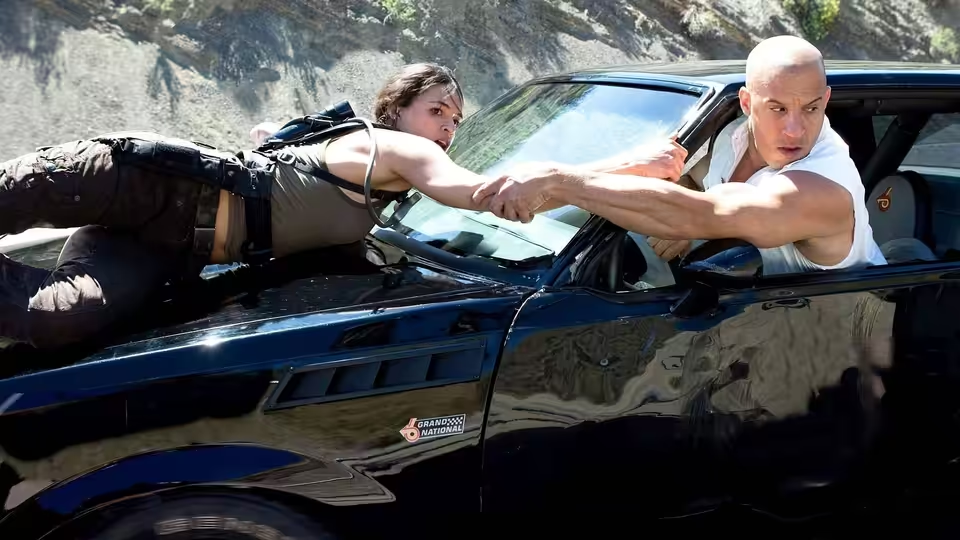
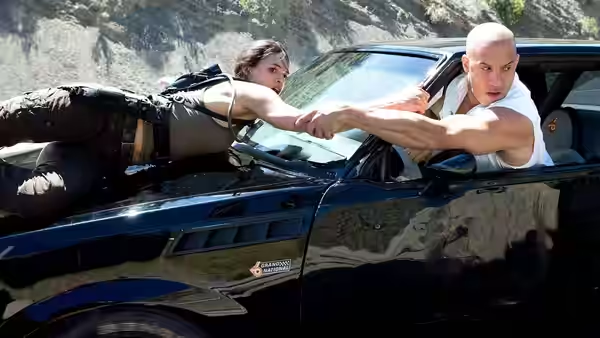
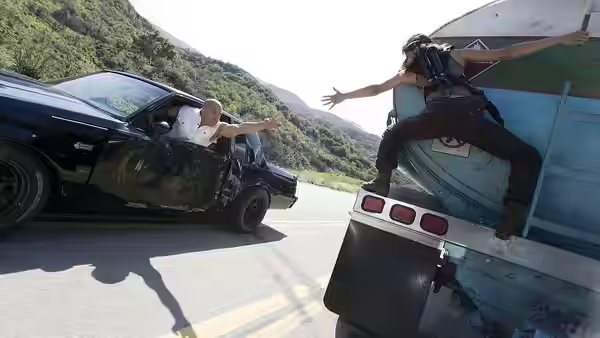
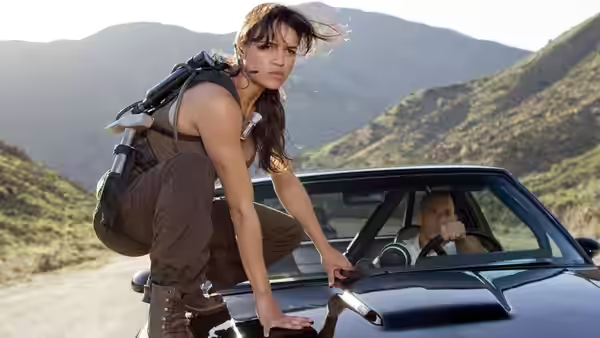
The opening is the best thing here. On a mountain road in the Dominican Republic, Dom, Letty, Han (Sung Kang) and Tego (Tego Calderón) steal the tanks off a moving fuel lorry one at a time, Letty on the bonnet of a car unhooking the couplings while the trailers swing behind her. Amir Mokri shoots it in plain daylight, so every hook and chain can be read, and Fred Raskin and Christian Wagner cut it so we always know where the lorry is, where the cars are and how close the bend is. Lin made Tokyo Drift, the third film, and this is him showing he can stage a chase in the open.
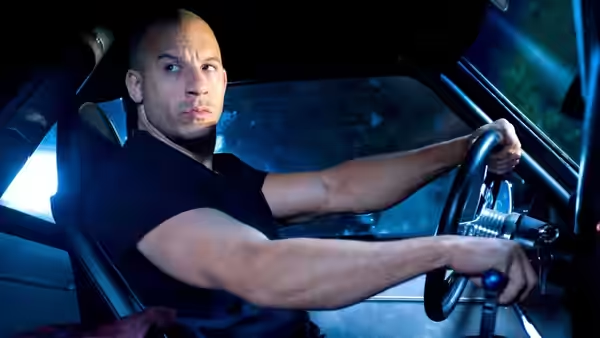
Diesel and Walker are the other reason to be here. Diesel plays Dom as a man who has decided to say as little as possible and let his shoulders do the talking, and it fits him better than it did eight years ago. Walker’s Brian has stopped pretending to his bosses that he knows which side he is on. When the two are in a room the film has a pulse. Morgan writes them a running argument about who let whom go, and neither actor pushes it.
There is a scene early on where Dom walks a stretch of road and the film shows us what he is working out from the skid marks and the glass. Diesel, who has never been an actor for showing his working, lets his face go slack, and Brian Tyler’s score, which thuds through most of the film, goes quiet. It moved us more than a film of this kind usually manages. It is also the only time the film trusts a still shot.
The night race through Los Angeles is good too: a satnav voice calling the turns, drivers picking their own routes through traffic, Mokri lighting it in sodium orange and headlight white. It is how Dom and Brian get hired by Ramon Campos (John Ortiz), who needs drivers for a heroin trafficker nobody has met.
Then the film goes underground. The work the drivers are hired for runs through tunnels under the Mexican border, and Lin shoots them as dust, rock and headlamps, with the camera a foot off the bumpers. Raskin and Wagner cut in half-second pieces, and we could not tell which car was which or who was ahead. After a while we stopped trying, and then we were cross about having stopped. The film returns there for its finale, which we will not describe except to say it is darker still. Ida Random’s tunnels look like the same hundred yards of set redressed, and the computer help with the driving shows: cars kiss rock and nothing happens, and the weight the opening heist had goes missing.
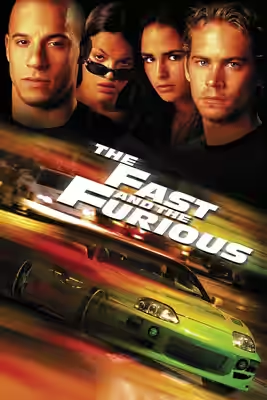
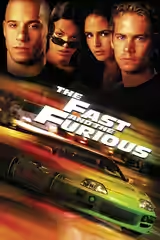
Set against the series’ own standard, this is a stranger film than the first. Rob Cohen’s The Fast and the Furious was a sunny, borrowed thing about small cars and who sits at Sunday dinner. This one has heroin, federal agents and a funeral, and the racing that was once the point has become a job interview. Sanja Milkovic Hays keeps Dom in the white vest and Letty in leather, so the costumes at least remember what the series was.
Most critics landed in the middle, won by the reunion and lost in the tunnels, and so did we. Watch it for the first half hour and the race. When the lights go out under the border you may find yourself reaching to turn up the brightness, and it will not help.