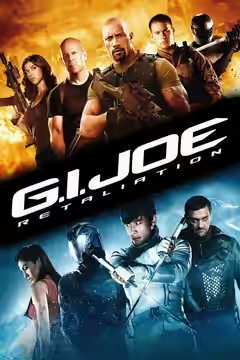
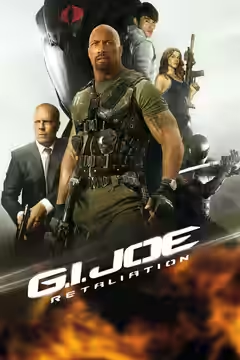
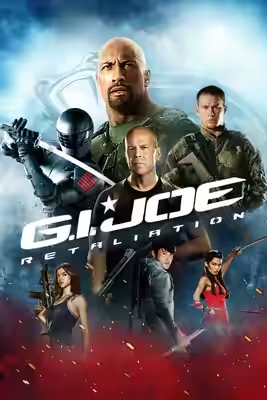
Jon M. Chu’s sequel has one set piece, ninjas on ropes across a Himalayan cliff, that we would happily watch again, and a hundred minutes around it that nobody appears to have read twice. Johnson and Pryce keep it watchable; the script does not.
Jon M. Chu’s G.I. Joe: Retaliation is a sequel to a film about toys, and for 110 minutes it has decided to be about something else: international politics, a betrayed army unit, men in rooms full of screens. Rhett Reese and Paul Wernick’s script sets all of that up briskly enough and then forgets to make any of it matter. There is one piece of action in the middle that we would put against most things of its kind, and around it a loud, flat, oddly joyless film that keeps telling us it is fun. Most critics have found roughly the same, and so have we.
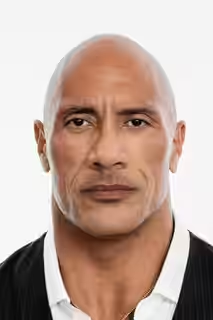
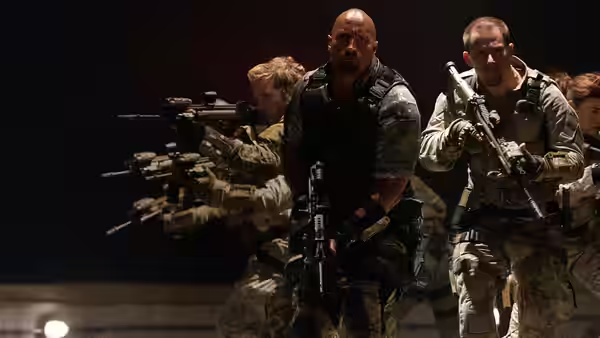
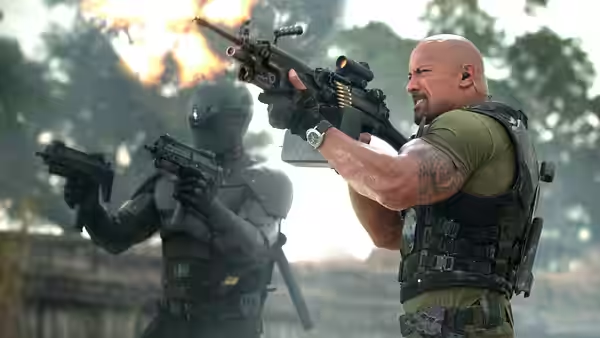
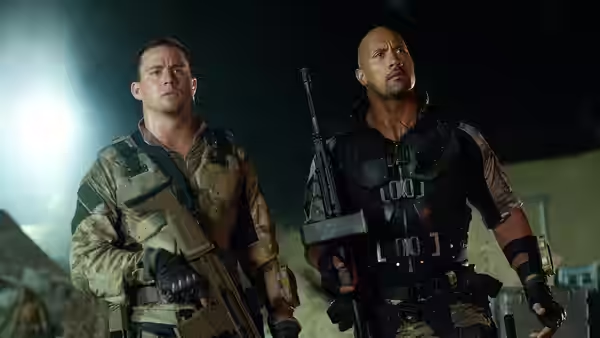
Dwayne Johnson is the reason it is bearable. He plays Roadblock as a sergeant who likes his unit and his daughters, and the opening stretch, with Duke (Channing Tatum) and Roadblock bickering over a games console on a sofa, is the only time the film sounds like people talking. Johnson could do this in his sleep and does not; he gives it some care. Then the unit is sent out on a job overseas, and the job goes wrong.
The strike that follows is where we first worried. The unit is hit in the desert, and Chu stages it as slow motion and sand, Stephen F. Windon’s camera drifting up through the smoke while Henry Jackman’s brass climbs underneath. We felt nothing. We noticed ourselves feeling nothing, which is a bad sign in a film whose whole second act is meant to run on grief. Roger Barton and Jim May cut the sequence so that the explosions arrive before we have worked out where anyone is standing, and when it is over we could not have said who was missing.
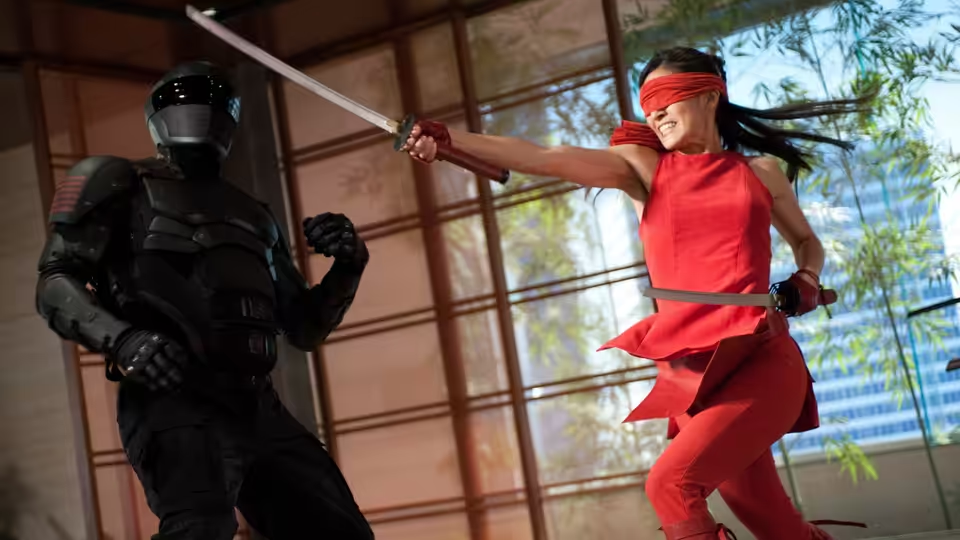
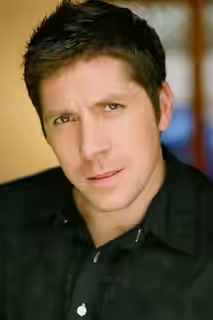
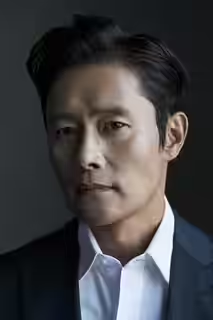
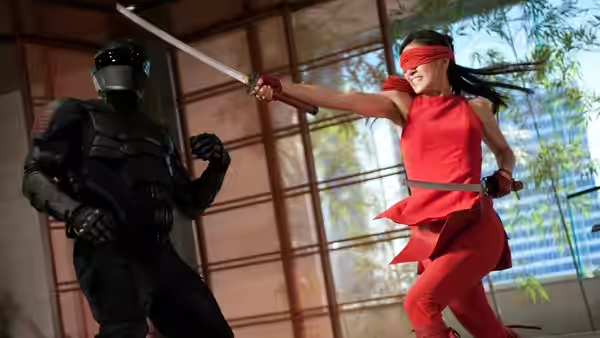
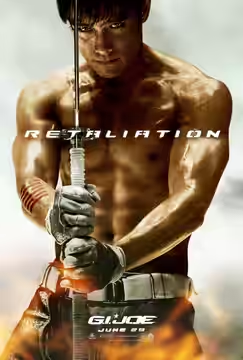
Then, for about ten minutes, the film becomes something else. Snake Eyes (Ray Park) and Jinx (Élodie Yung) go into the Himalayas after Storm Shadow (Lee Byung-hun), and the fight takes place on ropes strung across a cliff face, ninjas swinging from one wall to the other, cutting each other’s lines, dropping past the camera into cloud. Nobody says a word. Windon hangs the camera out over the drop and swings with them, Barton and May hold each swing long enough for us to see where it ends, and Jackman, for once, lets the wind do the work. We sat forward and stayed there. This is the one sequence where Chu treats a fight as choreography rather than as a series of bangs.
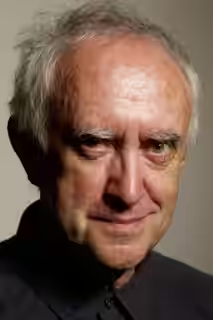
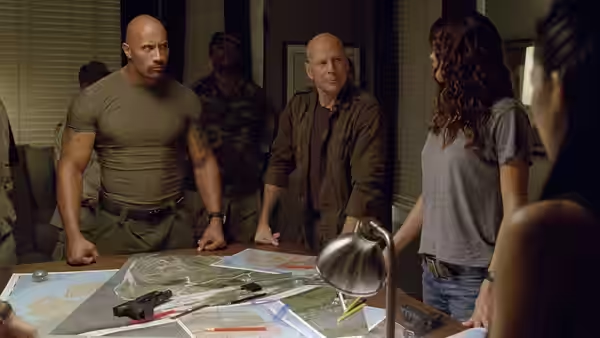
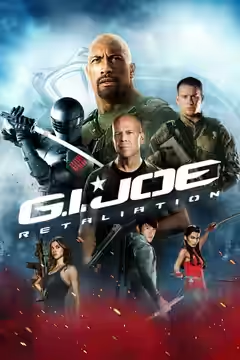
Jonathan Pryce has worked out that nobody is going to stop him and is having a lovely time as the President, purring through briefings and helping himself to the whisky. He is the only actor who seems to have read the whole script and found it funny. Bruce Willis turns up as Joe Colton, the original Joe, in a suburban house that Andrew Menzies’s production design has fitted with a rifle behind every cupboard door and a pistol under the cutlery. It is a decent visual joke, and Willis delivers his lines across it like a man reading out the specials. Adrianne Palicki’s Lady Jaye is given a brain and a cocktail dress and little else. D.J. Cotrona’s Flint is a haircut with a grievance.
The rest is plot, and the plot is the problem. Cobra Commander (Luke Bracey) and Firefly (Ray Stevenson) arrive with schemes we will not describe, partly out of courtesy and partly because we are not sure we could. People stand in rooms full of screens explaining things to each other, and the explanations never join up. The film also takes its guns seriously in a way nothing else in it earns: the survivors arming themselves in Colton’s house is shot with a lingering, polished hush, and the 12A certificate sits oddly over it. The tagline is ‘Heroes are made in America’, and the film means it.
The first film was sillier and knew it. This one has a better fight and a worse time. See the cliff. The rest you can have on in the background, where it will do no harm, and Johnson will occasionally remind you that somebody in it was trying.