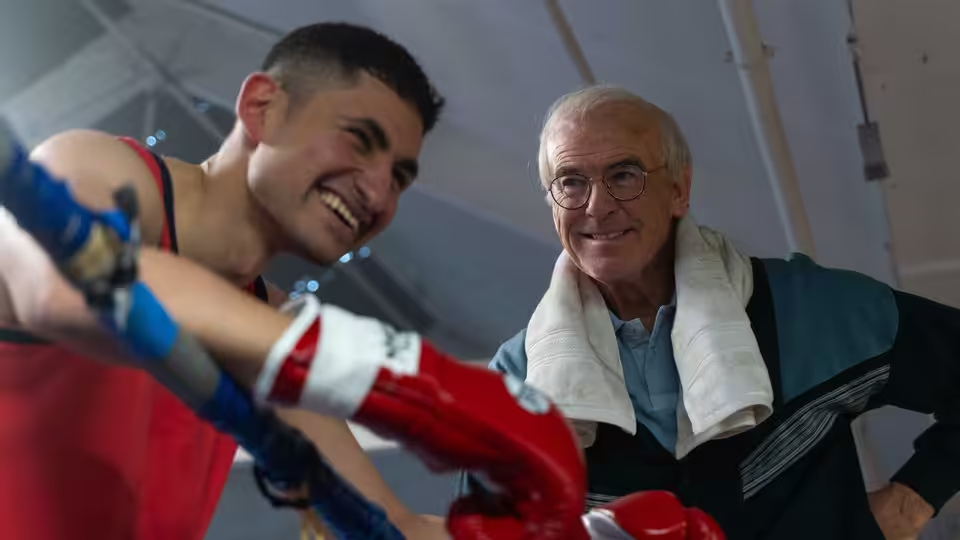
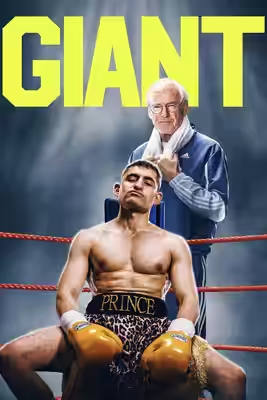
Rowan Athale’s biopic of Prince Naseem Hamed is really a film about his trainer, and Pierce Brosnan’s Brendan Ingle is the best thing in it. Around him the fights are short, the script is familiar and the boxer himself never quite comes into focus.
Rowan Athale writes and directs the story of Prince Naseem Hamed, the Sheffield boxer who called himself Prince and behaved as if the crowd had come to see the walk rather than the fight, and of Brendan Ingle, the trainer who took him in as a boy and stayed in his corner as the crowds grew. The title points at Hamed, or at the size of what he did. The film, though, is about Ingle. That choice explains both what works in it and what does not, and the result is a decent, likeable, rather ordinary 110 minutes with one performance we would happily watch again.
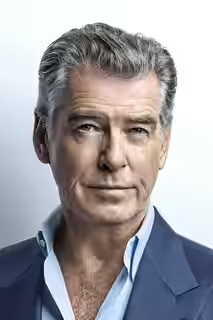
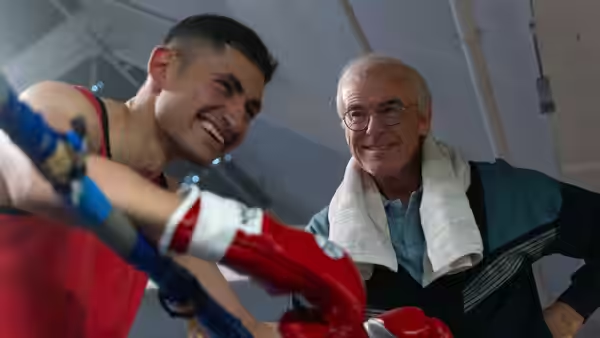
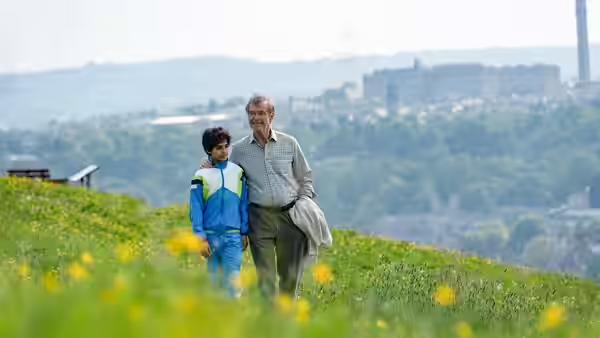
The performance is Pierce Brosnan’s. He plays Ingle as a talker, a man who teaches footwork the way a priest teaches catechism, and he does it without the polish we usually get from him. His Ingle is patient with the boys, cheerful with their mothers, slow to anger, and when the anger comes Brosnan lets it arrive in the shoulders before it reaches the voice. Katherine Dow Blyton, as his wife Alma, gives him someone to be quiet with. Their kitchen scenes are the steadiest thing in the film.
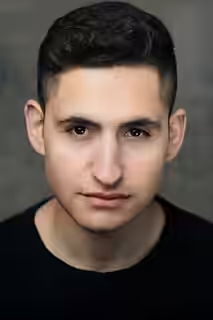
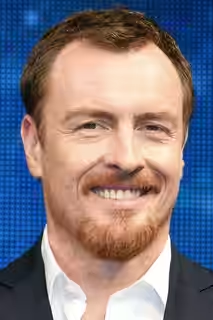
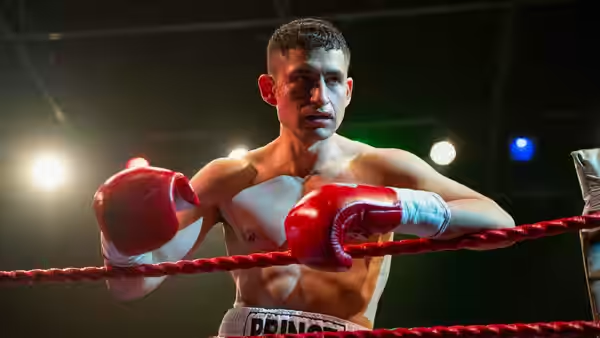
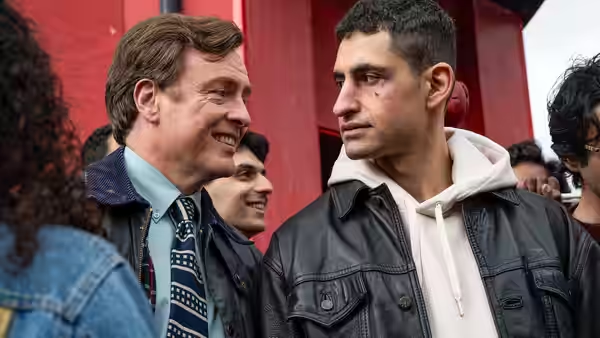
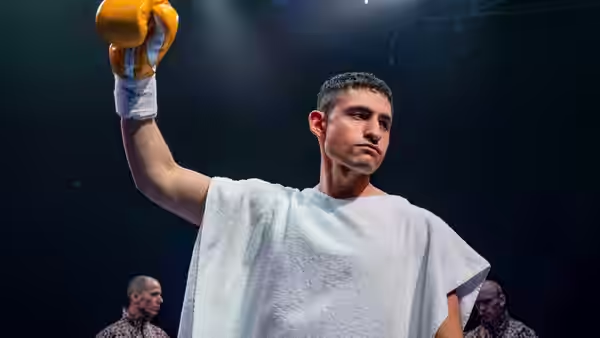
Amir El-Masry has the harder job and less to work with. He gets the swagger right, the chin up, the mouth going, the entrance staged as theatre before a punch is thrown, and in the early Sheffield stretch he is good company. But Athale’s script treats Hamed mostly as something that happens to Ingle. As the fame arrives, so does Toby Stephens as the promoter Frank Warren, in good coats and with a briefcase, and so does Arian Nik as Hamed’s brother Riath, and the boxer’s own wants are handed to other people to state on his behalf. We left knowing exactly what Ingle thought of Hamed and not much about what Hamed thought of anything.
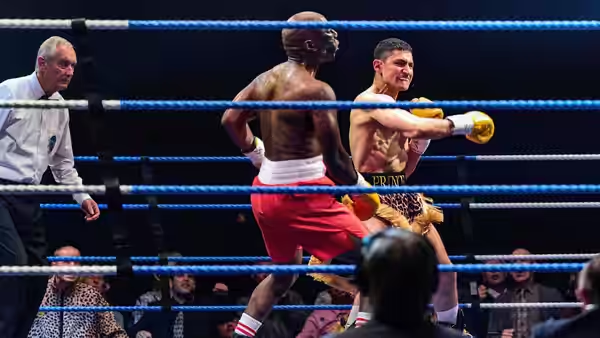
The fights are another matter. They are short, they are few, and more than one is over before we have settled into it. We sat forward for the first ring walk and were let down, each time, by how quickly the film wanted to be somewhere else. It is a boxing film that seems slightly embarrassed to be one. Larry Smith does his best work in the gym, where the light is low and the camera stays close to the bags and the bodies; in the arenas the money runs out and a crowd of thousands is heard rather than seen. Neil Athale’s score pushes hard under the training montages and is better when it stays out of the kitchen.
And then, late on, there is a scene between the two men in a plain room, which we will not describe, where Brosnan barely moves and El-Masry cannot stop moving, and we were more moved than the previous ninety minutes had earned. It is the scene the film has been walking towards, and it shows that Athale can direct actors when he trusts them to hold a room without a cut. There is not enough of that trust elsewhere.
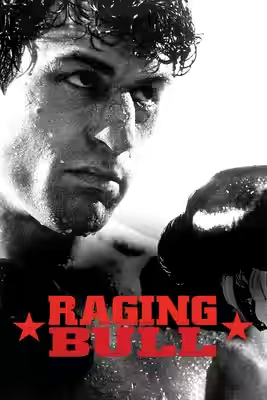
The boxing biopic comes with fixed furniture: the discovery, the montage, the first belt, the fame that sours, the split, the reckoning. Raging Bull (1980) broke the furniture up; The Fighter (2010) moved it all into the family living room. Giant keeps every piece where it found it. Its one change, putting the trainer at the centre, is a good idea half done. A film that committed to it would have made Ingle the lead on the poster as well as in the story, and would have found something for Hamed to want beyond the next entrance.
If you see it, see it for Brosnan, and see it at home, where the thin arenas matter less and the kitchen matters more. Do not go for the boxing. It runs 110 minutes and carries a 15.