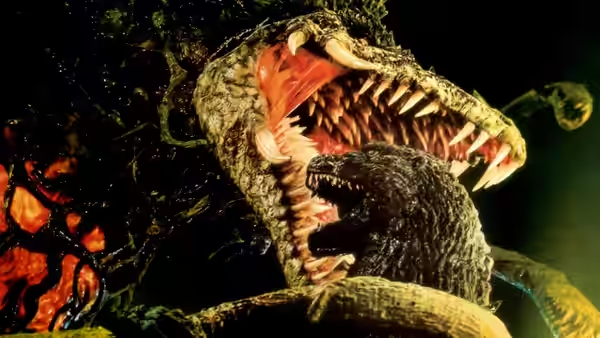
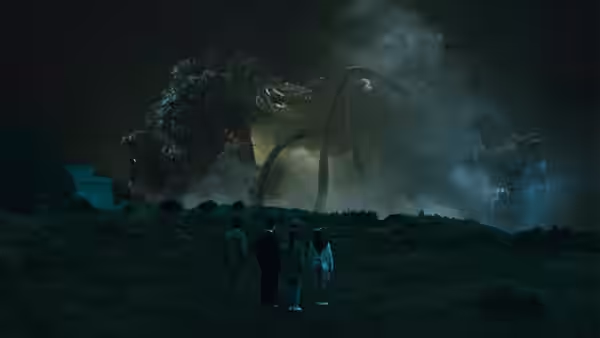
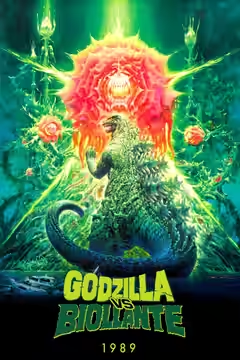
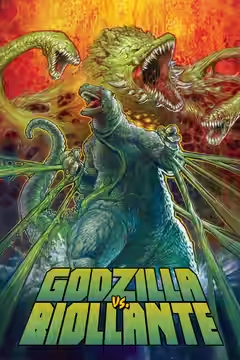
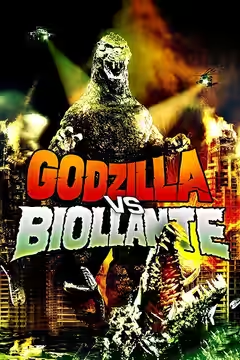
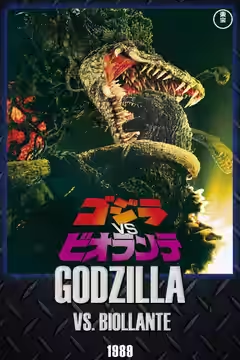
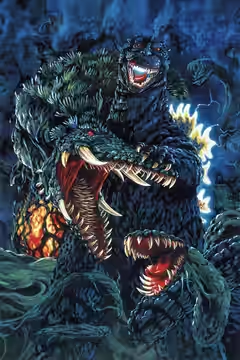
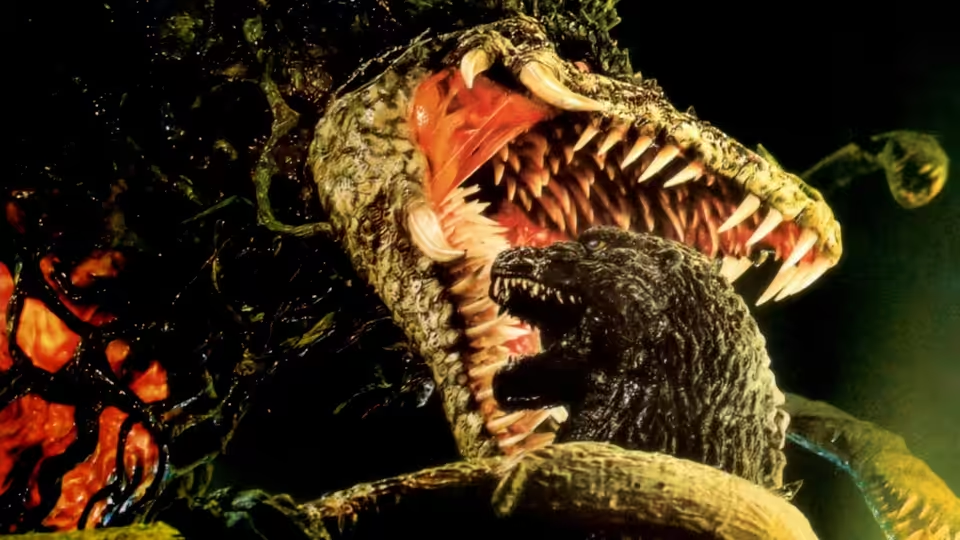
Godzilla struggles beneath Biollante’s open jaws and jagged teeth
Film review

Godzilla vs. Biollante

1989 · Directed by Kazuki Ōmori · 1h 45m

In a sentenceGodzilla fights a rose the size of a stadium, and the rose used to be somebody’s daughter

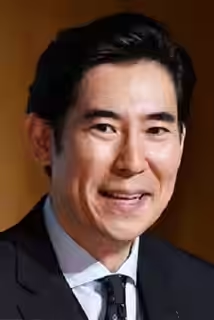
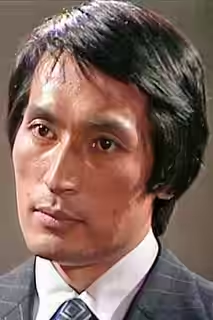
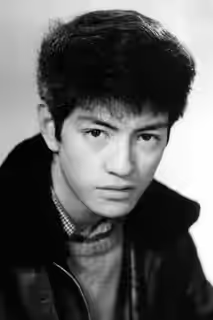
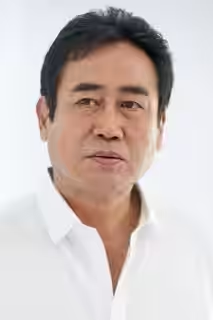
Tokyo, 1984, the morning after Godzilla’s attack. In the rubble, armed men fight over scraps of the monster’s flesh, and the cells end up in the desert state of Saradia, where geneticist Genshiro Shiragami (Kōji Takahashi) is trying to breed wheat that will grow in sand. A bomb destroys his laboratory and kills his daughter Erika (Yasuko Sawaguchi). Five years later, back in Japan, Shiragami is asked to use Godzilla’s cells to make a bacterium that eats radiation; young scientist Kazuhito Kirishima (Kunihiko Mitamura) and his girlfriend Asuka Okouchi (Yoshiko Tanaka) carry the request. Shiragami agrees, but he has a plan of his own, and it involves a rose. Meanwhile a psychic schoolgirl, Miki Saegusa (Megumi Odaka), senses the monster sleeping inside Mount Mihara beginning to stir, and foreign agents want the cells for themselves.

Fi1m review

Kazuki Ōmori’s sequel puts a grief story inside a monster film: a scientist grows his dead daughter into a plant the height of a cathedral. The spy plot is a muddle and the people are stiff, but the creature is worth the wait.

Kazuki Ōmori, who wrote the screenplay and directed, has made a Godzilla film in which the monster is not the strangest thing on screen. The story, credited to Shinichiro Kobayashi and Shinichi Sekizawa, gives us a geneticist who cannot bury his daughter, so he keeps her cells alive in a rose and then, when Godzilla’s flesh comes his way, adds that too. It is a good Godzilla film and an odd one, and the oddness is the best thing about it. If you have any patience for men in offices explaining bacteria, it will repay you.

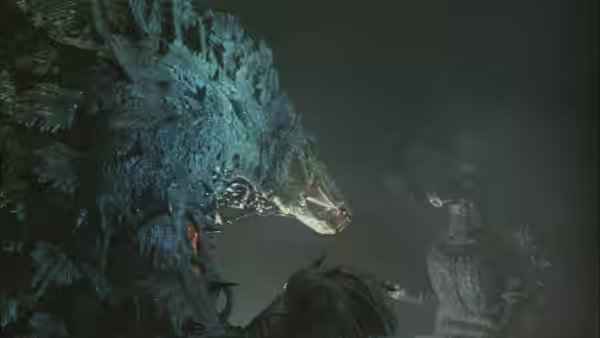
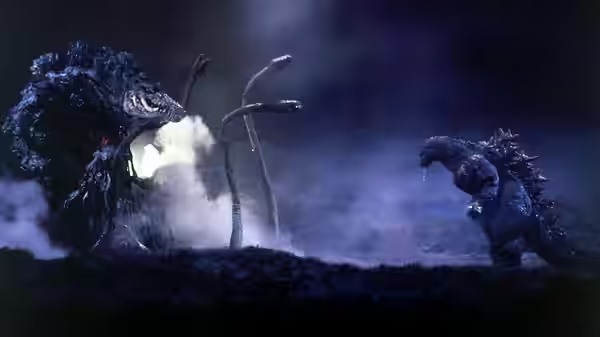
The creature is called Biollante, and its first appearance is the reason to see the film. It rises out of Lake Ashi at night as a rosebud the size of a house on a mound of vines, and the vines end in mouths. Yudai Kato shoots it through mist, lit from inside so the petals glow, and it does not roar; it makes a sound close to a woman’s voice. We did not expect to be moved by a rose, and then we were. Kōji Takahashi’s Shiragami stands on the shore looking at it with the face of a man who has got what he asked for, and the film holds on him long enough for us to understand that he is not frightened. Koichi Sugiyama’s score, mostly brass and drums elsewhere, drops to a slow string figure whenever the plant is on screen, and it does a great deal of the work.

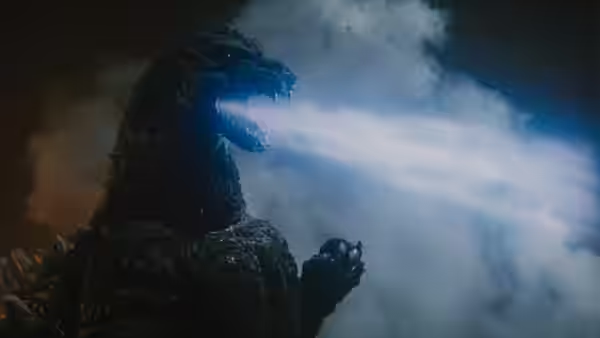
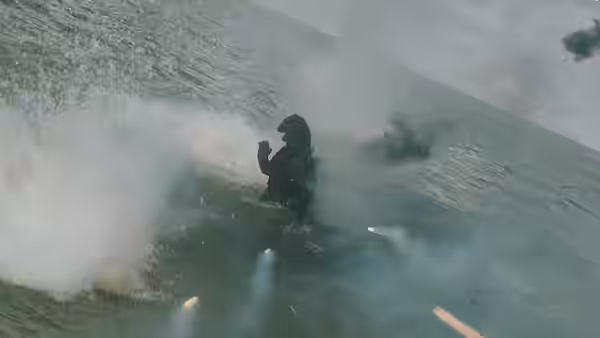
Godzilla himself is heavier and meaner than in the 1984 film, the eyes small and set far back, and the military sequences are handled with more care than the series usually bothers with. Masanobu Takashima’s Major Kuroki, a boy in a large chair, directs a flying tank fitted with a mirror that throws Godzilla’s own breath back at him, and the sequence is clear about who is where and what is failing. Shigekazu Ikuno’s production design gives the laboratories glass cases and cold light rather than the blinking panels of old, and Shiragami’s greenhouse, with the one rose under a bell jar, is a set you remember.

The rest is harder going. Around the monsters Ōmori has built an espionage plot involving a Saradian agent, an American company’s hired men, a briefcase of cells and a set of explosives at Mount Mihara, and it never quite settles into sense. Michiko Ikeda’s editing jumps between the factions as if we already knew which was which, and for a stretch in the first hour we did not. Kunihiko Mitamura and Yoshiko Tanaka, as the young couple who carry messages between the scientists and the government, are given almost nothing to play and play it politely. Tōru Minegishi’s Lieutenant Gondo, who treats the end of the world as an inconvenience to his lunch, is the one human being in the cast who seems to be enjoying himself, and we were glad of him every time he turned up.

Megumi Odaka’s Miki is the film’s other good idea. A classroom of children have all drawn the same picture of Godzilla the night before he wakes, and Ōmori shows us the drawings pinned to a wall, one after another, without music. That scene unsettled us more than anything the monsters do; it is a small, quiet thing in a loud film and it works.

Set against the series, this sits between the sober 1984 restart and the cheerful wrestling of the older films, and it finds a tone that is its own: sad about its monster, brisk about its army, and not much interested in its heroes. The second half takes a turn we will not describe, and the creature it produces is, as the one review we have read also says, a high point for the series’ practical effects. That review puts the whole film higher than we would; the spy business and the blank leads cost it more than a single good monster can pay back.

It runs 105 minutes, and perhaps thirty of them are people in rooms talking about cells. Sit through them. The rose is worth it.

Critical consensus AI synthesised

1 of 6
Positive
1
Mixed
0
Negative
0
Slant Magazine
19 March 2025 · ★★★★½ · Jake Cole
90

Cole considers the film one of the finest Godzilla installments, praising its mix of human drama and kaiju spectacle. He singles out Biollante’s intricate practical-effects design as a franchise high point.

Read the full review →

Straight answers AI written, from our review

Is Godzilla vs. Biollante worth watching?
Godzilla vs. Biollante is worth watching for anyone who likes monster films and can sit through half an hour of scientists in rooms, and we scored it 76. The espionage plot is a muddle and the young leads are given little to play, but the rose creature rising from Lake Ashi is one of the series' best sights.
How long is Godzilla vs. Biollante, and what is it rated?
Godzilla vs. Biollante runs 1h 45m. It is an action and horror film.
Where can I watch Godzilla vs. Biollante in Argentina?
Godzilla vs. Biollante is streaming on MUBI in Argentina. Availability is checked daily; the links above go straight to each service.
How violent or frightening is Godzilla vs. Biollante, and is it suitable for children?
Godzilla vs. Biollante has no UK certificate and carries a PG in the United States, so it is a monster film rather than a horror film for adults. The fights are between creatures and an army, and the most unsettling moment is a quiet one: a wall of children's drawings of Godzilla. Older children who enjoy monsters should be fine; small ones may find Biollante's mouths and voice eerie.
How does Godzilla vs. Biollante compare to The Return of Godzilla?
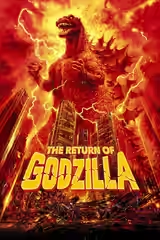
Godzilla vs. Biollante is the stranger and warmer of the two, while The Return of Godzilla is the graver and more frightened. The earlier film is a Cold War problem debated in Cabinet meetings; this one puts a grief story inside the monster film and has the better creature. Both have stiff human casts, but we prefer this one for its oddness, and the earlier film if you want Godzilla treated as a serious threat.
What should I watch after Godzilla vs. Biollante?
After Godzilla vs. Biollante, try The Return of Godzilla (1984, Fi1m 55): The sober restart this one follows; less strange, more frightened. Then Shin Godzilla (2016, Fi1m 74): The committee-room Godzilla film, in which the meetings are the horror; and Little Shop of Horrors (1986, Fi1m 76): Another plant that eats people, this one singing about it.

Cast

If you liked this, try…

  1. The Return of Godzilla (1984, Fi1m 55)The sober restart this one follows; less strange, more frightened.

  2. Shin Godzilla (2016, Fi1m 74)The committee-room Godzilla film, in which the meetings are the horror.

  3. The Host (2006) · not on Fi1m yetA Korean family chases a river monster and the film keeps being funny about it.

  4. Little Shop of Horrors (1986, Fi1m 76)Another plant that eats people, this one singing about it.

  5. The Day of the Triffids (1962) · not on Fi1m yetBritish killer plants on a budget; the greenhouse scenes still get under the skin.