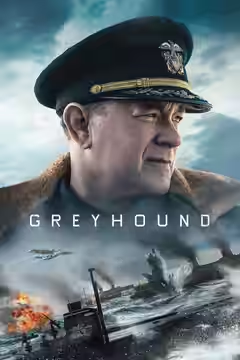
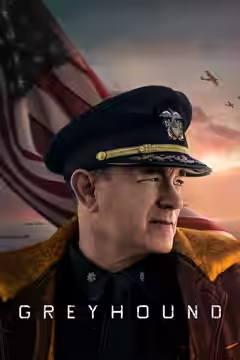
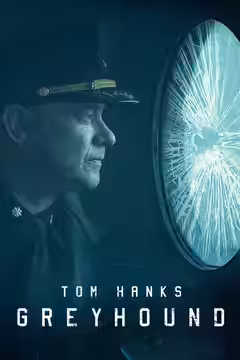
Tom Hanks writes himself a destroyer and 92 minutes of orders, and Aaron Schneider makes that a tight, sometimes gripping crossing. It is precise about everything except the people, and it is over before that starts to cost it much.
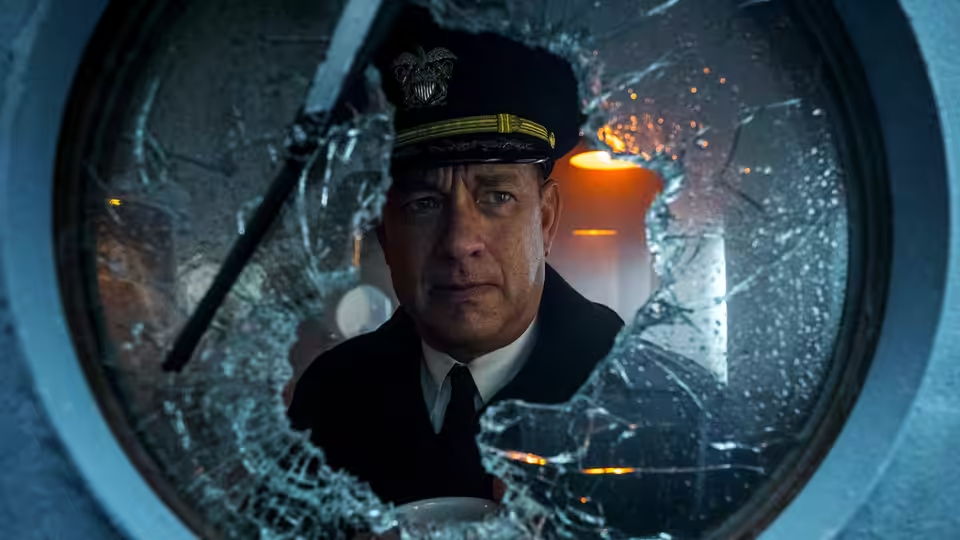
Aaron Schneider’s film, from a screenplay by Tom Hanks after a novel by C. S. Forester, is about a destroyer taking a convoy across the Atlantic in February 1942, and it is about almost nothing else. There is no shore leave, no letters home, no back story beyond one short flashback. For 92 minutes we are on the bridge of the Greyhound with Commander Krause (Hanks) as he gives orders and hears them repeated back. It is a narrow film and it knows it, and within those limits it is tense and well made and, by the end, thin. Worth an evening if you like your war films procedural; there is not much to carry away afterwards.
The method is repetition. Krause says “right full rudder”, the helmsman says “right full rudder, aye”, a talker relays a bearing from sonar, the ship turns. Sidney Wolinsky and Markus Czyzewski cut these chains fast and clean, so that an order travels from Krause’s mouth to the rudder in four shots and we always know which way the ship is turning, even when we have lost hold of why. Hanks the writer has bet that watching a competent man do a hard job under strain is enough to fill a film. For the first hour he is right.
The first U-boat hunt is the best thing in it. Sonar gets a contact, the range closes, the boat passes beneath the hull and the whole bridge goes quiet to listen for it, and we found we had stopped breathing along with them. The depth charges go, the sea heaves, oil comes up, the crew cheers, and Krause says, almost to himself, “fifty souls”. It landed harder than we expected, because nothing before it had asked us to feel anything. Hanks has played decent men in authority often enough that we know the shape, and here he strips even that back: no speeches, hardly a smile, a man whose whole attention is on the next order.
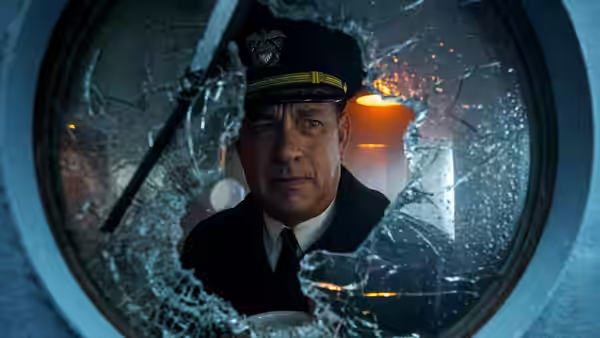
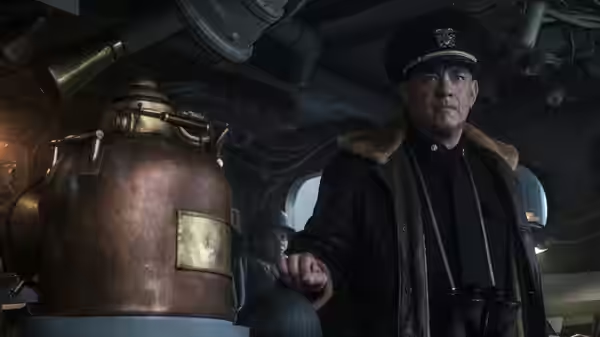
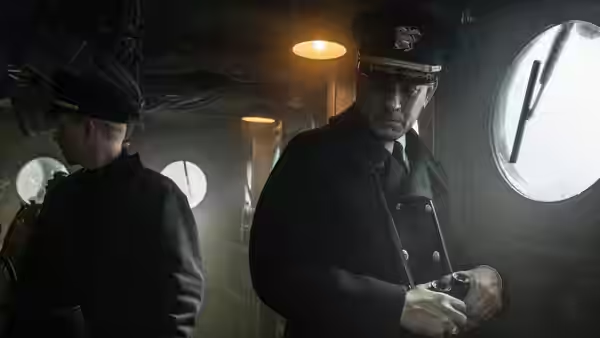
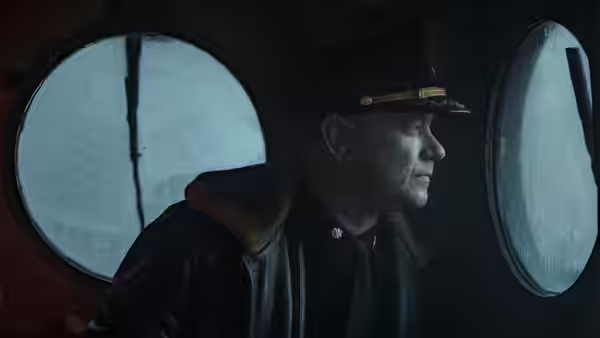
Shelly Johnson shoots nearly all of it from the bridge, through glass streaming with spray, and the war outside arrives as lookouts’ shouts and grey shapes on grey water. When the camera does go out over the convoy the sea has the smooth, weightless look of the computer, and those are the weakest images in the film. David Crank’s bridge is cramped and cold and crowded with brass and dials; there is always somebody’s elbow at the edge of the frame. Julie Weiss puts the crew in sheepskin and steel helmets over knitted caps and lets the frost sit on their collars. Blake Neely’s score is mostly drums and a low drone, and it knows when to stop, which is more than most war scores do. The night attacks are lit by flares and scored by the guns.
What is missing is the people. Stephen Graham’s Cole is loyal and worried, and that is the whole of him. Rob Morgan’s Cleveland brings Krause meals he does not eat and is the one man aboard the commander treats with anything like tenderness, and the film treats that as enough. Elisabeth Shue’s Evelyn gets one scene, a flashback, and is then gone from the film. Tom Brittney’s Watson, Manuel Garcia-Rulfo’s Lopez and Karl Glusman’s Eppstein are faces at stations. They are all well cast and none of them has more than a job to do.
By the third attack we noticed we were tired rather than tense. The later engagements are tracer and searchlight and shouting, and we could not have told you which merchant ship was burning or what it carried. The brevity that is the film’s great virtue starts to look like haste.
The submarine films it stands beside, Das Boot (1981) above all, understood that the waiting is the drama and the men are what you wait with. Greyhound has the waiting and the machinery. Hanks’s screenplay treats the ship’s log as the story, and his performance is the only thing on board that argues otherwise.
It runs 92 minutes and carries a 12. Watch it with the lights off and the sound up, because the bridge is where the film lives, and the bridge is good.