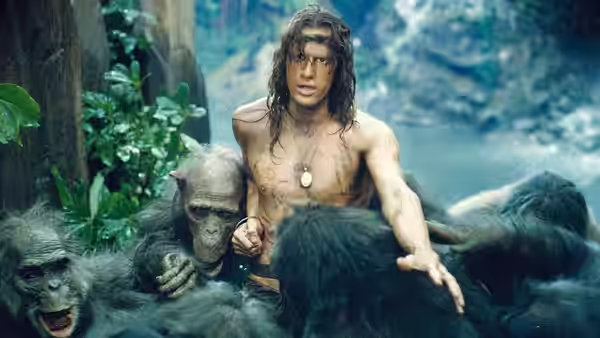
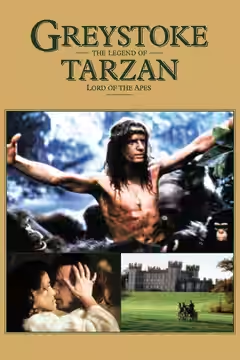
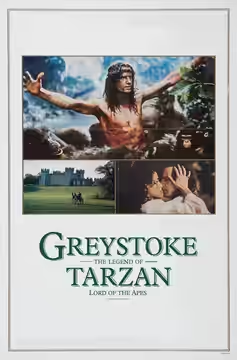
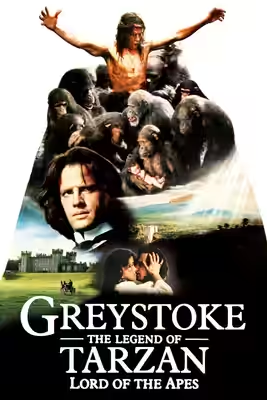
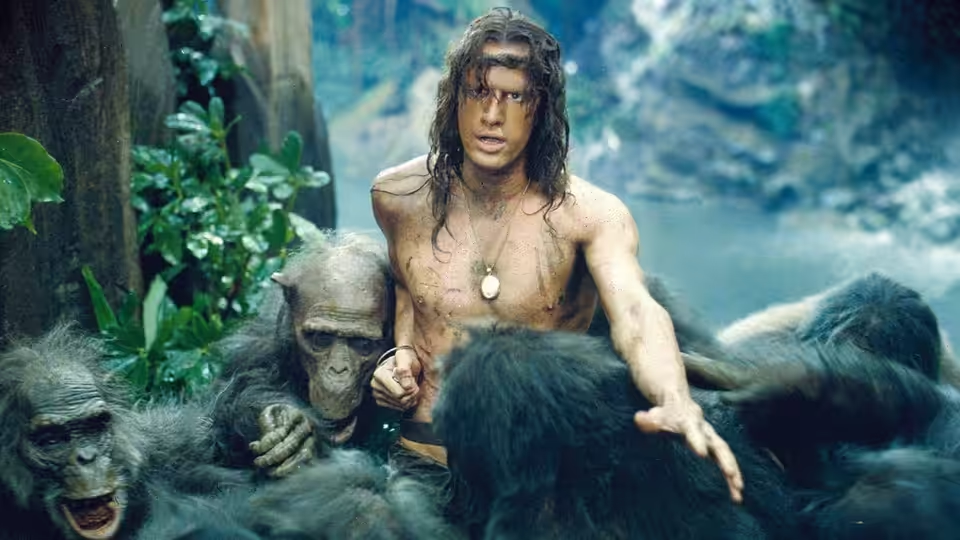
Tarzan (Christopher Lambert) gestures among apes gathered around him in the jungle
Film review

Greystoke: The Legend of Tarzan, Lord of the Apes

1984 · Directed by Hugh Hudson · 2h 23m

In a sentenceA Tarzan film with enough British manners to make us miss the jungle

John Clayton / Tarzan, Lord of the Apes (Christopher Lambert) is the central figure in an adventure that moves from the jungle to England. Miss Jane Porter (Andie MacDowell), The Sixth Earl of Greystoke (Ralph Richardson) and Capitaine Phillippe D’Arnot (Ian Holm) are among the people in his story. Life in the jungle and the demands of British manners provide the film’s two settings for its drama. Hugh Hudson directs this adaptation of a novel by Edgar Rice Burroughs, scripted by Robert Towne and Michael Austin.

Fi1m review

Hugh Hudson’s solemn Tarzan drama finds real feeling in Christopher Lambert’s physical performance and the jungle passages. The English section is harder work, with repeated jabs at British manners slowing an already deliberate adventure.

Hugh Hudson’s Greystoke: The Legend of Tarzan, Lord of the Apes is a decent, uneven adventure whose jungle passages justify more patience than its English ones. It wants us to take its central character seriously, and for a substantial stretch we do. Christopher Lambert gives it enough physical conviction to keep the solemnity from becoming an embarrassment. The difficulty comes when British manners take over and the film continues at the same deliberate pace, with less to hold our attention.

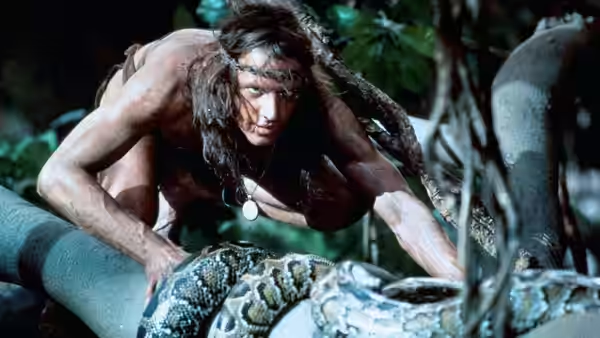
Christopher Lambert is the most interesting reason to disagree with the harsher reviews. His performance can seem stiff, but there is feeling in the physical effort, and that matters in a part which could easily become a demonstration of athletic ability. We were moved by the vulnerability he brings to the jungle passages. The sentimentality works there because he commits so completely to the physical performance that we accept the character’s feelings before questioning how insistently the film asks for ours.

John Alcott’s cinematography gives the jungle sufficient presence to sustain this unhurried approach. We have time to attend to the surroundings, which helps us believe in a life being lived there. Anne V. Coates’s editing is effective in these passages because Christopher Lambert’s performance remains the point of interest. The later slackness does not make the earlier patience a mistake, although it does expose how much that patience depends on the setting.

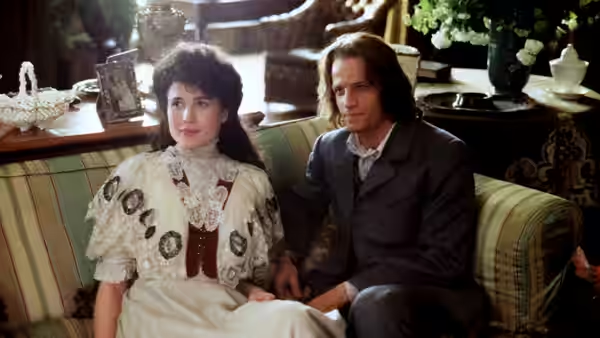
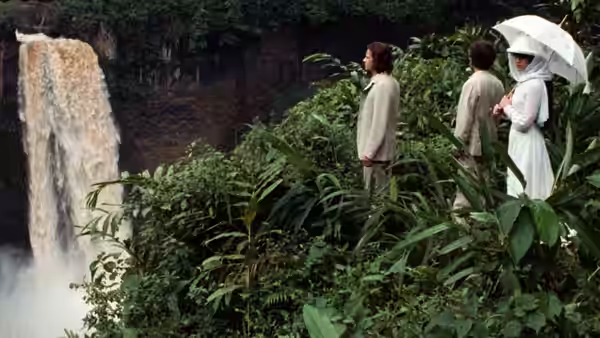
The move to England is where the film begins to labour. The satire of British manners has an obvious purpose, but the scenes keep pressing a point that becomes clear well before the film is finished with it. Robert Towne and Michael Austin’s screenplay does not find enough fresh difficulties within that material. At 143 minutes, the film gives us too much time to recognise the repetition, and too little reason to welcome it.

Stuart Craig’s production design helps the English section retain a sense of place, even when the dramatic pace weakens. These surroundings feel formal and constraining, though that impression soon becomes familiar. John Scott’s music is similarly committed to the film’s seriousness. Its emotional weight suits the jungle material more comfortably than the social satire, where we could use less encouragement to feel the importance of everything.

Hugh Hudson is entitled to make an adventure that spends time on discomfort and belonging. We do not need constant action, and the attempt to take the character seriously deserves credit. What we do need is a change of pace when the surroundings change. By then, the film has said much of what it has to say about how these people behave, and further attention to their manners brings diminishing returns.

This is worth considering if a solemn Tarzan drama appeals more than the promise of a brisk adventure. Christopher Lambert gives the jungle passages a tenderness that the heavier stretches do not erase. Go in prepared for the English section to test the goodwill earned elsewhere. There is no need to mistake its slow pace for a failure of concentration on your part.

Critical consensus AI synthesised

52
Positive
1
Mixed
2
Negative
1
The New Yorker
2 April 1984 · Pauline Kael
64*

The issue listing identifies this as Pauline Kael’s review, but provides no verdict. It offers no praise or complaint to summarize.

Read the full review →
Radio Times
★★★ · Sue Heal
60

Heal finds the film moving and deftly handled in its jungle scenes, but says it sags once the action shifts to England. She particularly praises Rick Baker’s make-up, while criticizing Christopher Lambert’s acting.

Read the full review →
Empire
1 January 2000 · Ian Nathan
15*

Nathan finds the film ludicrous, po-faced and slow, with its attempt at realism undermining the adventure. He particularly criticizes its prolonged satire of British manners and Christopher Lambert’s performance.

Read the full review →
Eye for Film
30 April 2014 · Jennie Kermode
75*

Kermode finds the film emotionally effective and faithful in spirit to Burroughs, despite its limited depth. She especially praises Christopher Lambert’s soulful, physically committed performance for grounding the film’s sentimentality.

Read the full review →

Straight answers AI written, from our review

Is Greystoke: The Legend of Tarzan, Lord of the Apes worth watching?
Greystoke: The Legend of Tarzan, Lord of the Apes is worth considering if a solemn Tarzan drama appeals; we score it 65 out of 100. Christopher Lambert’s physical performance brings tenderness to the jungle passages, but the move to England slows an already deliberate film, with repeated jabs at British manners testing the patience earned earlier.
How long is Greystoke: The Legend of Tarzan, Lord of the Apes, and what is it rated?
Greystoke: The Legend of Tarzan, Lord of the Apes runs 2h 23m. It is an adventure and drama film.
Where can I watch Greystoke: The Legend of Tarzan, Lord of the Apes in Türkiye?
Greystoke: The Legend of Tarzan, Lord of the Apes is not on any streaming or rental service in Türkiye at the moment. It is available in 28 other countries; change your country at the top of the page to see where. Availability is checked daily.
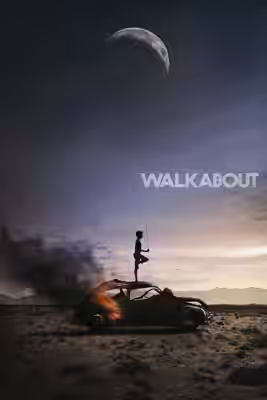
How does Greystoke: The Legend of Tarzan, Lord of the Apes compare to Walkabout?
Greystoke: The Legend of Tarzan, Lord of the Apes is more reassuring than Walkabout, which we recommend more strongly for its moving, disquieting treatment of cultural misunderstanding and physical survival. Both contrast wilderness with civilisation, but Greystoke labours over British manners, while Walkabout holds our attention through its young cast and desert images, even when that contrast makes the people too simple.
Is Greystoke: The Legend of Tarzan, Lord of the Apes based on a true story or a book?
Greystoke: The Legend of Tarzan, Lord of the Apes is adapted from a novel by Edgar Rice Burroughs, rather than based on a true story. Knowing the book is not essential to appreciating Christopher Lambert’s physical performance or the jungle passages, though we recommend expecting a solemn, deliberately paced drama rather than a brisk adventure.
What should I watch after Greystoke: The Legend of Tarzan, Lord of the Apes?
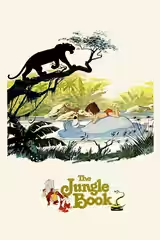
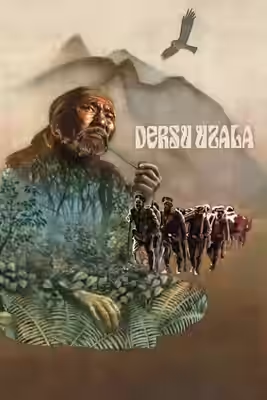
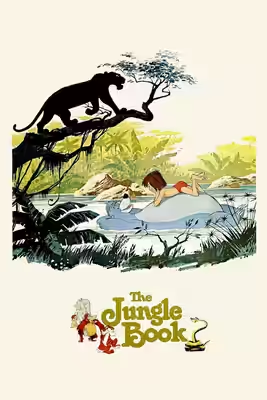
After Greystoke: The Legend of Tarzan, Lord of the Apes, try Walkabout (1971, Fi1m 85): Cultural misunderstanding and physical survival, with far less reassurance about either. Then Dersu Uzala (1975, Fi1m 82): Friendship across cultures, rooted in careful attention to the natural surroundings; and The Jungle Book (1967, Fi1m 80): For the jungle, the animals and a welcome relaxation of the solemnity.

Cast

Awards

Academy Awards, 1985

Nominated
Best Makeup and Hairstyling
Nominated
Best Supporting Actor
Nominated
Best Writing, Adapted Screenplay

If you liked this, try…

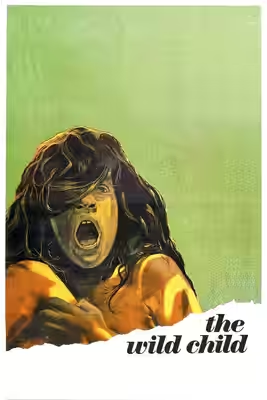
  1. The Wild Child (1970) · not reviewed yetA quieter study of education, belonging and the limits of civilising someone.

  2. Walkabout (1971, Fi1m 85)Cultural misunderstanding and physical survival, with far less reassurance about either.

  3. Dersu Uzala (1975, Fi1m 82)Friendship across cultures, rooted in careful attention to the natural surroundings.

  4. The Jungle Book (1967, Fi1m 80)For the jungle, the animals and a welcome relaxation of the solemnity.

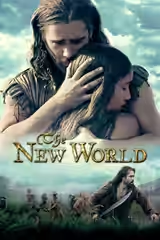
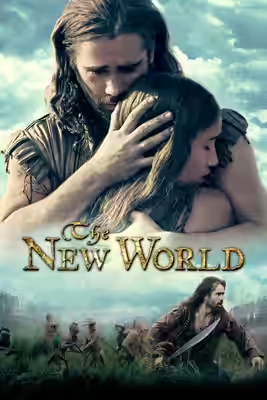
  5. The New World (2005) · not reviewed yetLandscapes and uneasy encounters between cultures, with room for silence.

Free account

Know what to watch tonight

Two lists that know where things are streaming, collections you can share, your own score beside ours, and Discover that remembers what you have seen.

  • Want to see, sorted by what is streaming now
  • Seen, with your score out of ten
  • No adverts, ever