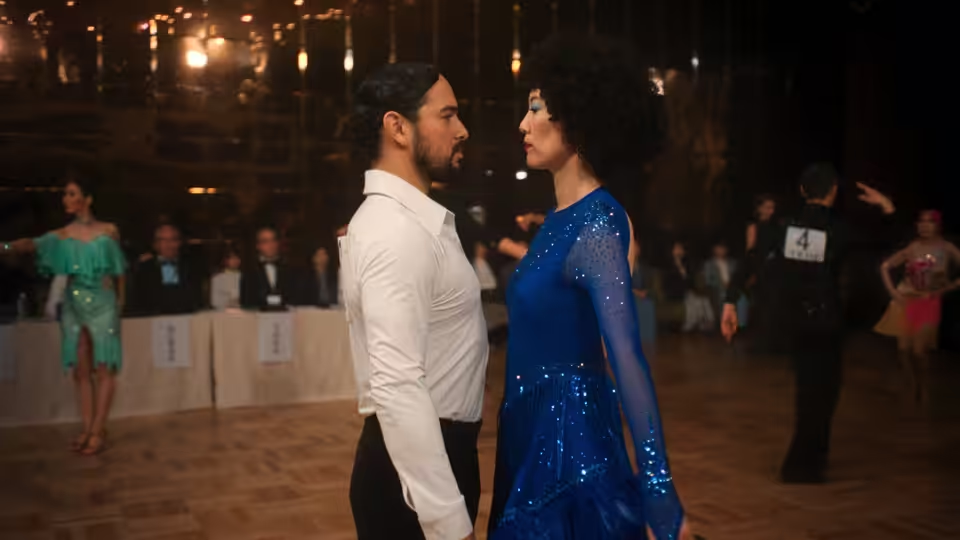
Rinko Kikuchi makes this uneven ballroom romance worth the evening, giving its grief and surreal dance sequences a warmth the plotting cannot always sustain. The comedy wanders, but Haru remains someone we want to stay with.
Josef Kubota Wladyka gives grief some company in this playful ballroom romance: comedy, the hope of renewed connection and dances that are allowed to become fantasies. It is a good fit for Rinko Kikuchi, whose Haru can be funny without making her sorrow seem like something the film has forgotten. We recommend it for her, and for the freedom of the dancing, with a reservation about a story that keeps interrupting its own progress. At 122 minutes, it has more room for eccentricity than it needs.
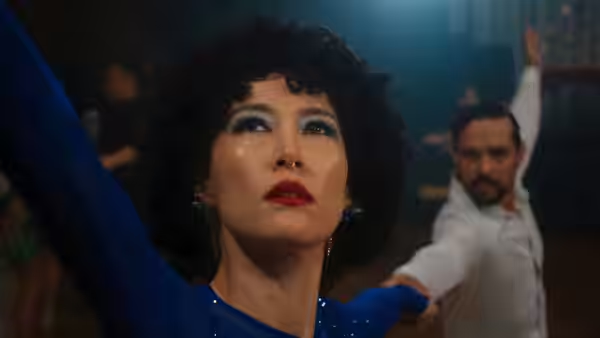
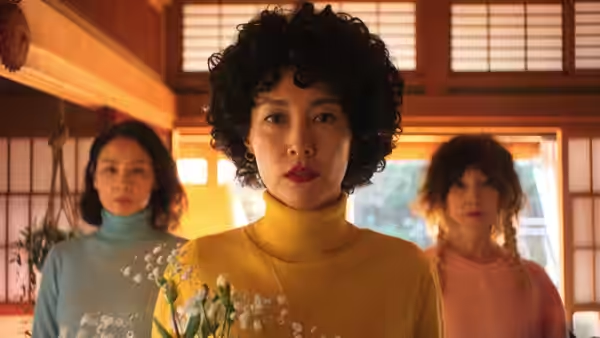
Haru could easily have become a collection of reactions to whatever odd development the writers produce next. Instead, her performance gives the character enough emotional consistency to prevent that, allowing the comedy and the hurt to belong to the same person. We warmed to Haru because her expressive dancing makes pleasure possible without suggesting that her grief has gone away. That matters in a film about beginning again, where optimism can so easily become an instruction to stop being sad.
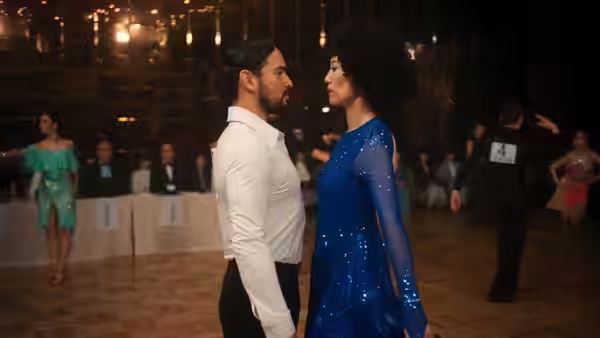
The surreal dance sequences are the clearest reason to choose this over a more cautious romance. Daniel Satinoff’s cinematography and Masami Tanaka’s production design find their most persuasive use in these passages, which give Haru’s complicated feelings something to do beyond being discussed. Nathan Halpern supplies the music for a film whose most convincing emotional expression comes through dancing. The collective achievement is to make the fantasy feel like a natural part of Haru’s experience, even when the surrounding story struggles to connect its episodes.
The script, by Nicholas Huynh and Josef Kubota Wladyka, is less dependable. Its increasingly eccentric turns can make following Haru’s feelings harder than following its appetite for another surprise. The episodic storytelling also leaves the people around her less fully imagined, and a romance needs those other people to have some weight of their own. Rinko Kikuchi does much of the work of making these encounters matter, but a supporting character should offer more than another opportunity for the lead to be expressive.
Ben Rodriguez Jr. edits a film whose individual dance sequences are more satisfying than its movement from one episode to another. The sharper shifts into darker material sometimes feel punitive, placing fresh emphasis on pain when Haru’s emotional difficulties are already clear. That unevenness makes the running time harder to justify. A little less insistence on changing the mood would have allowed the film to stay with a feeling long enough for it to develop, rather than requiring another adjustment from us.
For a romantic comedy, its willingness to let grief remain untidy is welcome. There is something generous about allowing a character to be sorrowful, funny and open to pleasure without demanding that each feeling take its turn in an orderly fashion. The trouble comes when the storytelling mistakes that emotional messiness for permission to wander, and the thinner characterisation becomes harder to overlook. Even so, the performance and the dancing provide enough pleasure to make the patience worthwhile. Choose it for Rinko Kikuchi, with some tolerance for the diversions between dances.